Duane Davis said he’d never told anyone the story. Jurors just heard him walk police through the night Tupac was killed

Daftar Isi
Jurors in Las Vegas heard Duane Davis’ own voice recount the night Tupac Shakur died
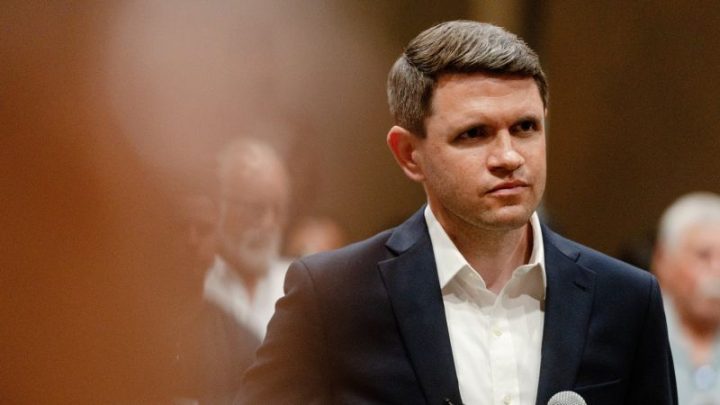
Activelifezero.com – For most of Thursday’s session in the Tupac Shakur murder trial, the courtroom fell silent as a younger Duane Davis — recorded in 2008 during a police interview — walked investigators through the final hours of September 7, 1996, in Las Vegas. The playback stretched across hours, and by the time the shooting itself was described, the jury sat locked onto the screen, their attention sharpened by the long buildup of testimony that preceded it.
The irony was not lost on anyone watching. Days earlier, Davis’ defense attorney had told the court that his client’s public explanations of the night were “bullsh*t.” Yet the taped interview, paired with passages from Davis’ 2019 memoir Compton Street Legend, paints a picture of startling internal consistency. The man who once insisted he had never shared his account with anyone was, in fact, sitting across from detectives in 2008, narrating every detail with the ease of a man who had rehearsed the story in his own head for over a decade.
How the recording made it into evidence
The 2008 session was not conducted under Miranda-style protections. LAPD detective Greg Kading opened the interview by telling Davis,
“Nothing you say today will be used against you.”
The conversation was part of a proffer agreement tied to separate drug charges, meaning Davis spoke freely, expecting his words to remain sealed. Prosecutors argued that Davis’ later decision to publish a memoir and grant interviews effectively voided that informal understanding. The trial judge agreed, ruling the recording admissible for the jury’s consideration.
The night before the shooting
Davis’ account, as played in court, places him at the MGM Grand shortly after a physical altercation between his nephew Orlando Anderson and associates of Death Row Records — the hip-hop label co-founded by Marion “Suge” Knight and closely tied to Shakur’s career. After the scuffle, Davis and his entourage drove to Club 662, Knight’s Las Vegas nightclub, where they lingered briefly before concluding their targets were not inside, Davis told investigators in the 2008 tape.
The group then made a stop at a liquor store. Pulling away from that stop, Davis described hearing crowds on the street chanting Shakur’s name. He said he spotted the rapper leaning out a car window, waving to fans. The detail landed heavily in the courtroom; Shakur’s sister, seated in the gallery, pressed her left hand against her mouth as the voice from 2008 described the moment. A family friend reached over to steady her.
The approach and the trigger
Davis said his vehicle performed a U-turn so they could circle back and pull alongside the car carrying Shakur and Knight. Terrence Brown was behind the wheel. Davis sat in the front passenger seat. Deandre Smith occupied the left rear position, while Anderson — known by the nickname “Baby Lane” — sat on the right rear side.
The driver pulled up on the passenger side of Shakur’s vehicle. Davis told investigators he wanted to be on his own side of the car to fire.
“If we would have been on my side, I would have blast,”
he said in the recording. Because the geometry was wrong, he passed the handgun to Smith in the back seat.
“I gave it to Dre, and Dre was like, ‘No, no, no,'” Davis recalled. “And Lane’s like, ‘Give it here.’ He popped it to him.”
Davis claimed Knight turned his head toward him during the exchange of gunfire. Asked why Knight would look over, Davis replied,
“I don’t f**king know,”
adding that he had known the label head since they were seven or eight years old. He believed Knight was killed in the volley, describing a bullet striking the back of the head. Shakur, he said, apparently tried to leap into the back seat while Knight ducked away. Davis estimated roughly six rounds were fired.
The getaway and the abandoned weapon
After the shooting, Davis’ group drove to the nearby Carriage House parking area, dumped the vehicle, and left the gun resting on a tire. They returned the following day to retrieve it. Investigators pressed Davis on why the weapon was left with the car at all, calling the logic incoherent. Davis fired back in the tape,
“You want the truth, or you want me to tell you a lie? … Okay, we left a f**king gun on the car, dude.”
Humor inside a homicide confession
What made the Thursday playback feel unlike a typical trial exhibit was its tone. The 2008 session was laced with banter between Davis, his attorney, and the detectives. After Davis laid out his plan to go after Shakur, he added,
“I ain’t never told nobody that story.”
An officer responded,
“Doesn’t it feel good, man, to get it off your chest?”
LAPD detective Daryn Dupree, who had already testified Wednesday, joked that Oprah Winfrey would call to thank him. Another officer chimed in,
“…and then he’ll be like, ‘Read my book.'”
The levity did not soften the gravity of the proceedings. Shakur’s death in September 1996 — nine days before Biggie Smalls was killed in New York — remains one of the most consequential unsolved cases in American popular culture. The trial now unfolding in Las Vegas represents the first full criminal prosecution of a named individual for orchestrating that shooting, more than two decades after the rapper was carried away on a stretch from the strip.
Where the recording and the memoir diverge
Two significant discrepancies separate the 2008 tape from the published memoir: the mechanism by which the gun ended up in the back seat, and the identification of who fired. Those gaps, prosecutors suggested, will shape cross-examination in the weeks ahead. For now, the jury has heard the voice of the accused, unfiltered and unscripted, telling them what he says happened on the worst night of his life.
Related Reading
Frequently Asked Questions
What is Duane Davis said he d never?
Duane Davis said he d never is the main topic of this guide. The article explains the context, practical details, and next steps readers should understand.
Why does Duane Davis said he d never matter?
Duane Davis said he d never matters because readers are looking for a useful answer, not just a short summary. Good content should match search intent and help them decide what to do next.