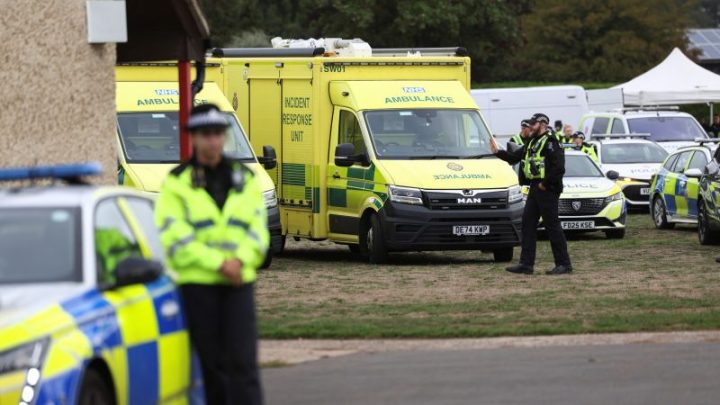
Charter plane crashes in fog while trying to land at remote Alaska military airstrip

Daftar Isi
Eight killed when Army-chartered aircraft strikes mountain in dense fog near remote Alaska radar installation
Activelifezero.com – A twin-engine charter aircraft carrying eight people plunged into rising terrain near an isolated military radar facility in western Alaska on Thursday afternoon, killing everyone aboard. The crash unfolded in thick fog as the plane attempted to land at Cape Newenham Airport, an Air Force airstrip situated roughly 450 miles southwest of Anchorage. Federal aviation and military officials confirmed the loss of all occupants shortly after the accident, which occurred around 12:15 p.m. local time.
Mission and passengers aboard
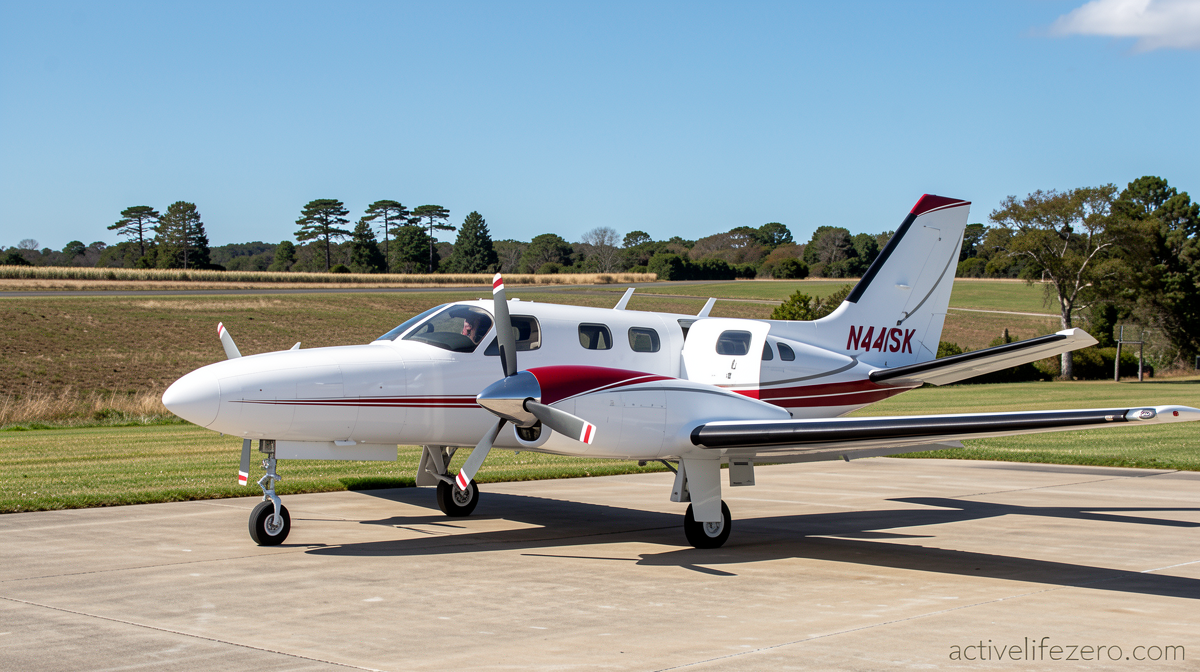
The Cessna 441 Conquest II had left Anchorage bound for the Cape Newenham facility, which provides ground access to a Long Range Radar Site maintained as part of the nation’s early-warning architecture. The flight was chartered by the US Army Corps of Engineers’ Alaska District. Clint Johnson, the National Transportation Safety Board’s Alaska region chief, identified the occupants as two pilots, two USACE employees, and four military contractors. The charter was operated by Security Aviation, a company that specializes in flights to remote Alaskan locations.
Only military flights and approved charter operations are permitted to use the airstrip, underscoring the controlled and specialized nature of the mission the eight victims were carrying out. The radar installation forms part of a network tasked with monitoring aircraft transiting the borders of Alaskan airspace and is maintained by military contractors.
Final approach in near-zero visibility
Preliminary radar and air-traffic-control data reviewed by the NTSB indicate the pilots made at least one landing attempt before being unable to complete it. They circled the area, held position, then began a second approach — during which the aircraft struck the ground.
“There was at least one approach that was attempted,” Johnson said. “It ended in a missed approach. (The plane) went back, held for a while, and then started a second approach. And that’s when the accident happened.”
National Weather Service observations placed visibility below 800 feet just before noon at the landing strip. With instruments as their sole reference, the pilots were navigating toward the south runway in conditions that rendered visual cues nearly nonexistent. After the first aborted attempt, air-traffic controllers lost contact with the aircraft and were subsequently informed it had not reached the airport.
Terrain that leaves little margin for error
The gravel runway at Cape Newenham stretches nearly 4,000 feet and sits on the slope of a mountain exceeding 2,300 feet in elevation. FAA mapping shows high terrain flanking both sides of the strip and rising sharply at the south end, meaning that once a pilot passes a certain point during approach, abandoning the landing becomes extremely difficult. The wreckage was located approximately one-third of a mile west of runway 15, in an area of ascending mountainous terrain, Johnson confirmed.
Investigation and logistical challenges
The NTSB will lead the investigation, with the FAA participating. A six-member accident investigation team was en route to the site at the time of reporting — a significant logistical undertaking given the extreme remoteness of the installation. NTSB investigations typically require one to two years before a probable cause is determined.
The Air Force confirmed that search-and-rescue crews examined the wreckage and found no survivors. Names of the victims will be released after next-of-kin notifications are completed.
Tributes and broader context
“This is a devastating loss for our military family and the communities we serve,” said US Air Force Lt. Gen. Robert Davis. “These individuals were dedicated professionals carrying out a vital mission in a demanding environment.”
The Army Corps of Engineers’ Alaska District acknowledged in a statement that two of its employees were among those killed.
Security Aviation issued its own statement: “Our hearts go out to the families, friends and loved ones of those who were lost. We will not speculate about the circumstances or potential cause and will defer questions regarding the investigation to the agencies leading that work.”
Alaska Senator Lisa Murkowski offered condolences on social media, noting her personal familiarity with the company’s pilots.
“I’ve traveled extensively with Security Aviation throughout Alaska, and have met many of their experienced pilots,” Murkowski wrote. “I appreciate the U.S. Coast Guard, NTSB, Alaska State Troopers, and the Rescue Coordination Center for responding to the site. Alaska is praying for those on board, their loved ones, and the team at Security Aviation.”
The aircraft and its role in Alaskan operations
The Cessna 441 Conquest II is a twin-engine turbo-prop aircraft, pressurized, with seating for up to nine passengers. Security Aviation describes the type as capable of cruising at 330 mph at 28,000 feet — specifications the company says make it well suited to Alaska’s demanding weather and airport environments. The aircraft’s pressurized cabin and twin-engine redundancy are standard features for operators serving remote Alaskan communities and installations where single-engine or unpressur
Related Reading
Frequently Asked Questions
What is Charter plane crashes in fog while?
Charter plane crashes in fog while is the main topic of this guide. The article explains the context, practical details, and next steps readers should understand.
Why does Charter plane crashes in fog while matter?
Charter plane crashes in fog while matters because readers are looking for a useful answer, not just a short summary. Good content should match search intent and help them decide what to do next.