Three Colorado River states must take big water cuts as biggest US reservoirs plunge to record lows

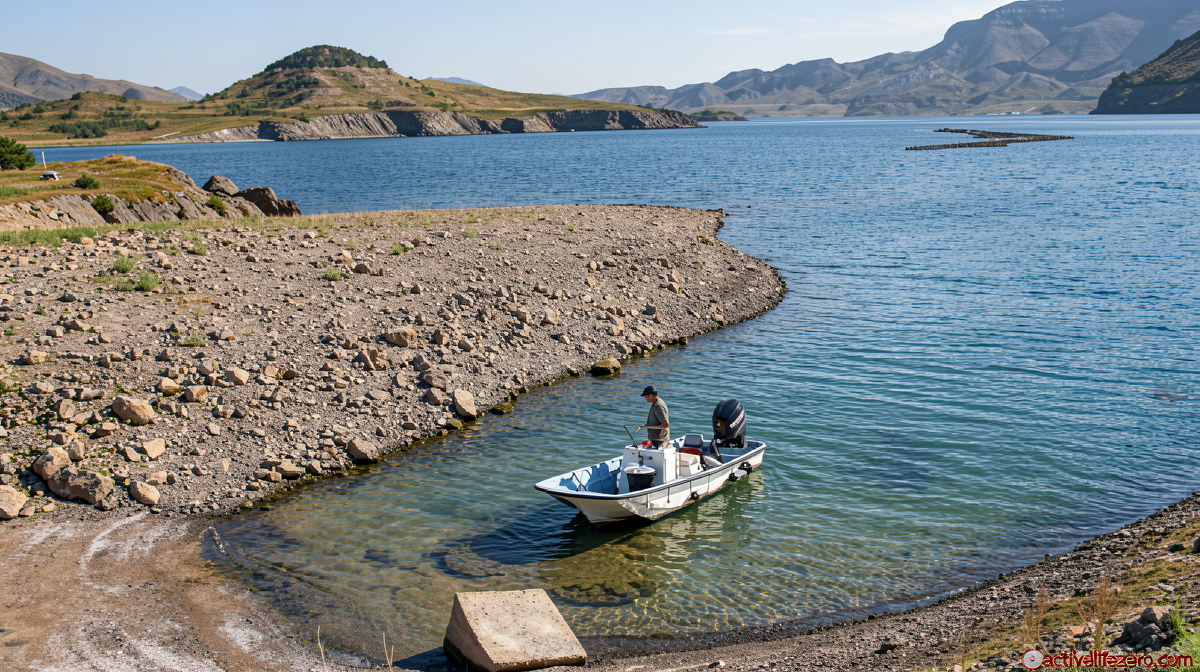
Three Colorado River States Must Cut Water
Activelifezero.com – Three Colorado River states must now accept mandatory reductions as the river’s two anchor reservoirs simultaneously sink to levels never before recorded. Lake Mead, the largest reservoir in the United States, has fallen below every mark since its creation roughly nine decades ago, while Lake Powell posted a fresh record low on August 15. With tens of millions of residents relying on the river for drinking water, irrigation, and hydropower, federal regulators moved to impose binding reductions on the lower-basin trio — Arizona, California, and Nevada — under a two-year operating plan released by the Department of the Interior on Friday.
The plan governs allocations through 2028 and arrives at the tail end of years of stalled negotiations among the seven states that draw from the river. No consensus deal materialized from those talks, leaving the Interior Department to step in with enforceable parameters. In July, the US Bureau of Reclamation had already outlined a broader ten-year operating framework for the waterway, stipulating that specific cut schedules would be issued on a rolling two-year cycle. Friday’s document constitutes the first installment of that cycle.
Allocation of the Reductions
The cuts land unevenly across the three downstream states. Arizona absorbs the deepest reduction at 760,000 acre-feet. California’s mandatory cut is the smallest at 440,000 acre-feet. Nevada will receive 50,000 acre-feet less water than its historical allocation. Upper-basin states — Utah, Colorado, Wyoming, and New Mexico — face no mandatory reductions under this particular plan, a distinction that has fueled ongoing friction between the two groups of states.
Translating those figures into percentages, Sarah Porter, director of the Kyl Center for Water Policy at Arizona State University, estimates the cuts represent roughly a 27% reduction for Arizona, a 10% reduction for California, and a 16% reduction for Nevada. She noted that within Arizona specifically, the people actually drawing Colorado River water will experience an effective 50% cut, because the state’s total water portfolio includes sources beyond the river.
State and Congressional Reactions
Tom Buschatzke, director of the Arizona Department of Water Resources, framed the outcome as a compromise shaped by earlier inter-state discussions and recommendations among the three downstream states.
“It could have been draconian,” Buschatzke said. “I would like the reductions for Arizona to be zero but that’s not the reality we’re facing. It’s a pretty good outcome.”
Arizona’s two Democratic senators, Ruben Gallego and Mark Kelly, issued a joint statement endorsing the new operating guidelines, signaling broad political acceptance within the state’s congressional delegation. Shivaji Deshmukh, general manager of the Metropolitan Water District of Southern California, confirmed that California’s agricultural and urban water users will now negotiate an internal plan to implement the required cuts, adding that water users across the basin must continue working toward shared solutions.
Why the River Is Shrinking
The Colorado River has been contracting for more than two decades. A climate-change-driven megadrought, compounded by rising temperatures and sustained high demand from growing cities and expanding agriculture, has eroded the river’s flow to levels far below what the 1922 Colorado River Compact assumed. That compact, negotiated when the Southwest had a fraction of today’s population and the Rocky Mountains delivered far more snowpack to the river’s headwaters, allocates 7.5 million acre-feet annually to the upper basin and another 7.5 million to the lower basin. With inflows now chronically below those figures, the original allocation is no longer physically workable.
The river still supplies water to approximately 40 million people and irrigates more than five million acres of farmland across the Southwest. Its two reservoirs function not only as water storage but also as the backbone of a major hydropower grid. When levels fall below certain thresholds, turbines must be throttled or shut down, compounding energy costs for utilities and ratepayers.
Expert Warnings and Legal Risk
Celene Hawkins, director of the Colorado River Program at the Nature Conservancy, characterized the moment as a structural inflection point.
“We are at a time of tremendous change in how we are managing water in this system and what that means for both communities and the river itself,” Hawkins said.
Porter, for her part, has warned that the trajectory points toward what she calls a system crash — reservoir levels so low that water simply cannot be delivered to downstream users without breaching compact obligations. She cautioned that without sustained demand management and additional supply-side measures, the next two-year cycle could demand cuts far deeper than those imposed this round, raising the prospect of litigation among the basin states.
Frequently Asked Questions
When do the new water cuts take effect? The two-year operating plan released by the Interior Department on Friday governs allocations through 2028. It is the first installment of a rolling cycle in which the Bureau of Reclamation will issue updated cut schedules every two years.
Which states are affected and by how much? Arizona faces a 760,000 acre-foot reduction, California a 440,000 acre-foot reduction, and Nevada a 50,000 acre-foot reduction relative to its historical allocation. Upper-basin states — Utah, Colorado, Wyoming, and New Mexico — are not subject to mandatory cuts under this plan.
Why were the cuts imposed unilaterally? Years of negotiations among the seven basin states failed to produce a consensus agreement. The Interior Department therefore issued binding parameters under its existing authority to manage the river’s operations.
What happens if reservoir levels continue to fall? Experts warn that sustained declines could trigger deeper mandatory cuts in the next two-year cycle, potential litigation among states, and reduced hydropower output as turbine operations are curtailed at lower water levels.