Thieves steal four Renoir paintings from French museum, dropping two as they flee

Thieves Steal Four Renoir Paintings from France
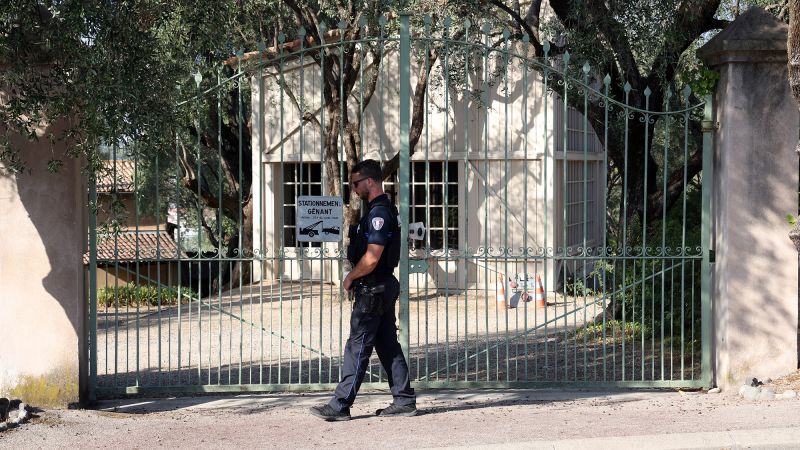
Activelifezero.com – Thieves steal four Renoir paintings from the Renoir Museum in Cagnes-sur-Mer before dropping two of the canvases during their panicked escape. The armed duo struck in the early hours of Tuesday morning, slicing through the museum’s garden fence and using an electric saw to rip the frames from their mounts. Police arrived within five minutes of the 5:48 a.m. alarm, but the pair had already vanished with two works in hand.
The Raid and the Dropped Canvases
Mayor Bryan Masson, a member of France’s National Rally party, described the intruders as “well-equipped and well-prepared.” They breached the perimeter fence, crossed the garden grounds, and descended to the ground-floor storage room where twelve artworks were kept. An electric saw did the work of detaching the frames. On the way out, one canvas slipped free and was abandoned along the escape route. By the time Masson addressed reporters later that Tuesday, a second dropped painting had been recovered from the museum’s garden, confirming that the burglars shed both remaining works in their haste.
The town hall subsequently announced on its Facebook page that the Renoir Museum would stay closed to visitors until further notice. No reopening date was set, and questions were routed to the town hall, the museum’s own administration, and France’s Ministry of Culture. No formal institutional statement had been issued at the time of reporting.
Mayor’s Reaction and the Louvre Shadow
Masson framed the loss in civic terms, posting on Facebook:
“An attack on the Renoir Museum is an attack on a part of the history and heritage of #CagnesSurMer.”
He called such incidents “particularly serious” and pledged that the town would “devote all necessary resources to better protect this heritage, which belongs to everyone who lives in Cagnes-sur-Mer.” The language pointed toward upgraded security infrastructure beyond what was already in place.
The episode lands roughly twelve months after the audacious Louvre raid in Paris, in which a small team lifted priceless objects in minutes and disappeared. Both events share a structural signature: few perpetrators, precise knowledge of layout and guard rotations, specialized cutting tools, and a compressed action window. The recurrence has sharpened a national debate over whether France’s museums—many running on aging security budgets—can withstand coordinated, well-planned intrusions.
Why the Museum Matters to Cagnes-sur-Mer
The institution is devoted to Pierre-Auguste Renoir (1841–1919), whose luminous color, soft-edged figures, and fascination with domestic leisure scenes helped define the Impressionist revolution of late-nineteenth-century Paris. The town where Renoir spent his final decades and where he is buried houses a significant collection of his paintings, pastels, and drawings. For a community of roughly 50,000 residents whose identity is bound up with the painter’s memory, the theft is less an insurance claim than a wound to civic pride.
Frequently Asked Questions
Where did the theft take place? The Renoir Museum in Cagnes-sur-Mer, a coastal town on France’s Mediterranean coast, roughly 20 km east of Nice.
How many paintings were taken versus recovered? Two canvases were carried off by the intruders. Two additional paintings were dropped during the escape—one found along the exit route, the other in the museum’s garden.
When did the alarm sound? At 5:48 a.m. local time on Tuesday. Police reached the site within five minutes of that alert.
Is the museum open to visitors? No. The town hall announced the museum would remain closed until further notice; no reopening timeline has been published.
What tools did the burglars use? They cut through the perimeter fence and employed an electric saw to sever the mounting fixtures holding the frames in place.