Vulnerable Republicans are increasingly defying President Trump ahead of the midterms

Vulnerable Republicans Defy Trump Before Midterms
Activelifezero.com – Vulnerable Republicans are increasingly defying President Donald Trump as they prepare for closely watched midterm contests. In competitive districts, some GOP lawmakers and candidates are stressing differences with the administration on war, immigration, trade and local development while trying to retain support from Republican voters.
The strategy reflects the difficult balance facing candidates in Iowa, Florida, Texas and other battleground areas. Republicans are working to defend congressional majorities as Democrats target districts where local concerns can outweigh national party loyalty.
Trump has often responded sharply to criticism within his party, but the White House and Republican Party apparatus have appeared more willing this cycle to allow endangered candidates to shape messages around their own districts.
“At the end of the day, we care about winning, and these candidates need to run the races necessary to accomplish that,” RNC spokeswoman Natalie Baldassarre said.
Baldassarre said Republicans remain united, while recognizing that candidates in tight races may need distinct approaches to persuade their voters.
Iowa Lawmakers Challenge Trump on Iran War Powers
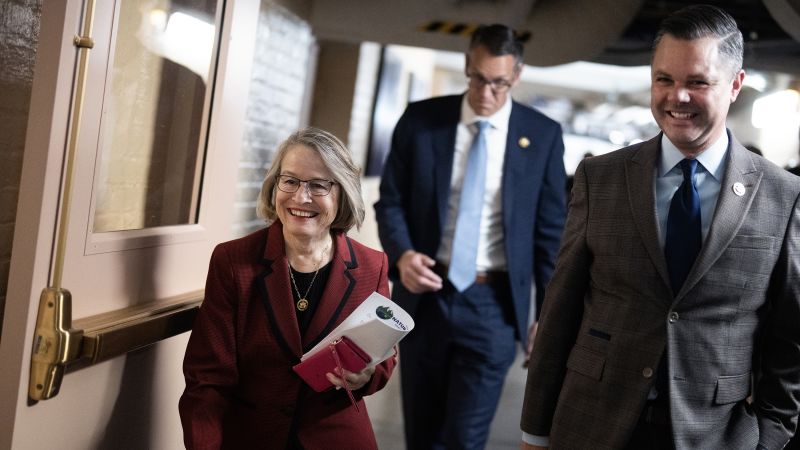
Two Iowa House Republicans, Zach Nunn and Mariannette Miller-Meeks, supported a measure intended to limit Trump’s authority in the conflict involving Iran. Their votes helped bring the number of Republican supporters of the war powers resolution to seven, the highest total so far.
Neither representative centered Trump in statements following the vote. Instead, they pointed to the potential human and financial costs of an extended conflict for military families and Iowans dealing with high fuel prices.
“I will not vote to keep our soldiers in an open-ended war, with Iowans paying too much at the pump,” Miller-Meeks said.
Before the vote, Miller-Meeks said Trump could understand a decision based on principle. The president had not publicly commented on the votes by Nunn or Miller-Meeks.
Immigration, Prices and Trade Drive Divisions
Vulnerable Republicans are increasingly defying the president on immigration as well. Florida Rep. Maria Elvira Salazar released an advertisement saying Trump’s enforcement campaign had “gone too far.” Trump said Friday that he still supported her reelection, though he disagreed with her position.
“She got a little bit soft on the border – I understand that, I understand that – but I just don’t happen to be there,” Trump said.
Affordability is also giving candidates room to emphasize local priorities. While Trump has described the issue as a “hoax,” Republicans in difficult races have made household costs a central part of their outreach to voters.
Trade disputes have created further pressure, especially in agricultural regions. Farm-state Republicans, including several in competitive contests, objected after Trump paused tariffs on imported beef. Some have also criticized the administration’s escalating trade dispute with Canada.
Nunn has raised concerns privately as well. Earlier this month, he said he spoke with Trade Representative Jamieson Greer about administration decisions and later shared those concerns with Trump at a White House dinner for Republicans running in battleground races.
Texas Candidate Focuses on Big Bend
In Texas’ 23rd Congressional District, Republican nominee Brandon Herrera began opposing proposed border-wall construction in Big Bend National Park months before the project was paused last month. His campaign presented the issue as a local concern extending beyond the national immigration debate.
Herrera met with administration officials, organized a community forum and joined a Texas Capitol rally against the planned construction. At the rally, he said that “nobody” wanted the project, while an aide said the administration had been receptive.
FAQ: What Does This Mean for Midterm Races?
Why are Republicans breaking with Trump? Candidates in competitive districts may believe that addressing local concerns about military action, immigration enforcement, prices, trade or development projects gives them a better chance of winning undecided voters.
Does disagreement mean these candidates oppose Trump’s agenda overall? Not necessarily. The reported differences are focused on specific issues and district-level concerns, while candidates and party officials continue to emphasize broader Republican unity.
Why do local issues matter in congressional elections? House candidates are elected by individual districts, where voters may judge them on matters that directly affect local families, businesses, farms, public lands and military communities.