All ICE agents in the field expected to have body cameras by the end of September, Mullin says

All ICE Agents in the Field Get Body Cameras by September
Activelifezero.com – Homeland Security Secretary Markwayne Mullin told reporters in New York on Tuesday that every member of the Immigration and Customs Enforcement field force will be equipped with a body-worn recording device before the month ends. The announcement closes out a months-long push for transparency that intensified after a string of violent and sometimes fatal encounters between immigration officers and members of the public over the past year.
Mullin framed the rollout as a near-term operational milestone rather than a distant policy aspiration. Asked whether the schedule held, he offered a confident but slightly qualified response:
“We’re getting close. We’re getting close. By the end of September, I’m pretty sure we will be there.”
Two Hardware Paths: Clip-On Units and Built-In Cameras
The agency is not locked into a single piece of hardware. Alongside the batch of standalone recording units already in hand, DHS is evaluating permanent camera modules that would be integrated directly into standard-issue gear. Mullin explained the distinction plainly:
“There’s also options we have. We have the permanent cameras that we’re trying to put on there.”
The operational difference is significant. A clip-on unit can be misplaced, damaged, or simply left behind between shifts. A permanently mounted camera becomes part of the uniform itself, virtually eliminating the chance that an officer steps into a field encounter without an active recording capability. For supervisors reviewing use-of-force decisions afterward, that distinction between “the camera was available” and “the camera was on” can determine whether a review is possible at all.
Cross-Party Pressure and the Homan Endorsement
Support for body-worn video in immigration enforcement has drawn uncommon bipartisan alignment. Civil-liberties organizations and law-enforcement scholars alike have long argued that objective video documentation protects both the public and the officer, creating a record that can settle disputes over what transpired during a stop, detention, or arrest. The urgency sharpened considerably after a run of confrontations in which agents used force against individuals who were not always in the process of being detained, prompting questions about whether supervisors had adequate information to review those decisions.
White House border czar Tom Homan has been among the most vocal internal advocates. Appearing on a Sunday television program, he framed the issue in terms of public trust:
“I’m a big proponent of cameras. I want the American people to see what the officer sees when he makes a decision.”
His remarks underscore a broader administrative philosophy: that transparency, rather than secrecy, is the most effective shield against allegations of misconduct. For critics who have questioned whether federal agents operate with sufficient oversight, the cameras represent a tangible step toward closing that gap.
Motorola Microphones and the Fast-Track Activation
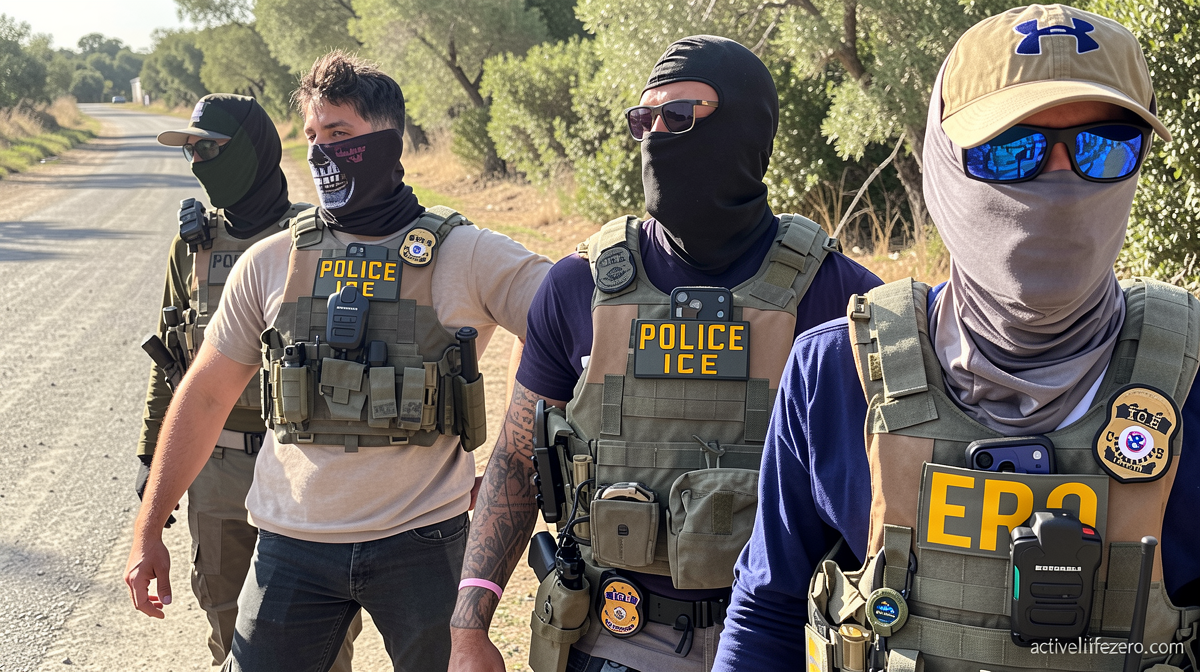
The technical backbone of the rollout leans on hardware already in agents’ pockets. Motorola supplies the radio microphones standard-issue across ICE field units, and Mullin explained that those existing microphones carry embedded camera capability that has not yet been fully activated.
“Some of the technology with some of the mics that all of these guys already wear, already have on them, have the ability for cameras too.”
Mullin confirmed he would sit down with the Motorola chief executive during the current week to discuss accelerating the activation process.
“We’re talking about how we can activate those faster too.”
This approach sidesteps the need to procure an entirely new fleet of recording devices. Instead, the agency can convert hardware already on belts and in pockets into a surveillance-and-accountability tool with minimal additional procurement lead time. Officers who already carry the microphones for radio communication would gain video capability without altering their daily gear routine.
Training Status and What Comes Next
ICE had earlier communicated to reporters that it had already acquired the necessary recording devices and that officer-level training was underway, with completion anticipated in the near term. The September deadline Mullin cited on Tuesday effectively folds that training window into the final weeks of the month, leaving little margin for slippage. Whether the agency meets the date will be watched closely by both supporters of the program and by the communities most directly affected by immigration-enforcement encounters.
Frequently Asked Questions
When exactly will every ICE field agent carry a body camera?
According to Secretary Mullin’s Tuesday briefing, the rollout is projected to be complete by the end of September 2026. He used the phrase “I’m pretty sure we will be there,” signaling confidence while acknowledging a small degree of schedule risk.
Will the cameras be clip-on units or built into the uniform?
Both. DHS is deploying standalone recording units now and simultaneously evaluating permanent camera modules integrated into standard-issue gear. The permanent option reduces the likelihood that an officer enters a field encounter without active recording.
Does the agency need to buy new hardware, or can it use existing equipment?
Much of the capability already exists. Motorola-supplied radio microphones worn by ICE officers carry embedded camera functionality that has not yet been fully activated. Mullin said he would meet the Motorola CEO that week to discuss speeding up activation, meaning the agency can leverage hardware already in agents’ pockets rather than procure an entirely new fleet.
Who within the administration is pushing for the program?
White House border czar Tom Homan has been a prominent internal advocate, telling a Sunday television audience that he wants “the American people to see what the officer sees when he makes a decision.” Broader bipartisan support from civil-liberties groups and law-enforcement scholars has added external pressure to complete the rollout.