Supreme Court to decide if Trump can hold migrants in mandatory detention without bond

Daftar Isi
Supreme Court to Decide if Trump Can Deny Migrants Bond Hearings
Activelifezero.com – The Supreme Court to decide if Trump can require mandatory immigration detention without bond hearings for people arrested inside the United States after entering the country unlawfully. The case will test the Trump administration’s interpretation of federal immigration law and could affect tens of thousands of people held by Immigration and Customs Enforcement while removal proceedings continue.
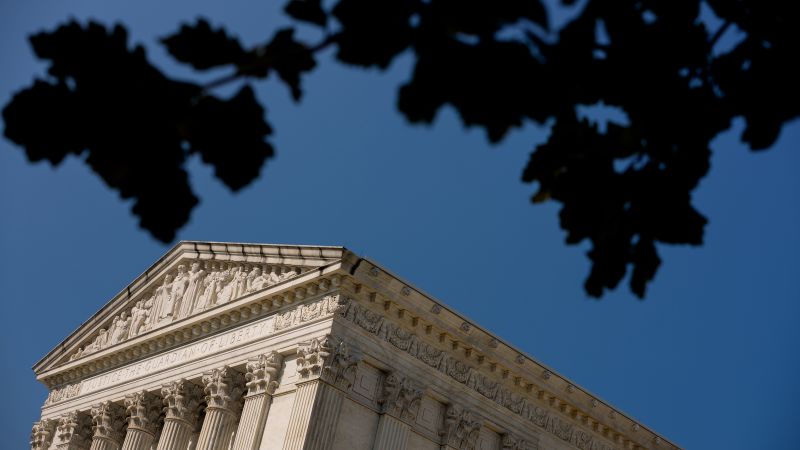
The justices agreed Thursday to hear the administration’s appeal as the court prepares to begin its new term. The dispute concerns whether migrants who have lived in the country for years may be treated as applicants for admission and detained without an individualized hearing on release.
Why the Detention Dispute Matters
For decades, immigration authorities generally allowed many people arrested within the United States to request bond while their cases moved through immigration court. Bond hearings can consider whether a person is likely to appear for future hearings or poses a danger to the community.
The Trump administration adopted a broader reading of a 1990s immigration law. It argues that people who entered without authorization may be subject to mandatory detention even when immigration officers locate them long after their entry into the country.
The policy shift coincided with a sharp rise in the immigration detention population. The number of migrants in detention increased from slightly below 38,000 at the end of the Biden administration to more than 65,000 during the summer.
Thousands of detainees have filed habeas corpus petitions in federal court, challenging the government’s authority to keep them in custody without bond hearings. Those lawsuits argue that detention should not be automatic for people who have longstanding ties to US communities.
“The administration’s ability to indefinitely detain tens of thousands of noncitizens pending their removal depends entirely on whether its novel reading of the statute is correct,” said Steve Vladeck, a Georgetown University Law Center professor and Supreme Court analyst.
Vladeck said the issue has generated more than 20,000 lower-court decisions, with most rejecting the administration’s position. The Supreme Court to decide if Trump can ultimately rely on that interpretation nationwide.
The Case Before the Supreme Court
The case, Rhoney v. Barbosa Da Cunha, involves a man from Brazil who entered the United States around 2004 or 2005. Immigration officers encountered him after a traffic stop in Massachusetts last year.
The Justice Department had asked the court to review another appeal involving the same legal question. Although the justices declined that specific case, the appeal they accepted gives the court an opportunity to resolve whether people discovered well after an unauthorized entry can be detained without bond while removal cases proceed.
The administration says Congress intended mandatory detention to apply to people who are not entitled to enter or remain in the United States. Federal officials contend that detention helps ensure people attend immigration hearings and allows removal orders to be carried out.
“The government’s detention of such unlawfully present aliens while their removal proceedings unfold implements the statute Congress enacted,” the Justice Department said in an appeal the court declined to hear.
Competing Views of Federal Immigration Law
The legal fight centers on two provisions of federal immigration law. One provision generally allows immigration authorities to detain people arrested in the United States during removal proceedings, but also permits release on bond.
A second provision directs the government to detain an applicant for admission who is not “clearly and beyond a doubt entitled to be admitted.” Critics say this language has traditionally applied to people stopped at the border or otherwise seeking entry into the country.
Under the administration’s view, migrants who entered without authorization can remain applicants for admission even after living in the United States for years or decades. Opponents argue that reading eliminates bond hearings for people Congress did not intend to place in mandatory detention.
The Supreme Court to decide if Trump can use this broader interpretation could determine how ICE handles arrests inside the country and whether lower courts may continue ordering bond hearings in similar cases.
Frequently Asked Questions
What will the Supreme Court decide?
The court will decide whether federal law allows the government to hold certain migrants without bond after ICE arrests them inside the United States, including people who entered unlawfully years earlier.
Does the case decide whether someone can remain in the United States?
No. The case concerns detention while removal proceedings are pending. It does not by itself determine whether an individual will be allowed to remain in the country.
What is a bond hearing in immigration court?
A bond hearing is a proceeding in which an immigration judge may consider whether a detained person can be released while their case continues. Judges may weigh factors such as flight risk and public safety.
Who could be affected by the ruling?
The decision could affect migrants arrested by immigration authorities within the United States, particularly people who entered without authorization and are facing removal proceedings.