America wants to wean itself off Chinese technology. Will the pain pay off?

Daftar Isi
US Push to Reduce Chinese Tech Reliance Tests Domestic Industry
Activelifezero.com – American efforts to reduce dependence on Chinese technology are forcing companies across the country to confront a difficult reality: replacing China’s vast manufacturing network will be neither quick nor cheap.
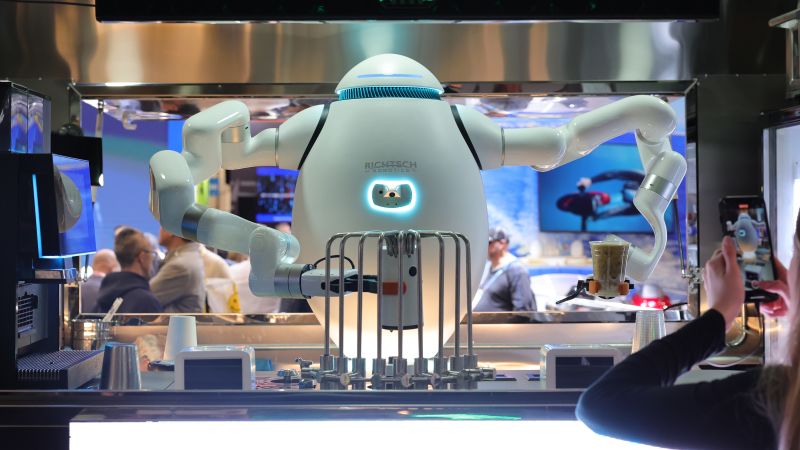
For Rajat Bhageria, founder of San Francisco-based Chef Robotics, that challenge has become increasingly urgent. His company makes robotic arms used by food manufacturers to automate the preparation of ready-made meals. Although final assembly takes place in the United States, key machine-utensil components fitted to the ends of the robotic arms are currently produced in China.
Chef Robotics is not yet directly affected by the expanding restrictions on Chinese technology. Still, Bhageria is already looking for alternative suppliers because he expects the list of affected products could widen.
“You can imagine what’s the next shoe to drop, right? Like, the next thing might be fixed robot arms.”
For years, the calculation for many technology companies was straightforward: obtain the strongest available components at the lowest possible price. China’s ability to manufacture large volumes of affordable parts made it a central supplier for industries ranging from consumer electronics to automated factories. Now, customers and investors are increasingly asking whether American companies can reduce their use of foreign-made components.
“For a while of course, it was like, ‘Hey, let’s find the best components, and let’s find them at the cheapest price,’” Bhageria said.
That question has become more pressing as the rivalry between Washington and Beijing expands beyond trade into supply chains, industrial policy and national security. US officials have argued that restrictions on Chinese technologies are necessary to safeguard sensitive government and consumer information while encouraging more domestic production.
Yet the transition creates a major practical problem. Decades of outsourcing and globalized manufacturing have left many US producers without the specialized capacity, workforce and supplier networks needed to recreate complex production at home. Even when an American factory can make a replacement part, it may not be able to match Chinese prices, production speed or volume.
A Costly Search for Alternatives
Bhageria began exploring a shift in production last year after President Donald Trump increased tariffs on Chinese imports. The process quickly exposed the limits of available alternatives. Producing the company’s plastic grabbers in the United States would be prohibitively expensive, while many manufacturers outside China lacked the equipment or capability to fill Chef Robotics’ order.
“It’s actually been a much harder process than we had initially hoped,” he said. “We will even talk to some really good machine shops in the US and they’re like, ‘We can’t do this.’”
The experience illustrates why removing Chinese technology from US supply chains is more complicated than simply changing vendors. Modern products often depend on many specialized inputs, from displays and sensors to batteries, motors, power systems and molded plastic parts. A manufacturer may be able to source one component domestically while remaining reliant on foreign factories for several others.
Ben Armstrong, executive director of MIT’s Industrial Performance Center, has warned that the shift will involve a steep adjustment period. His work focuses on manufacturing competitiveness and automation, two areas at the center of the US-China technology contest.
“A lot of our digital lives are built on the infrastructure of foreign-made components and goods assembled abroad, and that’s not going to change anytime soon,” Armstrong said. “We just don’t know how to make them in the US. So, there will be a learning curve, and during that learning curve process, the price will be high.”
For businesses, those higher costs can translate into longer development schedules, smaller production runs and more expensive finished products. Universities, consumers and companies that need ordinary electronics as well as advanced equipment could all feel the effects if supply constraints continue.
Restrictions Continue to Expand
Washington’s restrictions have increasingly targeted technology categories viewed as strategically important. In July, the Federal Communications Commission added power inverters and new forms of advanced robotics to its list of restricted foreign-made technology. The category includes humanoid robots capable of running, jumping, dancing and fighting.
The US has also prohibited vehicles that use Chinese software and imposed a 100% tariff on Chinese electric vehicles. Similar drone tariffs took effect last month, following a ban on new drone models in December. The broader policy direction is clear: technologies linked to transportation, communications, automation and data are receiving greater scrutiny.
Even large American manufacturers are finding it difficult to navigate the changing rules. Ford faced criticism from the Trump administration earlier this month over its connection to Chinese technology, particularly electric-vehicle batteries made by CATL. Ford rejected claims that it was handing US manufacturing to Chinese entities.
The dispute shows how difficult it can be to separate a finished American product from international technology networks. Vehicles assembled in the United States may still require batteries, software, electronic systems or raw materials supplied through overseas companies. The same issue affects robotics firms, drone producers and electronics manufacturers.
Building Capacity Takes Time
Companies are now weighing the immediate cost of moving production against the risk of waiting until a new rule makes an existing supply chain unusable. For Chef Robotics, beginning the search early may soften the financial impact of future restrictions. But the company’s situation also highlights a broader obstacle: alternative manufacturing capacity must exist before businesses can shift orders at scale.
Michael Murray, chief executive of Kopin Corporation, which makes optical components for drones used by the US military, said relocating production for some of its micro-display screens from China has taken more than two years. That timeline reflects the complexity of qualifying new facilities, building supplier relationships and ensuring that replacement production meets required standards.
The policy goal of strengthening domestic industry may eventually encourage more investment in US factories and technical expertise. In the near term, however, many companies face a period of uncertainty. They must adapt to changing rules while trying to remain competitive against Chinese rivals that continue to benefit from deep manufacturing ecosystems.
For Bhageria and other business leaders, the central question is no longer whether supply chains will change. It is whether US industry can develop the capacity needed to make that transition without sacrificing affordability, innovation and access to critical technology.
Related Reading
Frequently Asked Questions
What is America wants to wean itself off Chinese?
America wants to wean itself off Chinese is the main topic of this guide. The article explains the context, practical details, and next steps readers should understand.
Why does America wants to wean itself off Chinese matter?
America wants to wean itself off Chinese matters because readers are looking for a useful answer, not just a short summary. Good content should match search intent and help them decide what to do next.