
US strikes Iranian targets in response to attack on cargo ship
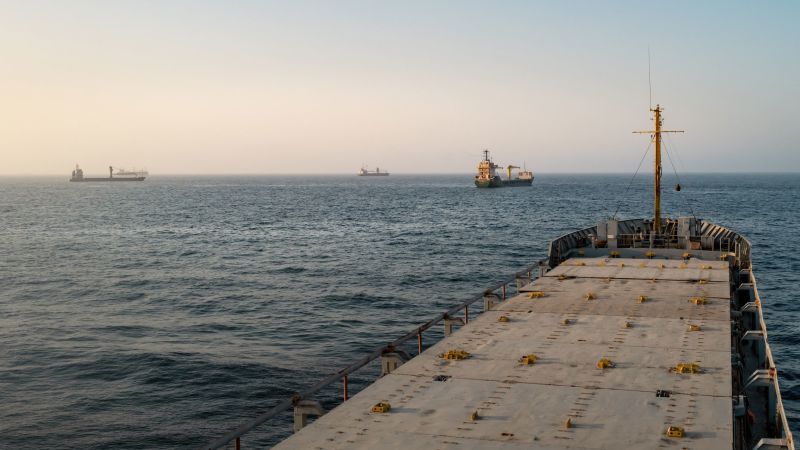
US Airstrikes Target Iranian Facilities After Drone Attack on Cargo Ship
US strikes Iranian targets in response – On Friday, the United States military launched airstrikes against Iranian military infrastructure near the strategic Strait of Hormuz, following Tehran’s earlier assault on a commercial vessel. The strikes, confirmed by US Central Command (CENTCOM), targeted missile and drone storage sites as well as coastal radar stations, according to a statement released by the command. The attack on the cargo ship, which occurred the previous day, was described as a “clear violation” of the ceasefire agreement, with CENTCOM emphasizing the need for Iran to account for its actions.
Trump’s Reaction: A Mixed Message
President Donald Trump responded swiftly to the incident, labeling Iran’s drone strike a “foolish violation” of the peace accord. During a press briefing in the Oval Office, he hinted at the possibility of further escalation but stopped short of confirming whether the US would retaliate. “You’ll find out,” he said when pressed about potential consequences, leaving the situation in suspense. Earlier that day, Trump had issued a social media post detailing the event, stating, “The Islamic Republic of Iran shot at least four one-way attack drones at ships passing through the Strait of Hormuz. One of the drones struck the upper deck of a large, costly cargo ship.”
While acknowledging the damage, Trump noted that the ship was still operational. “The vessel was able to continue its journey, though it sustained some harm,” he wrote. The president also credited US forces for neutralizing three additional drones, calling the attack a “foolish violation” of the agreement. However, he added a layer of complexity by suggesting that Iran’s actions highlighted its continued military capabilities, despite the prolonged conflict. “They still have some ability to strike, even if it’s not overwhelming,” he remarked to an audience of conservative Christians in Washington, DC. “Nobody saw it coming,” he said, describing the Iranian strike as an unexpected move that disrupted maritime operations.
Details of the Attack and Its Impact
The incident unfolded on Thursday when an Iranian projectile struck the starboard side of a cargo ship, damaging its bridge. The United Kingdom Maritime Trade Operations, which tracks maritime activity in the region, confirmed the attack. No casualties or environmental damage were reported, though the ship’s journey was temporarily disrupted. The attack occurred just hours after Iran’s Islamic Revolutionary Guard Corps issued a warning about the safety of vessels in the strait, asserting that only ships traveling along routes approved by Tehran would be granted passage. This declaration challenged the Trump administration’s claim that the waterway had been reopened for unrestricted traffic.
According to the US-Iran agreement signed earlier this year, the strait should see the same level of commercial activity as before the war. However, the terms of the deal remain vague, particularly regarding Iran’s authority to impose tolls on passing ships. While the US has maintained that the waterway is open and free, Iran has insisted it retains the right to levy fees for vessels using its territory. The latest strike has reignited debates over these differing interpretations of the agreement.
The Ceasefire and Its Challenges
Despite the recent incident, the ceasefire between the US and Iran remains in place. Trump, who has been hesitant to fully commit to resuming hostilities, acknowledged last week that the war might have led to “economic catastrophe” if it had continued. However, he has not provided clear signals about his intentions moving forward. During a press event, when asked if the agreement still held, he replied, “I don’t like the fact that they took a shot yesterday.” The president added that the ship, though expensive, was “fine” after the attack, though it had “taken a little beating.”
Iran’s strategic position in the region has long been tied to control of the Strait of Hormuz, a vital chokepoint for global oil exports. The attack on the cargo ship underscores the ongoing challenges in securing safe passage for commercial vessels. The US had previously lifted its blockade of Iranian ports under the terms of the agreement, but the incident has raised concerns about the effectiveness of the deal. Analysts suggest that Iran may be testing the boundaries of the ceasefire, using the strait as a bargaining tool in nuclear negotiations.
Historical Context and Future Implications
This was the first reported attack on a commercial ship since the US and Iran signed a memorandum of understanding to open the strait and begin discussions on Iran’s nuclear program. The agreement, while promising, has left many details unresolved. For instance, the terms of traffic volume and Iran’s right to charge fees for passage remain points of contention. The incident has added urgency to these talks, with both sides vying to assert their positions.
Trump’s administration has faced criticism for its lack of clarity on how the US will enforce the ceasefire. While the military action on Friday was a direct response, the president’s comments suggested a more measured approach. “We still have a fight,” he told the audience, “but it’s not a full-scale war.” His emphasis on Iran’s limited capabilities highlights the administration’s strategy of using targeted strikes to deter further aggression without pulling back from diplomatic efforts.
Analysts warn that the attack could have broader implications for international trade and regional stability. The Strait of Hormuz is critical for approximately 20% of the world’s oil supply, and disruptions there can ripple through global markets. The incident has also prompted calls for increased vigilance from allies, as the US military and maritime agencies work to monitor activity in the area. The cargo ship’s survival, though damaged, serves as a reminder of the resilience of commercial vessels and the potential for escalation without direct confrontation.
As the situation evolves, the focus remains on whether the ceasefire will hold. Trump’s commitment to the agreement, despite the attack, reflects a delicate balance between deterrence and diplomacy. The president’s evasive answers during the Oval Office event suggest he is keeping his options open, possibly to negotiate terms that align with both US and Iranian interests. Meanwhile, the military’s swift response has sent a clear message: the US is prepared to act if necessary to protect its interests in the region.
The broader context of the US-Iran conflict shows that while the ceasefire has reduced immediate hostilities, tensions persist. The attack on the cargo ship has reignited debates over Iran’s military capabilities and its willingness to abide by the terms of the agreement. With the strait remaining a focal point for both sides, the coming weeks will likely determine the future of the ceasefire and the trajectory of negotiations over Iran’s nuclear program.
