Trump asks Supreme Court to let him build ballroom, citing national security needs and architectural values

Trump Asks Supreme Court to Approve White House Ballroom
Activelifezero.com – Trump asks the Supreme Court to let him proceed with a controversial White House ballroom project despite lower court objections. The emergency petition, filed Friday, argues that national security priorities and architectural significance warrant presidential authority to bypass congressional approval. This legal challenge represents a significant test of executive power over historic federal property.
The $400 million expansion would nearly double the White House footprint, creating an 89,000-square-foot structure compared to the existing 55,000 square feet. Lead architect Shalom Baranes designed the facility with extensive marble work and reinforced engineering to support both the above-ground ballroom and an underground bunker beneath it.
Presidential Authority Under Review
The DC Circuit Court of Appeals ruled 2-1 on August 7 that Congress retains ultimate authority over White House modifications. The appeals court ordered construction to pause on above-ground portions while permitting the underground bunker to continue. Trump’s legal team received a 14-day window to seek Supreme Court intervention.
“The President of the United States of America is not a tenant, but rather the sole, elected head of the Executive Branch, and Congress has authorized him to renovate, secure, and protect the White House and its grounds, as other Presidents have been allowed to do, without exception.”
US Solicitor General John Sauer presented this argument in the Supreme Court filing, characterizing the lower courts’ injunction as exceeding constitutional authority. Sauer emphasized that the president’s dual role as commander-in-chief and executive head grants inherent powers to maintain the presidential residence.
Security Concerns Drive Petition
The administration’s petition highlights Trump’s safety as a compelling justification for allowing construction to continue. Sauer noted that the president has faced multiple assassination attempts in recent years, making the ballroom’s security features essential rather than merely aesthetic additions.
“The entire ballroom structure is designed to shield the military installation beneath it. Halting the Project will stall this vital construction, making this President — the subject of recurrent assassination attempts — much less safe, and risking future Presidents’ safety.”
The underground bunker, which both lower courts permitted to continue, serves as a critical security component. The administration argues that stopping above-ground construction would create delays that compromise the integrated security system the ballroom is designed to provide.
Updated Design and Preservation Debate
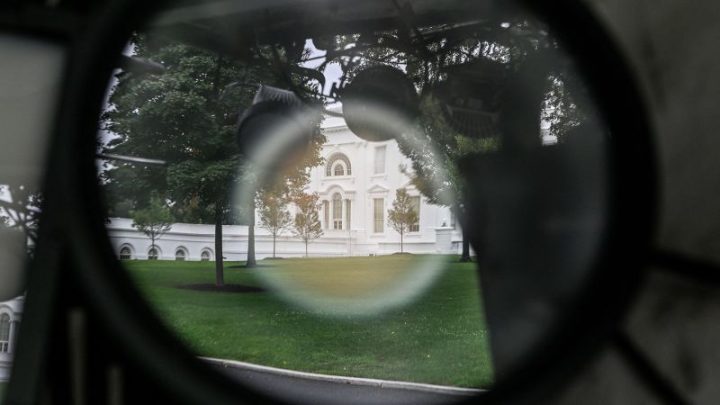
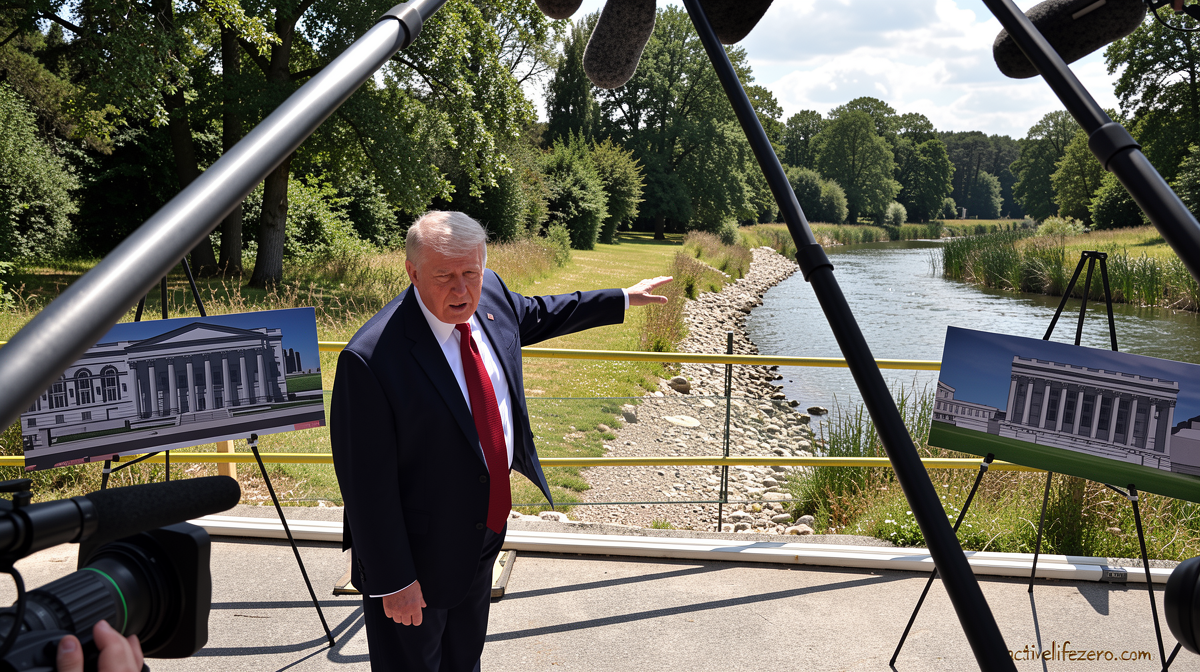
The Supreme Court filing includes updated renderings showcasing modifications since the initial design was unveiled. At least two large presidential seals in gold have been added to the exterior, demonstrating architectural coherence while incorporating traditional presidential symbolism. White House images from early August show substantial construction progress with concrete columns, metal rebar, and a tower crane visible.
The legal challenge was originally filed last year by the National Trust for Historic Preservation, arguing that Congress never surrendered its authority to approve major White House changes. The organization described the building as belonging to the American people rather than any single administration.
“The National Trust has shown, compellingly, that Congress has not ceded unfettered authority to the Executive Branch to dramatically redesign, reshape, and reconstruct the White House — the People’s House — to fit a particular President’s desires.”
Frequently Asked Questions
What is the current status of the White House ballroom construction? Construction has been partially halted on above-ground portions while the underground bunker continues. The Supreme Court is reviewing an emergency petition to allow full construction to proceed.
How much will the ballroom expansion cost? The project is valued at $400 million and would increase the White House footprint from 55,000 to approximately 89,000 square feet.
Who filed the original legal challenge? The National Trust for Historic Preservation initiated the lawsuit last year, arguing that Congress retains authority over major White House modifications.
What security features does the ballroom include? The design incorporates a reinforced underground bunker, extensive marble work, and sophisticated engineering to support both the ballroom and security installations beneath it.
When will the Supreme Court likely issue a decision? The Court typically reviews emergency petitions within weeks of filing. A ruling is expected before the DC Circuit’s 14-day pause expires.