Judge says Trump DOJ subpoenas of Tim Walz and other Democrats are unconstitutional

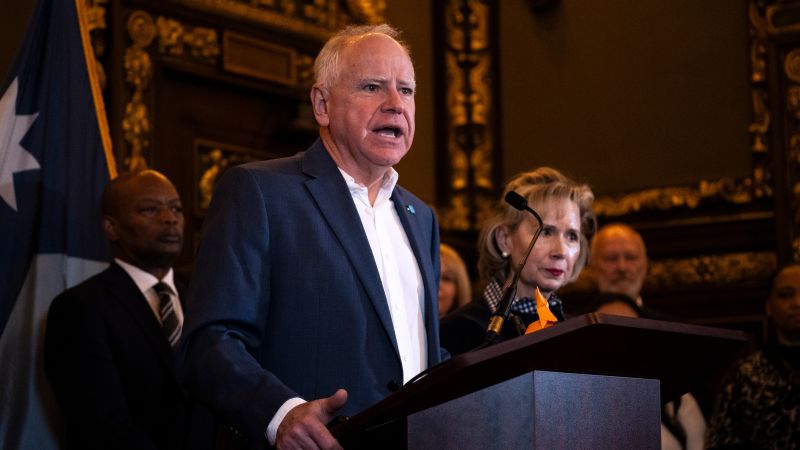
Judge Says Trump DOJ Subpoenas of Tim Walz and Other Democrats Are Unconstitutional
Judge says Trump DOJ subpoenas of Tim – A federal judge has ruled that the Justice Department’s attempt to compel Minnesota Governor Tim Walz and other Democratic officials to provide records is unconstitutional, marking another significant setback for the Trump administration’s legal strategies. The decision, issued on Monday, blocked the Department of Justice from using subpoenas to investigate resistance to the federal immigration crackdown. Judge Patrick Schiltz, an appointee of former President George W. Bush, argued the move was a retaliatory effort aimed at “harassing political opponents” and undermining state autonomy.
Subpoenas Target Democratic Officials
The subpoenas sought records and information from Walz, Attorney General Keith Ellison, Minneapolis Mayor Jacob Frey, St. Paul Mayor Kaohly Her, and officials in Ramsey and Hennepin counties. These documents were meant to explore whether Democratic officials obstructed immigration enforcement by publicly opposing the Trump administration’s deployment of thousands of agents to detain migrants accused of living in the US illegally. Schiltz called the action “a coordinated attempt to pressure state officials into complying with federal mandates, while simultaneously targeting them for their dissent.”
“The Department is not conducting a criminal investigation, but is instead using the grand jury process for other (unlawful) purposes,” Schiltz wrote in his 30-page decision. The judge emphasized that the subpoenas lacked a clear legal justification, stating they were issued primarily to “coerce” officials into assisting with immigration enforcement and to retaliate against those who resisted. This ruling aligns with a pattern of judicial pushback against the Justice Department’s aggressive tactics in recent months.
Context of the Immigration Surge
Over the winter, the Trump administration launched a monthslong immigration surge in the Twin Cities, resulting in widespread protests and the fatal shootings of two US citizens. According to the Department of Homeland Security, more than 4,000 undocumented immigrants were arrested in Minnesota during this period. State and local leaders, including Walz and Frey, publicly criticized the operation, arguing it was excessive and targeted vulnerable communities. In response, Trump accused these officials of inciting violence and undermining national security.
The case centers on the Department of Justice’s claim that Democratic officials obstructed federal immigration efforts. The subpoenas were issued to gather evidence of this alleged obstruction, with the DOJ asserting that the resistance of state leaders hindered the enforcement of immigration laws. However, Schiltz found that the administration’s actions were motivated by political intent, not a genuine legal inquiry. “The subpoenas were not issued to investigate a legitimate violation of law, but to intimidate and silence officials who challenged the administration’s policies,” the judge stated.
Constitutional Arguments and Evidence
Schiltz highlighted “overwhelming” evidence that the subpoenas were used as a tool to pressure Minnesota officials. He noted that senior Justice Department officials had repeatedly threatened to punish states with “sanctuary” policies, suggesting the effort to obtain records was part of a broader campaign to hold states accountable for their stance on immigration. The judge also pointed out that the Constitution explicitly grants states the right to determine how they allocate resources to federal laws, making the subpoenas an overreach of executive authority.
“The Department has struggled—without success—to identify a single plausible investigatory justification for these subpoenas,” Schiltz wrote. This criticism underscores the DOJ’s reliance on political pressure rather than legal necessity. The ruling further reinforces the idea that the Trump administration’s actions were not solely aimed at enforcing immigration laws, but at eliminating opposition through intimidation.
Reactions from Officials and the DOJ
Minnesota Governor Tim Walz celebrated the decision in a statement posted on X, calling the investigation “politically motivated, unconstitutional, and meritless.” He stated, “This case was just one example of that, but we are seeing daily reminders of this administration’s lawlessness—both in Minnesota and across the country. We all must continue to seek justice and uphold the rule of law.”
“The U.S. Justice Department is pursuing criminal investigations into the President’s political opponents,” Walz added. “This case was just one example of that, but we are seeing daily reminders of this administration’s lawlessness—both in Minnesota and across the country. We all must continue to seek justice and uphold the rule of law.”
Minneapolis Mayor Jacob Frey also praised the ruling, asserting that it protected the rights of officials to voice concerns about their constituents. “Subpoenaing political opponents because they spoke on behalf of their constituents violates the core tenets of our democracy and human decency,” Frey said. His comments reflect a broader sentiment among Democrats that the DOJ’s actions were an attempt to suppress dissent and control narratives.
In response, the Department of Justice issued a statement reaffirming its commitment to investigating “obstruction” of federal law enforcement. “The Department takes the unlawful obstruction of federal law enforcement operations extremely seriously and will continue to act in full compliance with the law to investigate these matters,” the DOJ said. Despite the ruling, the agency remains determined to pursue cases it deems as obstructive, even as legal challenges mount.
Broader Implications for Federal Power
The decision has significant implications for the balance of power between federal and state authorities. By invalidating the subpoenas, Schiltz reinforced the principle that states have the right to set their own priorities in immigration policy. “Minnesota is free to decide how it allocates its resources to federal immigration laws,” the judge explained, emphasizing that the state’s choice to resist the Trump administration’s policies is constitutionally protected.
This case is part of a larger trend where federal judges have questioned the Justice Department’s use of subpoena power to target political figures. Critics argue that the administration’s tactics have created a climate of fear, where officials are hesitant to speak out for fear of legal repercussions. The ruling may serve as a precedent for future cases involving similar allegations of political bias in legal proceedings.
While the DOJ maintains its stance, the judge’s decision highlights the importance of judicial oversight in ensuring that law enforcement actions remain within constitutional bounds. As the administration continues to push for broader investigations, the outcome of this case may influence how future legal actions are perceived and challenged. The fight over the balance of power between the federal government and state officials is far from over, with this ruling adding another layer to the ongoing debate about executive authority and democratic accountability.