Judge pauses US Postal Service plan to implement Trump’s new mail voting restrictions

Judge Pauses USPS Mail-Voting Restrictions
Activelifezero.com – A federal judge in Boston paused the US Postal Service’s finalized rule that would have reshaped how states handle mail-in ballots before the November 3, 2026 midterm elections. The two-week temporary restraining order, issued late Thursday night by Judge Indira Talwani — an Obama-era appointee — came at the behest of a coalition of Democratic-led states and voter-rights groups that filed suit within days of the regulation’s release.
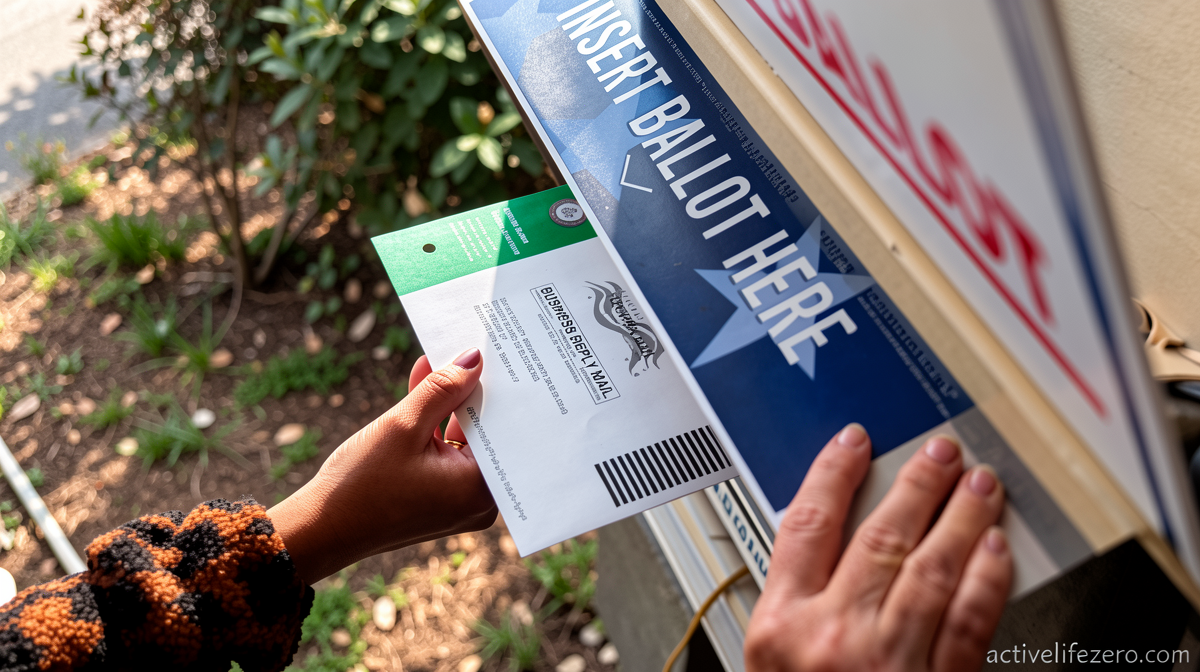
The rule, born from a March executive order signed by President Trump, would have stripped states of the ability to design and distribute their own ballot envelopes. Under the proposed framework, every state election office would have been required to submit both outgoing and return envelope designs to the Postal Service for pre-approval before a single ballot could be mailed. On top of that, the agency would have declined to carry any ballot not sealed in an envelope carrying a voter-specific barcode, a mechanism intended to enable automated tracking of election mail from drop-off to counting.
What the Court Found
Talwani’s written order took direct aim at the agency’s timing. She wrote that the Postal Service, through its Final Rule, was effectively withholding delivery of mail ballots unless state and local election officials turned in envelope designs for advance sign-off, doing so “without regard to impending deadlines for the November 3, 2026 election.”
“Plaintiff States have neither time nor funds to design new mail ballots, seek approval of the new designs, order production of mail ballots, update their own election management systems, train election officials to use the USPS portal, and upload citizen data to the portal, all before the midterms,” the judge wrote.
On the merits, Talwani concluded the challengers were “likely to win” their central constitutional arguments: that the rule exceeds the Postal Service’s statutory authority and intrudes on states’ long-standing role in administering elections.
Logistical and Political Reactions
Election officials in the plaintiff states told the court that their printing vendors had already confirmed redesigning and reprinting millions of envelopes on the compressed timeline was physically unachievable before voters needed ballots in hand. They also questioned whether the proposed data-upload system — which would have required states to transmit registered mail-voter lists to a USPS portal — was technically workable inside the available window.
The judge noted that the Trump administration had offered “no reply to Plaintiff States’ assertion that compliance for the 2026 midterm elections will be impossible for many of them,” treating that silence as reinforcing the urgency of the states’ position.
In its filings, the Department of Justice called the regulatory shift “modest” and insisted the Postal Service held the statutory authority to impose the new requirements. The administration framed the barcode and tracking provisions as tools to aid law-enforcement investigations into potential election irregularities, arguing the measures would bolster public confidence in mailed ballots. DOJ did not immediately respond to requests for comment on the ruling, and the White House had been contacted for reaction as of the latest update.
Supreme Court Context and What Comes Next
The Thursday order lands amid a fast-moving legal dispute. Just days earlier, on Monday, the Supreme Court vacated a prior injunction Talwani had issued to block agencies from implementing portions of the March executive order across the roughly two-dozen states that had sued. Writing over the dissent of the court’s three liberal justices, the high court held the earlier order premature because, at the time suit was filed, the agencies had not yet finalized their implementing plan and there was no concrete action to enjoin.
That decision did not reach the final USPS rule, which dropped Friday night after the justices had already closed the record on their appeal. The present litigation therefore stems from revised complaints filed specifically in response to the finalized regulation, giving Talwani a fresh procedural footing to evaluate the rule on its merits. She has scheduled a hearing for next Thursday to decide whether to convert the temporary restraining order into a longer-term preliminary injunction.
Frequently Asked Questions
How long does the pause last? The order is a two-week temporary restraining order. Judge Talwani will hold a hearing next Thursday to determine whether to extend the relief as a preliminary injunction.
Which elections are affected? The rule targeted the November 3, 2026 midterm elections. Because the pause freezes the regulation, states retain their existing mail-ballot procedures for that cycle unless and until a court lifts the order.
Can states still mail ballots under current rules? Yes. The restraining order preserves the status quo, meaning states continue using their own envelope designs and distribution processes without the proposed USPS pre-approval or barcode requirements.
What happens if the administration appeals? The government may seek review in the First Circuit or petition the Supreme Court for expedited review, though the two-week window limits the practical runway before ballots must be in voters’ hands.