El-Sayed’s loyalty to America, Rogers’ loyalty to Trump and other takeaways from Michigan Senate debate

Daftar Isi
El Sayed’s Loyalty to America Shapes Senate Debate
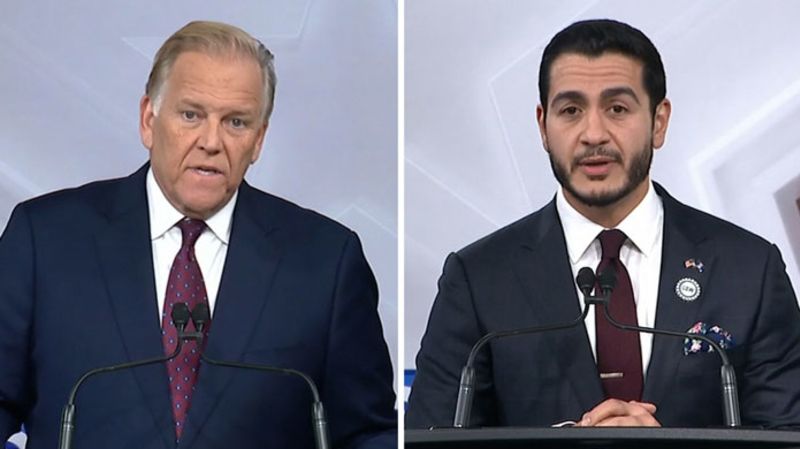
Activelifezero.com – El Sayed’s loyalty to America became the most personal issue in Michigan’s closely watched Senate debate, as Democratic nominee Abdul El-Sayed and Republican Mike Rogers clashed over national security, political ideology, honesty and the economy ahead of Election Day.
The race could have implications for control of the Senate. El-Sayed, a former executive director of the Detroit Health Department, argued that Rogers is closely aligned with President Donald Trump and Republican economic policies. Rogers, a former congressman, sought to cast El-Sayed as too far outside Michigan’s political mainstream.
Questions about identity and national loyalty
The sharpest exchange centered on El-Sayed, a Michigan-born Muslim who could become the first Muslim elected to the Senate. Rogers questioned his opponent’s loyalty after Trump had falsely described El-Sayed as a “jihadist.”
Rogers said El-Sayed had been influenced by the Muslim Brotherhood and alleged that some of his donors supported Iran-backed militant groups, including Hamas and Hezbollah. El-Sayed has denied any connection to the Muslim Brotherhood.
“If you are going to go to the United States Senate, we need to know: Are you for America or are you for these terrorist groups overseas?”
El-Sayed called the accusation disgraceful and said challenging his commitment to the Constitution crossed a line. His response emphasized religious freedom and the constitutional rights shared by Americans of every faith.
“To bring into question my commitment to the Constitution is really beneath you. I am proud of America. I’m proud to be an American. I’m proud of our Constitution that guarantees all of us the right to pray as we choose to pray.”
The debate over El Sayed’s loyalty to America put questions of religious identity and belonging at the center of the campaign. Rogers presented the issue as a national-security concern, while El-Sayed argued that his record and his constitutional values answered the charge.
Rogers targets El-Sayed’s political ideology
Rogers also argued that El-Sayed is too progressive for Michigan, linking him to the Democratic Socialists of America and criticizing his views on government spending and taxes. El-Sayed identifies as a capitalist and is not a member of the DSA, though some members of the organization support his campaign.
Rogers appealed directly to supporters of Haley Stevens, El-Sayed’s unsuccessful Democratic primary rival, suggesting they could find a place on the Republican ticket if they viewed El-Sayed as too extreme.
“You’re a Haley Stevens voter, and you came out of this, and you said, ‘Man, I just can’t do it. He’s too extreme … well, guess what, you have a home with us.’”
That pitch underscored the challenge for both candidates. El-Sayed must keep progressive voters engaged while winning over moderates and undecided voters. Rogers must compete in a Democratic-led state while persuading voters who may be dissatisfied with Trump or reluctant to support his agenda.
Mutual accusations of misleading voters
Both candidates accused the other of distorting the truth. Rogers repeatedly alleged that El-Sayed had a pattern of deception, citing disagreements over border enforcement and policing. El-Sayed countered that Rogers was repeating familiar Trump-style talking points instead of addressing voters’ concerns.
The candidates’ arguments reflected broader divisions in the Michigan Senate race: whether experience or change is more important, how voters view Trump’s influence, and whether El Sayed’s loyalty to America should even be a subject of political attack.
Michigan Senate Debate FAQ
Why did the debate matter to Michigan voters?
The debate gave voters a direct look at the candidates’ competing views on national security, economic policy, ideology and trust. It also highlighted the challenge each campaign faces in building support across Michigan’s diverse electorate.
What was El-Sayed’s response to the loyalty accusation?
El-Sayed rejected the allegation, said he was proud to be an American, and pointed to the Constitution’s protections for religious freedom. He described the attack as an unacceptable challenge to his commitment to the country.
What is Rogers’ central argument against El-Sayed?
Rogers argues that El-Sayed is too progressive for Michigan and has raised questions about his positions on national security, border enforcement and policing. El-Sayed disputes those characterizations.
Related Reading
Frequently Asked Questions
What is El Sayed s loyalty to America?
El Sayed s loyalty to America is the main topic of this guide. The article explains the context, practical details, and next steps readers should understand.
Why does El Sayed s loyalty to America matter?
El Sayed s loyalty to America matters because readers are looking for a useful answer, not just a short summary. Good content should match search intent and help them decide what to do next.