With a new breed of candidate, Democrats are challenging in states they usually lose

Daftar Isi
Democrats See New Openings in Senate Map Once Tilted Toward Republicans
Activelifezero.com – Republicans head into the fall campaign with President Donald Trump’s weakened standing creating a difficult national backdrop, but the party’s challenges extend beyond the White House. Democrats have recruited or elevated candidates who appear capable of competing in Senate contests that, in previous cycles, might have been quickly placed in the Republican column.
The shift has encouraged Democrats to believe they can win the four additional seats needed for Senate control. It also comes as the party is increasingly well positioned to capture the House next month. Yet the Senate opportunities are not simply a referendum on Trump. Several Democratic contenders are attempting to rebuild credibility with voters who had drifted away from the party on cultural, economic and political grounds.
Different candidates, different state strategies
North Carolina illustrates the importance of a candidate’s local profile. Former two-term Gov. Roy Cooper has maintained appeal among independent voters and has shown enough competitiveness in rural areas to threaten Republican advantages there. His familiarity across the state gives Democrats a serious chance in a race where Republican Michael Whatley, despite his standing within party circles as a former Republican National Committee chair, has struggled to equal Cooper’s name recognition.
In Iowa, the contest has become unexpectedly competitive. State legislator Josh Turek describes himself as a “common sense prairie populist,” presenting an approach aimed at voters who may not normally consider a Democratic candidate. The stakes are notable in a state Trump carried by 13 points only two years earlier.
Iowa Republican Rep. Ashley Hinson would ordinarily appear well placed to win the seat that Sen. Joni Ernst is preparing to leave. A former television anchor, Hinson is a skilled communicator with a profile that connects to issues central to the state. But Iowa’s agricultural economy is facing pressure from Trump’s tariffs and elevated fuel costs, factors that could reshape the political environment around the race.
Ohio offers another test of economic messaging. Trump won the state comfortably in 2024, yet former Sen. Sherrod Brown’s long-running blue-collar populist message may have fresh resonance as the president becomes associated with billionaires. Brown has spent years emphasizing workers and industrial communities, and the campaign will show whether that language can reconnect Democrats with voters who have increasingly supported Republicans.
Testing the limits of the Democratic coalition
In Texas, James Talarico is pursuing a combination of economic populism and Christian faith. Democrats have repeatedly hoped that a statewide breakthrough in Texas is close, though no Democrat has won one of those races in three decades. Talarico’s campaign represents an effort to make that goal more tangible by speaking to economic concerns while engaging religious voters in a state where Democrats have often struggled to expand their coalition.
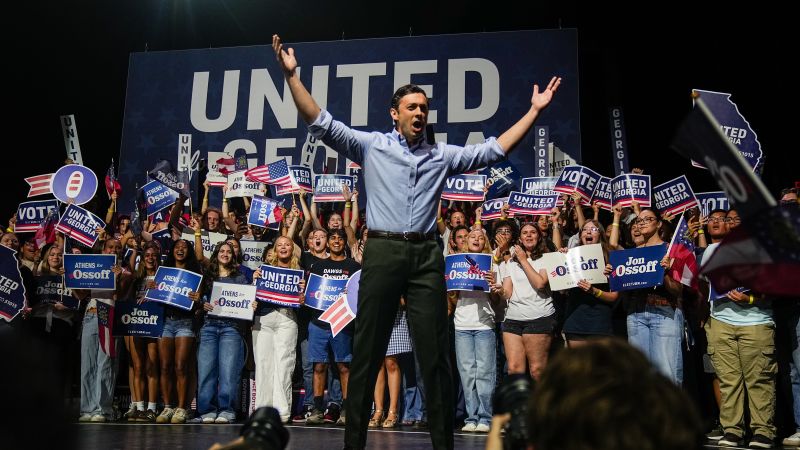
Georgia Democratic Sen. Jon Ossoff has developed a national profile through sharp criticism of Trump and a political identity that reflects generational change. His success in a closely divided state has fueled speculation about whether he could become a significant figure in the party’s 2028 presidential conversation. For now, his reelection effort remains crucial to Democratic hopes of building a Senate majority.
Democrats have also benefited in some races from Republican nominees who carry significant vulnerabilities. Georgia Rep. Mike Collins, a prominent MAGA supporter, and Texas Attorney General Ken Paxton, whose campaign has been shadowed by scandal, received Trump’s backing despite concerns from some establishment Republican leaders. Such matchups can make a difficult year still harder for the GOP, particularly if voters are already dissatisfied with the national political climate.
A party brand still in need of repair
Even with a more favorable map, Democrats cannot assume that anti-Trump sentiment will automatically produce victories. The party continues to face broad doubts about its own direction. A CNN/SSRS survey conducted in late July found Democrats leading by 8 points in voter preference for the fall, but it also showed congressional Democrats and Republicans were similarly unpopular. Expectations for what Democratic majorities could accomplish were low.
That contradiction explains why candidate quality matters so much this year. Strong individual campaigns may give voters a reason to support a Democrat even when they remain skeptical of the party nationally. The emerging contenders are not using one uniform formula: some emphasize rural populism, others labor-focused economics, generational change, faith, executive experience or direct confrontation with Trump.
The broad challenge is to address the failures of policy, language and positioning that damaged Democratic trust with portions of its traditional base. Winning competitive races in states such as Iowa, Ohio, Texas and North Carolina would suggest that the party has found messages that can travel beyond its strongest regions and constituencies.
Michigan and Maine underscore the risks
Michigan may feature the most consequential gamble for Democrats. Abdul El-Sayed, a 41-year-old epidemiologist, is the party’s highest-risk candidate in a pivotal contest. A victory over former Republican Rep. Mike Rogers would establish El-Sayed as a leading figure in a new political generation and within the progressive movement.
A loss, however, would produce a very different interpretation. Progressive Democratic voters rejected the more moderate Rep. Haley Stevens, and if Rogers wins, critics could argue that the party’s left wing surrendered a potentially winnable seat—and perhaps Senate control in the process.
Maine Republican Sen. Susan Collins faces what may be her most difficult reelection campaign, with the national mood turning against Republicans. Collins has often survived political conditions that appeared threatening, aided by a reputation for independence. But the intensity of the Trump era has strained that image and repeatedly placed her between her Republican base and the more moderate voters who have helped sustain her career.
These races reinforce a basic truth of midterm politics: strategy and talent matter, but timing and circumstance can prove equally decisive. Candidates able to appear disciplined, relatable and credible across ideological lines are rare. In 2026, Democrats are betting that a stronger and more varied class of contenders can turn a favorable national opening into lasting gains.
Related Reading
Frequently Asked Questions
What is With a new breed of candidate?
With a new breed of candidate is the main topic of this guide. The article explains the context, practical details, and next steps readers should understand.
Why does With a new breed of candidate matter?
With a new breed of candidate matters because readers are looking for a useful answer, not just a short summary. Good content should match search intent and help them decide what to do next.