
Can Marco Rubio convince Trump that a free Cuba is America First?
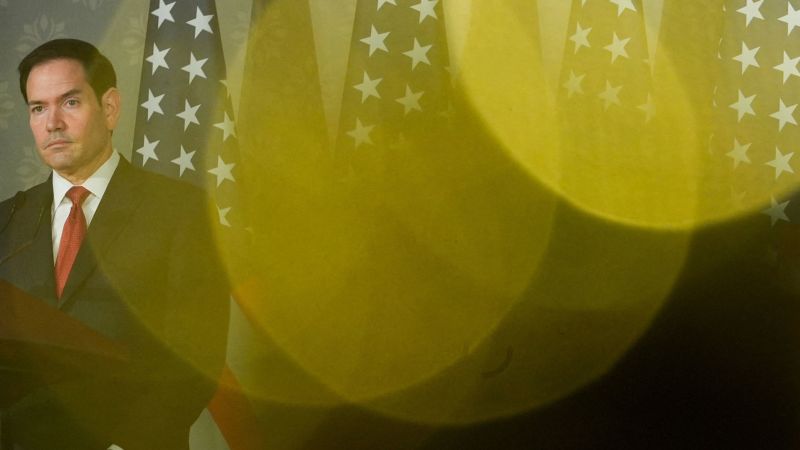
Can Marco Rubio convince Trump that a free Cuba is America First?
America’s Cuba Policy in a Crucial Moment
Can Marco Rubio convince Trump that – In recent weeks, the United States has intensified its efforts to reshape Cuba’s political landscape, with Secretary of State Marco Rubio at the helm of a strategy that blends pressure with diplomatic overtures. The campaign against the island’s leadership, which has included targeted sanctions and a severe fuel embargo, marks one of the most aggressive phases in decades of U.S.-Cuba relations. For months, Rubio has worked alongside President Donald Trump to push Cuban leaders toward negotiations, while simultaneously advocating for their removal from power. The current standoff reflects a complex interplay between Rubio’s long-standing vision for a democratic Cuba and Trump’s pragmatic approach to international challenges.
As the U.S. government intensifies its economic and political pressure, the situation in Havana grows more precarious. Rolling blackouts have become a regular feature of daily life, exacerbated by the fuel blockade that aims to cripple the Cuban economy. This strategy is part of a broader effort to force the island’s regime into concessions, with the U.S. Justice Department recently indicting former President Raúl Castro on charges tied to his leadership. Meanwhile, the USS Nimitz aircraft carrier strike group looms nearby, a symbol of American military readiness should diplomacy fail.
Rubio’s current role as secretary of state underscores his growing influence in shaping Trump’s foreign policy. The 55-year-old Cuban-American politician, once a GOP front-runner, now holds multiple titles within the administration, including acting national security adviser. This dual appointment places him at the center of Trump’s global strategy, allowing him to steer efforts in Iran, Venezuela, and beyond. Yet, for all his political power, the Cuba issue remains deeply personal. His family’s roots in the island nation, and his lifelong advocacy for democratic reforms, fuel a sense of urgency that transcends policy goals.
From Campaign Promises to Policy Actions
Rubio’s commitment to Cuba’s transformation dates back to his early days in politics. During the 2016 presidential campaign, he articulated a clear vision for the island, asserting that any deal with Havana must include democratic elections, independent media, and unshackled expression for its 11 million residents. This stance contrasted sharply with Trump’s vague assurances, which centered on “a good deal” with the Castro regime. At the time, Rubio dismissed Trump’s response with scorn, prompting the audience to erupt in applause. Now, as Trump’s senior advisor, Rubio finds himself in a delicate position: advocating for a free Cuba while navigating the president’s shifting priorities.
Trump, who once mocked Rubio as “Liddle Marco,” has shown a pragmatic side in recent months. When pressed about the specifics of a potential agreement, he admitted uncertainty about toppling the Cuban government, stating, “Well, I don’t know about changing the regime.” This sentiment echoes a broader White House frustration with the difficulty of forcing significant concessions from Havana. Despite the U.S. imposing sanctions on Cuban President Miguel Díaz-Canal, his wife, and stepson, along with other regime allies, the Cuban government has remained defiant. The challenge lies in balancing idealism with realpolitik, as Rubio’s ambitions for the island clash with Trump’s broader strategic objectives.
Rubio’s approach to Cuba is emblematic of his broader role in Trump’s foreign policy. As a career politician with presidential aspirations, he has become a central figure in the administration’s efforts to reshape international alliances. His involvement in Iran and Venezuela has been marked by bold initiatives, yet Cuba remains his most personal and politically fraught assignment. The island’s leaders, including the Castro family, are now bearing the brunt of this pressure, with their families targeted in the latest sanctions. For Rubio, the success of this campaign could define his legacy — or reveal the limits of his influence.
America First and the Cuban Dream
Rubio’s Cuba policy is framed as an extension of America First principles, a doctrine Trump has championed throughout his presidency. The senator’s rhetoric emphasizes a future where the island enjoys freedom, prosperity, and normalcy, aligning with the aspirations of the Cuban diaspora in South Florida. Over 1 million Cuban Americans reside in the region, many of whom view the current administration’s actions as a step toward restoring their homeland’s independence. Rubio’s recent testimony before the House Foreign Affairs Committee echoed this sentiment, stating, “The United States is open to a negotiated situation that puts Cuba on a path toward democracy, prosperity, freedom, normalcy.”
Yet, the path to this vision is fraught with obstacles. Trump’s recent statements suggest a willingness to prioritize other conflicts, such as the Iran war, over a decisive shift in Cuba’s governance. “We’re going to handle that as soon as we finish,” Trump remarked, “I like to do one thing at a time.” This perspective has left some within the White House questioning whether the administration’s Cuba strategy is a genuine push for reform or a temporary campaign tactic. For Rubio, the pressure to deliver results is immense, especially as he prepares for a potential run for the presidency in 2028.
Lawrence Gumbiner, who previously led the U.S. Embassy in Havana during Trump’s first term, highlighted the tension Rubio faces. “This is the golden ring for Marco Rubio,” Gumbiner said. “This is what he has dreamed about, both personally and professionally.” The senator must navigate the expectations of the Cuban exile community, which has long sought the removal of the Castro dynasty, while also appeasing Trump’s cautious approach. The challenge is to maintain a delicate balance between idealism and pragmatism, ensuring that the U.S. remains committed to its goals without appearing overly aggressive.
The ongoing pressure campaign on Cuba represents a pivotal test for Rubio’s leadership. With the White House grappling to force major concessions from Havana, the question remains: will the combination of economic sanctions, diplomatic pressure, and military readiness achieve the desired outcome, or will it ultimately result in what Trump calls “a good deal”? For Rubio, the answer could shape not only the future of U.S.-Cuba relations but also his own political trajectory. As the nation watches the unfolding situation, his ability to reconcile America’s global ambitions with the dream of a free Cuba will be scrutinized more closely than ever before.
Legacy and Leadership in the Crosshairs
Rubio’s Cuba campaign is a defining chapter in his career, intertwining his personal history with the broader narrative of U.S. foreign policy. Growing up in a Cuban-American household, he has often credited the exile community with shaping his views on freedom and governance. This connection has fueled his determination to dismantle the Castro regime, even as the administration’s approach remains uncertain. The current strategy, however, is not without its critics, with some arguing that it risks alienating allies or overextending U.S. resources.
As the administration’s chief diplomat, Rubio’s decisions carry significant weight. His dual role as secretary of state and acting national security adviser positions him to influence not only Cuba but also relations with Europe, China, and other key players. Yet, the Cuban issue stands out as the most emotionally charged. The nation’s history of struggle, from the revolution to the Cold War, has left a lasting imprint on Rubio’s worldview, making the fight for freedom in Havana a deeply symbolic endeavor. Whether this campaign will succeed or falter depends on his ability to harmonize the demands of the diaspora with the realities of American politics.
In the end, the U.S. approach to Cuba is a microcosm of the larger debates within the Trump administration. While Rubio’s idealism drives the vision of a democratic Cuba, Trump’s pragmatism tempers that ambition. The result is a policy that aims to achieve both — but the path forward remains unclear. As the nation awaits the outcome, the Cuban-American community watches with hope, knowing that Rubio’s success could reshape the island’s future as much as it redefines his own.
