
Why heat, travel and sleep could challenge teams as much as the opposition at the World Cup
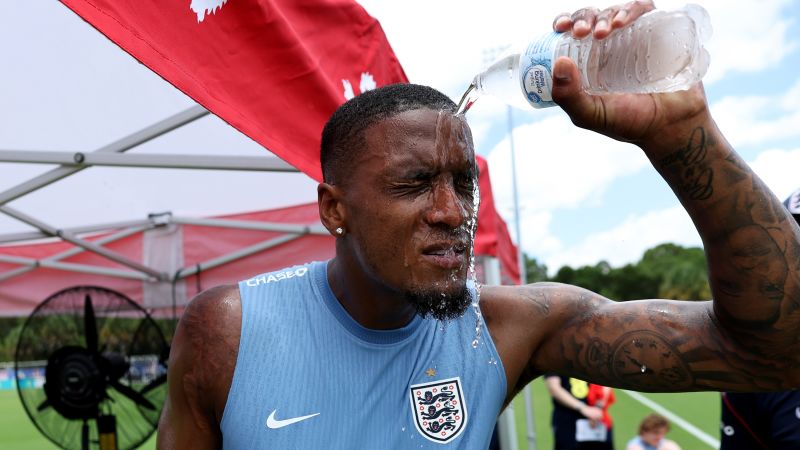
Why Heat, Travel, and Sleep Challenge Teams at the World Cup
Why heat travel and sleep could – As the World Cup kicks off on June 11, the tournament’s unique conditions—heat, travel, and sleep—are set to impact players as significantly as the opposing teams. With 48 nations competing in 104 matches across the United States, Canada, and Mexico, these factors could tip the balance between underdogs and favorites. Even elite athletes like Kylian Mbappé, Lamine Yamal, Harry Kane, and Lionel Messi must contend with extreme weather, long-distance travel, and disrupted sleep patterns. These challenges, often overlooked, highlight how much the success of a team might hinge on managing the invisible pressures of the event.
The Heat Factor: A Critical Threat
High temperatures are a major concern for this year’s World Cup. Similar to the 2022 Qatar tournament, where players endured blistering conditions, the current event could see matches in venues exceeding 100°F (38°C) on multiple occasions. A 2025 report by Football for Future and Common Goal titled “Pitches in Peril” flagged 10 of 16 host cities as “very high risk” for extreme heat. The report emphasized that the body’s response to heat stress during intense play can lead to dehydration, fatigue, and even injuries. FIFA’s reliance on the Wet Bulb Globe Temperature (WBGT) as a metric for deciding match cancellations has been questioned by experts, who argue that a WBGT of just 89.4°F (31.9°C) can create conditions as harsh as 113°F (45°C) in low-humidity settings.
“FIFA’s current heat policy is insufficient. Players face a high-risk environment for competitive football even before the WBGT threshold is reached,” said a group of 20 specialists in a recent open letter. The experts proposed lowering the trigger point for action to WBGT levels above 78.8°F (26°C), suggesting this could reduce the likelihood of heat-related setbacks during critical moments of the tournament.
Travel and Time Zones: A Test of Adaptability
The logistical demands of this World Cup are unprecedented. With matches spread across 16 cities in three time zones, players must travel up to 2,800 miles between games, often after minimal rest. Dominic Rae, a senior physiotherapist at Al Nasr Football Club in the UAE, noted that jet lag and inconsistent sleep schedules can compromise a team’s performance. “Adjusting to different time zones requires careful planning,” he explained. “Without proper recovery, even the most talented players may struggle with focus and stamina.” The tournament’s 13 distinct kickoff times further complicate recovery, forcing athletes to adapt their routines to varying circadian rhythms.
Unlike past editions, which concentrated matches in a single region, this expansion means teams must manage their energy across vast distances. The absence of a full offseason since 2023 adds to the strain, as players battle fatigue from back-to-back matches. Coaches are now tasked with balancing training, rest, and mental health to keep athletes resilient amid these challenges.
Recovery and Adaptation: The Unseen Battle
Recovery has become a central theme in this year’s World Cup strategy. The interplay of heat, travel, and sleep disruption creates a “hidden battle” for teams, where physiological and psychological factors must be meticulously managed. Medical staff are emphasizing hydration, cooling techniques, and sleep optimization as key priorities. “Every game is a test of how well players adapt to these combined stressors,” said one expert. “Even a small reduction in sleep quality can have compounding effects on performance.”
Adaptation also involves adjusting to the tournament’s schedule. FIFA has tried to ease the burden by scheduling matches during cooler hours, but this may not be enough. Teams are now experimenting with recovery protocols, such as nap cycles and personalized rest plans, to counteract the physical and mental toll of travel. For example, some squads may prioritize sleep before key matches, while others focus on acclimating to high temperatures through pre-game conditioning. These efforts could determine the difference between a strong showing and a premature exit.
With the World Cup’s focus shifting to how players endure the tournament’s unique demands, the phrase “why heat, travel, and sleep” may soon be a central discussion in sports science circles. As teams face these invisible challenges, the ability to optimize recovery and adapt to environmental stressors could be as crucial as tactical brilliance on the pitch. The upcoming matches will serve as a test for how well the global soccer community prepares for the physical and mental strains of this year’s edition.
