
What experts say about the effectiveness of electric muscle stimulation workouts
What Experts Say About the Effectiveness of Electric Muscle Stimulation Workouts
What experts say about the effectiveness – As fitness trends evolve, so do the methods people use to achieve their goals. For Emily Ferrara, a 43-year-old woman, the search for results led her to an unconventional solution: an electrode suit. After struggling to see progress in traditional workout classes, she turned to electrical muscle stimulation (EMS) following a recommendation from her trainer. “I came across it online, read about the science, and shared it with my old coach,” Ferrara explained. “She said it sounded credible, so I did some research and found it fascinating—only 20 minutes a session.”
A Personal Transformation Through EMS
Ferrara’s journey began with concerns about her thyroid condition and post-menopausal osteoporosis. After discussing the method with a physician, she was cleared to try it. Over the past two years, she has attended three EMS classes weekly in an Atlanta studio, supplementing her routine with cardio sessions. The results, she says, have been noticeable. “My body fat levels were much higher before,” she recalled. “They could measure it precisely, and now I see a shift—less fat, more muscle.”
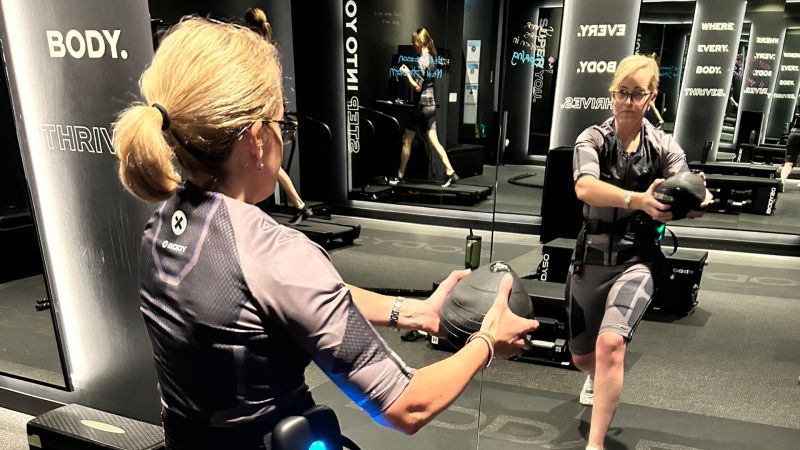
EMS sessions involve wearing a suit with electrodes that deliver controlled electrical impulses to muscles. Ferrara’s routine starts with a treadmill warm-up to generate body heat, which helps the equipment function optimally. The 20-minute workouts combine minimal movements like squats and light weightlifting with TRX suspension bands, creating a unique blend of resistance and stimulation. “It’s not just about intensity,” she added. “It’s about how the body responds to the signals, even when you’re doing less movement.”
The Rise of EMS in Fitness Culture
EMS has rapidly gained traction across social media and fitness studios, with its popularity seemingly growing faster than traditional methods. Playlist, the parent company of the ClassPass app, reported a significant surge in venues offering EMS sessions. The number of locations with EMS workouts increased by over 16% between 2023 and 2025, reflecting a broader shift in consumer interest. Celebrities and athletes, including soccer star Cristiano Ronaldo and actor Tom Holland, have also adopted EMS for specific purposes. Ronaldo uses it as a supplement to his daily training to target his core, while Holland incorporated the technology into his regimen for a “Spider-Man” film.
This rise in popularity has sparked both enthusiasm and skepticism. Proponents highlight its efficiency, claiming that the minimal movements—like short squats or light lifts—can yield noticeable muscle gains without requiring lengthy sessions. However, experts caution that the method’s effectiveness may depend on individual circumstances and goals. “EMS is not a one-size-fits-all solution,” said Dr. Greg Holtzman, a clinical practice division director at Washington University’s physical therapy department.
Scientific Insights and Practical Applications
EMS has long been a tool in physical therapy for rehabilitation and strength building. Before becoming mainstream in fitness, it was used in Soviet sports programs during the 1970s to enhance athlete performance. The technique works by sending electrical signals through the suit, prompting involuntary contractions in targeted muscle groups. Unlike conventional workouts, which recruit smaller fibers first, EMS activates larger fibers immediately, potentially leading to rapid strength gains.
According to Holtzman, this approach can be beneficial for specific populations. “The literature generally supports EMS for two groups: those who are very weak, like post-operative patients, and those who are very strong, aiming to isolate a particular muscle,” he explained. However, he questioned its value as a general exercise tool. “It’s not as efficient as varied routines like functional strength training or weightlifting,” he noted. “The contractions are powerful, but they don’t engage the same range of muscle fibers as traditional methods.”
Benefits and Risks of EMS Workouts
Despite its potential, EMS is not without drawbacks. Holtzman emphasized that while the technology itself rarely causes injury, prolonged use can lead to muscle soreness. “Increased power on the machine doesn’t necessarily harm the muscles,” he said. “But the way it recruits fibers can leave people fatigued, so form must be maintained even during stimulation.”
Risks also include skin irritation and discomfort, which are common but typically manageable. Holtzman advised individuals with active infections, malignant cancers, or pacemakers to consult a medical professional before starting. “EMS is safe for most people, but caution is needed,” he said. “It’s not something that’ll send you to the hospital, but it’s important to understand the limitations.”
For Ferrara, the benefits outweigh the risks. “It’s a game-changer for someone like me, who struggles with time and consistency,” she said. “I’ve seen measurable changes in my body composition, and it fits into my schedule without overwhelming me.” Yet she also acknowledged the importance of combining EMS with other exercises. “I still do cardio twice a week because it’s not a replacement for overall fitness. It’s a supplement, not a substitute.”
What the Data Reveals
A 2022 meta-analysis compared EMS with conventional training methods, offering insights into its efficacy. While the study found EMS could be effective for certain purposes, such as muscle activation or rehabilitation, it suggested that the technique might not replace traditional workouts entirely. “EMS is useful for short-term gains or specific targets,” said Holtzman. “But for comprehensive fitness, variety is key.”
Still, the appeal of EMS persists. Its ability to deliver intense stimulation in a fraction of the time required for traditional workouts makes it attractive to busy individuals. “People are drawn to the idea of a quick, high-intensity session,” Holtzman observed. “But the real question is whether that time is being used effectively.”
As the trend continues, more research is needed to determine its long-term impact. For now, Ferrara’s experience highlights the potential of EMS when used strategically. “It’s not magic,” she said. “But it’s a tool that works for me. I’ve found a balance between intensity and sustainability.”
While experts like Holtzman remain cautious, they agree that EMS has a place in modern fitness. Its ability to target isolated muscles and conserve energy during sessions could be valuable for specific goals. However, the method’s reliance on external stimuli raises questions about its role in holistic wellness. “EMS is a supplement, not a standalone solution,” Holtzman concluded. “It’s about integrating it into a broader approach to health.”
Conclusion: A Balanced View of EMS
As with any fitness innovation, the effectiveness of EMS depends on individual needs and how it’s applied. For those with limited time or specific muscle-targeting goals, it offers a unique approach. For others, it may complement a well-rounded routine. “EMS has its merits,” Holtzman said. “But it should be viewed as part of a larger strategy, not the whole story.”
Whether it’s a temporary fix or a long-term investment, the growing interest in EMS reflects a shift toward efficiency and technology in health and wellness. As Ferrara’s story shows, it can work for some—but understanding its limitations is crucial to making informed choices. “I’m not saying it’s better than everything else,” she said. “But it’s helped me stay consistent and see results I wouldn’t have otherwise.”
