
A 3,200-pound space observatory may soon fall from orbit. A risky endeavor just launched to save it
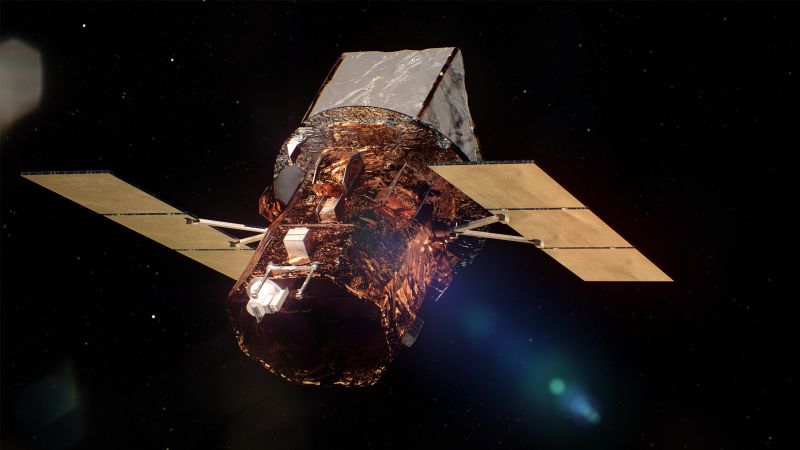
NASA Launches Rescue Mission for 3,200-Pound Space Observatory
A 3 200 pound space observatory – NASA has initiated a high-stakes mission to salvage the 3,200-pound space observatory before it reenters Earth’s atmosphere. This endeavor, spearheaded by a commercial robotic satellite named LINK, represents the first attempt to rescue an uncrewed NASA spacecraft not originally designed for in-orbit servicing. The operation aims to prolong the observatory’s operational life, preserving its invaluable scientific data and setting a precedent for future space maintenance initiatives.
The Observatory’s Legacy and Urgent Need for Rescue
The Neil Gehrels Swift Observatory, a 3,200-pound (1,452-kilogram) telescope, has spent nearly two decades studying cosmic phenomena, including gamma-ray bursts and supernovae. Its contributions have been pivotal in understanding high-energy events in the universe. However, recent solar activity and atmospheric drag have accelerated its descent. If left unattended, the observatory will soon reach an altitude of 185 miles (300 kilometers), triggering its reentry this fall.
Despite efforts to reduce power usage and adjust its position to minimize atmospheric resistance, the Swift team at Penn State University has determined that intervention is necessary. The observatory’s scientific instruments are uniquely irreplaceable, and its loss would mark a significant setback for astrophysics. The urgency of the situation has driven Katalyst Space Technologies to deploy their robotic solution with remarkable speed.
The Rescue Mission: A Bold Technical Leap
LINK, a robotic satellite developed by Arizona-based Katalyst Space Technologies, is designed to rendezvous with Swift and raise its orbit to 370 miles (600 kilometers) above Earth. The mission’s success depends on precise navigation and the satellite’s three robotic arms, which will secure Swift while its solar panels provide the energy needed to extend the observatory’s altitude. The launch, delayed due to weather and a software glitch, was finally executed on a Northrop Grumman Pegasus XL rocket, carried aloft by the Stargazer aircraft over the Kwajalein Atoll.
At 4:36 a.m. ET on Friday, the rocket’s engines ignited, placing LINK directly into Swift’s orbit. This milestone followed months of planning and nine months of rapid development by Katalyst, highlighting the growing capabilities of commercial space firms. The mission not only saves a single satellite but also demonstrates the feasibility of extending the lifespan of aging spacecraft through robotic intervention.
Implications for Space Exploration and Sustainability
“We didn’t want to establish a precedent that anything leaving orbit is destined for reentry,” said Shawn Domagal-Goldman, NASA’s astrophysics division director, during a June 17 press briefing. “This wasn’t just any spacecraft—it’s a 3,200-pound space observatory with irreplaceable scientific tools.” His comments underscore the strategic importance of the mission, which could pave the way for more complex space operations, such as repairing or refueling satellites beyond Earth’s orbit.
“We’re building a blueprint for servicing spacecraft that were never intended for on-orbit maintenance,” said Ghonhee Lee, CEO of Katalyst Space Technologies, in a NASA statement. “Establishing a sustainable presence in space requires the ability to manipulate our environment—whether through repositioning, repair, or refueling satellites after they’re launched.”
LINK’s compact size, weighing 880 pounds (399 kilograms), contrasts with its critical role in this rescue mission. Its 20-foot (6-meter) solar panels and three robotic arms are engineered to handle the challenges of orbital intervention. The next phase will involve a series of tests to verify its functionality and ensure a safe docking with Swift. Success could redefine how space agencies approach satellite longevity and mission sustainability.
The Science of Orbital Decay and Solar Influence
Low-Earth orbit satellites like Swift face a natural decline in altitude due to atmospheric drag. This process is intensified when solar activity peaks, causing Earth’s atmosphere to expand and increase resistance. NASA noted that the sun’s 11-year solar maximum in 2024 led to heightened flares and coronal mass ejections, which stretched the atmosphere and hastened Swift’s descent. The observatory’s rescue is a response to this celestial challenge, ensuring its continued scientific contributions.
By intervening to extend Swift’s orbit, NASA and Katalyst are not only saving a single mission but also advancing the field of space debris management. This initiative highlights the growing importance of robotic systems in maintaining Earth’s orbital environment. As more satellites are launched, the ability to service them in orbit will become essential for both cost-efficiency and environmental responsibility in space exploration.
