
What it takes to be chosen as a World Cup referee – and how to ref the final
World Cup Refereeing: The Journey to the Final
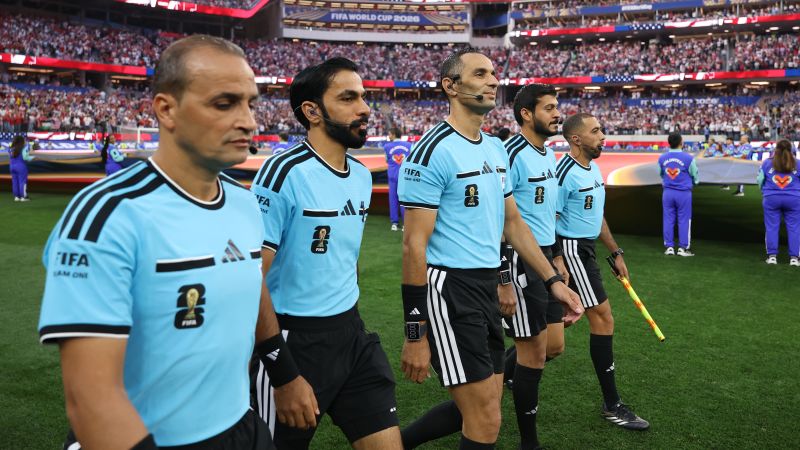
What it takes to be chosen – The road to officiating the World Cup is as demanding as the competition itself. As 48 nations vie for the tournament’s top prize, the referees face their own high-stakes journey to secure a place on the global stage. This year, the International Federation of Association Football (FIFA) has selected 52 main referees, 88 assistant referees, and 30 video assistant referees (VARs), creating a 170-member team—the largest in World Cup history. The expanded format, featuring 48 teams and 104 matches, has intensified the selection process, requiring officials to meet rigorous standards.
A Global Representation
The officials hail from 50 FIFA member nations, spanning all continental confederations. Among them, eight represent the United States, while six are women, a milestone achieved after FIFA’s inclusion of female referees in the 2022 Qatar edition. This diversity underscores the global nature of the sport, yet the role remains highly competitive. For example, a Somali referee was recently denied entry to the host country due to “vetting concerns,” highlighting the scrutiny officials undergo. Meanwhile, in China, fans are rallying behind one referee, the country’s sole representative, following the national team’s early exit.
The Pressure of the Final
Being chosen for the final is a dream come true, but the path to that moment is anything but simple. Leif Lindberg, an assistant referee at the 2002 Brazil vs. Germany final, recalls the intensity of his debut: “It was my first World Cup game—and South Korea’s first World Cup game ever (at home), too. We had 50,000 spectators all in red jerseys. The noise was incredible,” he says. “Every one of us was dreaming about officiating the World Cup.” Yet, the reality involves more than just passion and skill. Referees must balance their careers with grueling match schedules, often at a personal cost.
“Most referees have been through at least one divorce,” Lindberg adds, noting that many sacrifice family life to meet the demands of the role. As a retired official on his second marriage, he understands the toll such responsibilities can take.
The selection process began immediately after the 2022 Qatar tournament, according to FIFA. Candidates are evaluated through a multi-step process, including seminars, fitness tests, and a review of their prior tournament experience. Over the past three years, their performances in domestic and international competitions have been closely monitored, ensuring only the most qualified are considered. A committee then finalizes the lineup, assigning referees to teams based on their consistency and reputation.
Tracking Performance and Building Trust
Referees at the elite level are often part of the same officiating teams across international games, allowing for group assessments. Renato Faverani, a former assistant referee, explains: “In every important match ahead of the World Cup, we have one or two observers. Their feedback helps determine who gets the final whistle.” Faverani, who officiated four matches at the 2014 World Cup, including the Germany vs. Argentina final, also highlights the importance of prior experience. Before earning his World Cup appointment, he built a resume that included the UEFA Champions League and the European Championship, as well as Serie A matches.
“Afterwards, you receive an evaluation, which is then compared with other referee teams,” Faverani says. This peer review ensures that only the most reliable officials are entrusted with critical moments in the tournament.
Once selected, referees are appointed three to four days before each game, based on their recent form and performance metrics. FIFA also enforces a rule to prevent conflicts of interest: officials cannot referee matches involving their own country. This means the knockout stage teams are not preordained, adding an element of unpredictability to the process. For instance, Sweden’s Lindberg recalls the emotional weight of his assignment: “It was a very special moment to follow our national team and hope they would lose. If they reached the semifinals, I would have had to go home.”
The Emotional Rollercoaster of Selection
The moment of being named for the final is both thrilling and surreal. Renato Faverani describes the experience of learning his fate during a practice session near his hotel: “All the referees were assembled in a huge hall. Then FIFA President Sepp Blatter stood at the front, unfurled a sheet of paper, and began reading from it. ‘The referees for the World Cup final are: Mr…’ Blatter uttered. Seconds of suspense passed before my name was announced.”
“For two or three hours, it was the best moment,” Faverani says. “Then, the pressure and responsibility arrived. You just hope the match comes quickly because the pressure is very high.”
Despite the excitement, the work doesn’t stop after the announcement. Referees must prepare meticulously for the final, mastering the Laws of the Game and adapting to the unique challenges of the stadium. The role requires not only technical precision but also the ability to remain calm under intense scrutiny. As Faverani notes, the emotional high of selection gives way to the demanding reality of officiating the ultimate match. Fans may not realize how much preparation goes into ensuring every call is flawless, from analyzing game footage to rehearsing scenarios with assistants and VARs.
For many, the World Cup is the pinnacle of their career, but it’s also a test of resilience. Lindberg’s story reflects the personal sacrifices made in pursuit of this honor. “You have to give up a lot to get there,” he acknowledges. The combination of rigorous training, consistent performance, and a touch of luck makes the World Cup referee a rare breed. Their journey is one of dedication, where the final whistle symbolizes not just a career achievement, but a global recognition of their expertise and commitment to the sport.
A Legacy of Excellence
The World Cup’s expansion has transformed the referee’s role, emphasizing the need for adaptability and accuracy. With 104 matches across 48 teams, the pressure on officials has never been higher. Yet, the tournament’s commitment to diversity and quality ensures that the best talents are selected. As the final approaches, the selected referees face the ultimate challenge: delivering decisions that shape the fate of nations. Their journey, from local matches to the global stage, is a testament to the dedication required to stand in the spotlight of the world’s most prestigious competition.
