
Why America is obsessed with a grandpa in high-waisted pants who is building sidewalks
Why America is Obsessed with a Grandpa in High-Waisted Pants Who is Building Sidewalks
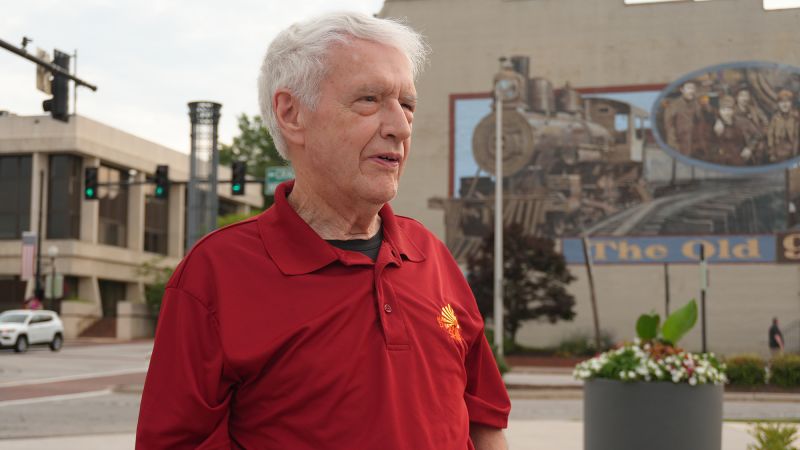
Why America is obsessed with a grandpa – At the heart of a viral movement lies a seemingly simple act: a man in his 70s, wearing high-waisted slacks and moccasins, determined to transform a city street into a safer passage for pedestrians. Gary Miller, a cardiologist and longtime councilman in Danville, Virginia, has become an unlikely symbol of civic action, his story spreading across social media platforms with astonishing speed. What began as a personal concern has evolved into a national conversation about infrastructure, government accountability, and the power of relatable leadership.
The Viral Moment
Miller’s crusade started with a nagging fear. While commuting home one evening, he worried about a child darting into traffic to reach the grocery store. “I go that way and go after dark,” he explained, his voice tinged with urgency. “I was honestly afraid I was going to hurt somebody.” This moment of vulnerability sparked a four-year campaign to install sidewalks along Kemper Road, a neighborhood where many residents had long relied on streets for movement. The project, which brought 1,600 feet of new infrastructure to a historically underserved community, became the centerpiece of Miller’s re-election video—a clip that has since amassed over four million views on TikTok and X, with Instagram tallying nearly 175,000 likes.
“When you think about public safety, the first thing to come to your mind may not be sidewalks,” Miller said in the video, his attire—gray slacks tucked high above his waistline, a turquoise Under Armour polo, and slip-on leather moccasins—drawing attention as much as his message.
The video’s resonance lies in its simplicity. Miller’s message, though rooted in local action, struck a chord with Americans weary of bureaucratic inertia. In a society where progress often feels slow or unattainable, his determination to fix a concrete problem became a beacon of hope. The footage captured him standing on a newly paved sidewalk, arms outstretched, pointing to a grassy lot where pedestrians once risked injury. The contrast between his elegant appearance and the stark reality of unsafe streets underscored the absurdity of neglecting basic infrastructure.
A Symbol of Change
Miller’s transformation from a quiet public servant to a viral figure highlights a growing appetite for leaders who embody authenticity. “The American voter cries out for an old man with hiked-up pants who has never once opened ‘The InstaFace’ and just wants to solve something tangible,” one X user wrote. His grassroots approach, devoid of flashy rhetoric, resonated with a public disillusioned by the complexities of modern governance. In a time when political discourse often revolves around abstract policies, Miller’s sidewalk project offered a tangible solution to a pressing issue.
His story also taps into a broader cultural shift. As cities grapple with aging infrastructure and increasing inequality, Miller’s success in Danville became a metaphor for what’s possible when local leaders prioritize community needs. The video’s humor and heart combined to create a viral phenomenon, with social media users joking about his “biblically accurate waistline” and questioning whether he was “hiding the sidewalk in his pants.” Yet beneath the lighthearted commentary, there was a deeper appreciation for his commitment to action.
The Broader Implications
What started as a local initiative has sparked a national dialogue about the role of government in everyday life. In an era where infrastructure projects are often stalled by red tape and political gridlock, Miller’s success became a rallying point for those demanding results. His work exemplifies the kind of anti-performative politics that many citizens crave—leaders who focus on real-world impact rather than empty promises. “People are desperate for a government that can deliver basic services and infrastructure,” said Michael Pollack, a Cardozo School of Law professor and advocate for sidewalk preservation. “When someone actually follows through, it becomes a rare moment to celebrate.”
The movement has drawn attention from national figures, including proponents of the “Yes in My Backyard” housing initiative and transit advocates. These groups have praised Miller’s communication style, drawing comparisons to Zohran Mamdani, the telegenic New York City mayor known for his youthful energy and accessibility. “Miller’s video is some of the best political media I’ve seen,” Pollack noted. “It made the importance of sidewalks feel personal, even urgent.” His efforts have not only improved safety for pedestrians but also redefined how civic projects are perceived in the digital age.
The Local Context
Danville, like many American cities, was built for cars. Pedestrians were an afterthought, with roads designed to prioritize vehicle traffic over human movement. This neglect has had tangible consequences: in 2025, 12 people were killed and 95 seriously injured in traffic crashes, making Danville one of Virginia’s most dangerous metro areas for road safety. The Danville Metropolitan Planning Organization’s 2025 safe streets plan revealed a stark disparity, showing that 81% of roads linked to fatalities and injuries are located in socioeconomically disadvantaged neighborhoods.
Car ownership rates are lower among poorer residents, forcing them to navigate unsafe streets without the protection of sidewalks. For these communities, the absence of infrastructure isn’t just inconvenient—it’s a daily hazard. Miller’s project, which brought sidewalks to Kemper Road, addresses this systemic issue head-on. “I can name a half dozen other places where people are forced to go out into the street to get where they’re going,” he said, emphasizing the need for broader investment in overlooked areas.
The video’s success has also spotlighted the role of style in political messaging. Miller’s fashion choices—clad in a polished look that feels both timeless and quirky—contrasted with the chaotic conditions he aimed to improve. This visual juxtaposition made his campaign relatable, humanizing the issue of sidewalk construction in a way that resonated with viewers. “He’s a walking advertisement for the importance of sidewalks,” one commenter remarked, highlighting how his appearance became part of the story.
The Legacy of Sidewalks
As Miller’s story continues to gain traction, it underscores a larger truth: sidewalks are more than just paths for walking. They are the foundation of urban life, enabling commerce, community interaction, and even public safety. In his new book, “Sidewalk Nation: The Life and Law of America’s Most Overlooked Resource,” Pollack argues that these humble structures are often undervalued in policy discussions. “Sidewalks are essential for everything from street vendors to emergency responders,” he wrote, stressing the need for a unified approach to their maintenance and expansion.
Danville’s experience is emblematic of a national trend. Many cities, particularly those with histories of racial and economic segregation, have struggled to fund infrastructure that benefits all residents. Miller’s work has demonstrated that change is possible when leaders prioritize local needs and engage directly with the community. His video, which has become a cultural touchstone, serves as a reminder that even small, incremental efforts can inspire widespread action. “What happened here?” Miller asked in the clip, his tone both curious and defiant. “It’s a reminder that progress starts with one step.”
As the nation watches, the question remains: can this grassroots success be replicated elsewhere? Miller’s story is a testament to the power of individual initiative and the importance of civic engagement. In a world where political leaders are often critiqued for their detachment, his ability to connect with voters through a tangible, relatable project has redefined what it means to be an effective public servant. The sidewalk, once a mundane feature of urban landscapes, has become a symbol of hope and change—and Gary Miller, the grandpa in high-waisted pants, is its unlikely champion.
