
Tanker struck near Strait of Hormuz as Trump heads to NATO summit
Tanker struck near Strait of Hormuz as Trump heads to NATO summit
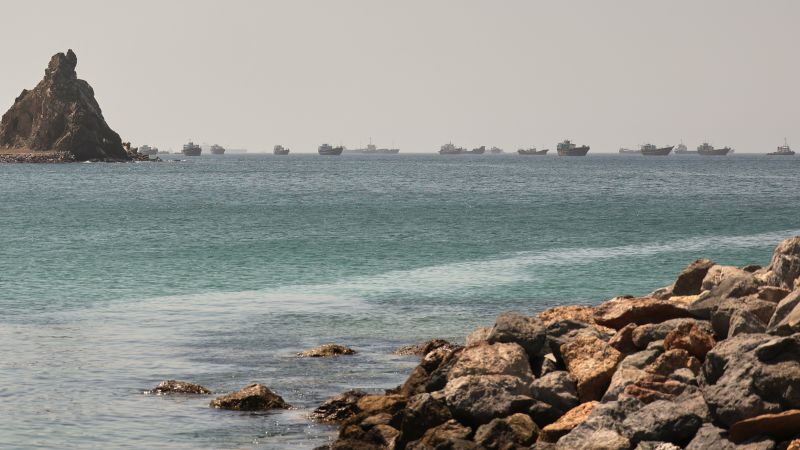
Tanker struck near Strait of Hormuz – A commercial vessel was hit by an unidentified missile while navigating near the strategic Strait of Hormuz on Monday, according to the UK Maritime Trade Operations (UKMTO). The incident occurred approximately eight nautical miles east of Limah, Oman, with the attack targeting the ship’s port side and causing a fire, though no injuries or environmental damage have been confirmed, the UKMTO stated. The event took place just hours before U.S. President Donald Trump’s departure for a critical NATO summit in Ankara, Turkey, where leaders are set to deliberate on security challenges in the region. Simultaneously, Iran was holding a multi-day funeral for its late supreme leader, Ayatollah Ali Khamenei, who was killed in a U.S.-Israeli strike earlier this year.
Iranian Claims and Regional Tensions
Iran’s semi-official Fars News Agency reported that a Qatari oil tanker was attacked after disregarding repeated warnings from Iranian authorities. The agency attributed the incident to the Islamic Revolutionary Guard Corps (IRGC), citing unnamed sources. “No official authority has yet confirmed or denied these reports,” it noted, adding that the attack was part of a broader pattern of Iranian assertiveness in the region. Meanwhile, The Wall Street Journal and Axios, both citing U.S. officials, mentioned that Iran had launched missile strikes at two commercial ships in the area. These reports underscore the escalating tensions between Tehran and Washington, which have intensified amid ongoing negotiations for a peace deal.
“Risk remains lower than during the pre-MOU period; however, Iranian intent and capability to conduct intentional hostile action remain, and the environment continues to warrant heightened vigilance despite the absence of recent escalation,”
UKMTO emphasized in a Sunday update, referring to the U.S.-Iran Memorandum of Understanding (MoU) signed earlier this year. The MoU, which outlines conditions for resuming talks, has become a focal point for both sides as they navigate political and military posturing. Iranian officials, during the funeral of Khamenei, reiterated their stance that negotiations would not proceed unless threats against U.S. interests are halted, a sentiment echoed by the nation’s foreign minister in a post on X.
Strategic Leverage and Maritime Disputes
Tehran has increasingly used the Strait of Hormuz as a tool for negotiation, leveraging its control over the waterway to assert influence. Before the war, the strait accounted for roughly one-fifth of global crude oil shipments, making it a vital artery for energy trade. However, since the MoU was established, the number of ships transiting the strait has fluctuated, with many opting for routes close to Oman. Iranian authorities have also mandated that crew members obtain permission to use these routes, a move seen as a strategic maneuver to pressure the U.S. into concessions.
On Sunday, the IRGC announced the deployment of patrol boats to block the “Omani route,” a statement supported by Iranian media and a Telegram channel linked to the group. The claim that the attacked tanker was traveling via this route aligns with Iran’s broader strategy of using the strait as a bargaining chip. Despite these actions, maritime traffic through the strait has remained relatively steady, with 108 vessels crossing the channel from Friday through Sunday, according to data from MarineTraffic. This figure, however, falls short of the pre-war average of over 100 ships per day, indicating a slight decline in activity.
Political Context and Diplomatic Stalemate
The timing of the attack adds to the backdrop of a fragile diplomatic standoff between Iran and the U.S. Following Khamenei’s funeral, Tehran has paused negotiations aimed at resolving its conflict with Washington. The decision comes as the U.S. seeks to secure a lasting agreement, with Trump recently stating that the country would either achieve a deal or “finish the job” in its confrontation with Iran, according to Reuters. This remark highlights the administration’s dual approach of diplomacy and military readiness, a posture that has dominated the region’s dynamics since the war began.
The MoU’s paragraph 13, which Iran’s foreign minister referenced in a recent statement, outlines key prerequisites for resuming talks. Among these conditions is an end to all hostilities, including in Lebanon, where Israeli military strikes were reported on Monday. The country’s state media confirmed that the IRGC had deployed patrol boats to disrupt the Omani route, further complicating the situation. This coordinated effort suggests Iran’s determination to maintain pressure on the U.S. while positioning itself as a key player in regional security.
Global Implications and Vigilance Required
Analysts note that the attack near Hormuz has reignited concerns about the safety of maritime routes in the region. While the UKMTO has reported a decrease in risk compared to earlier stages of the conflict, it warns that Iranian capabilities to target commercial vessels persist. The incident also underscores the geopolitical significance of the strait, which remains a critical hub for global energy supply chains. With the NATO summit approaching, the U.S. faces the challenge of balancing its military commitments with diplomatic efforts to stabilize the region.
As the U.S. Central Command awaits comments on the attack, the situation reflects the broader tensions between Iran and the West. The MoU, signed to facilitate dialogue, has been tested by recent hostilities, with both sides using the strait as a symbol of their strategic rivalry. The attack may serve as a reminder of the precarious state of negotiations, with Iran’s actions signaling a willingness to escalate if its demands are not met. For now, the focus remains on the NATO summit, where leaders will assess the current state of affairs and chart the next course of action in the region’s complex security landscape.
CNN’s coverage of the incident drew on contributions from journalists Alejandra Jaramillo, Billy Stockwell, and Aida Karimi, who provided detailed analysis of the event’s implications. The attack, though not yet confirmed by official sources, has sparked renewed discussions about the vulnerability of international shipping routes and the role of the Strait of Hormuz in global geopolitics. As the U.S. and Iran continue their tug-of-war over influence and control, the maritime corridor remains a contested space with far-reaching consequences for international trade and regional stability.
Historical Context and Future Outlook
The Strait of Hormuz has long been a strategic battleground, with its narrow waters and high volume of traffic making it a prime target for military operations. The recent attack echoes earlier incidents, such as the 2019 strikes on oil tankers, which raised alarms about Iran’s ability to disrupt global energy flows. Despite these threats, the UKMTO has maintained that the current environment is more stable, though vigilance is still required. The number of vessels transiting the strait has shown resilience, with 108 crossings recorded in the past three days, a figure that, while lower than pre-war levels, indicates continued activity.
As the U.S. prepares for its NATO summit, the attack serves as a stark reminder of the challenges ahead. Trump’s administration faces the dual task of addressing immediate security threats while pursuing long-term diplomatic solutions. The IRGC’s recent actions, including the blocking of the Omani route, highlight Iran’s calculated approach to assert dominance in the region. With the MoU as a framework for dialogue, the path forward depends on both sides’ willingness to compromise, even as the strait remains a flashpoint for international tensions.
The incident also places the U.S. in a delicate position, as it seeks to support allies like Qatar while maintaining pressure on Iran. The Qatari tanker, a key player in the global oil market, was reportedly caught in the crosshairs of Iran’s military strategy. This attack could influence the outcomes of ongoing negotiations, as it reinforces Iran’s ability to project power and test the resolve of its adversaries. The UKMTO’s report, while not confirming the attack, has called for continued monitoring of the region, emphasizing the need for coordinated efforts to ensure the safety of maritime traffic.
As the funeral of Ayatollah Khamenei concludes, the focus shifts to the next phase of Iran’s political strategy. The nation’s leaders, emboldened by the recent strikes, may use the summit as an opportunity to advance their agenda. The MoU, though a step toward de-escalation, remains a contested agreement, with both sides interpreting its terms to serve their interests. The attack near the Strait of Hormuz could serve as a catalyst for renewed hostilities or a signal of Iran’s intent to negotiate under favorable conditions. With the world watching, the outcome of these developments will shape the future of Middle Eastern security and U.S.-Iran relations in the coming weeks.
