
Rahm Emanuel to deliver ‘painful’ truths on Israel in Tel Aviv speech
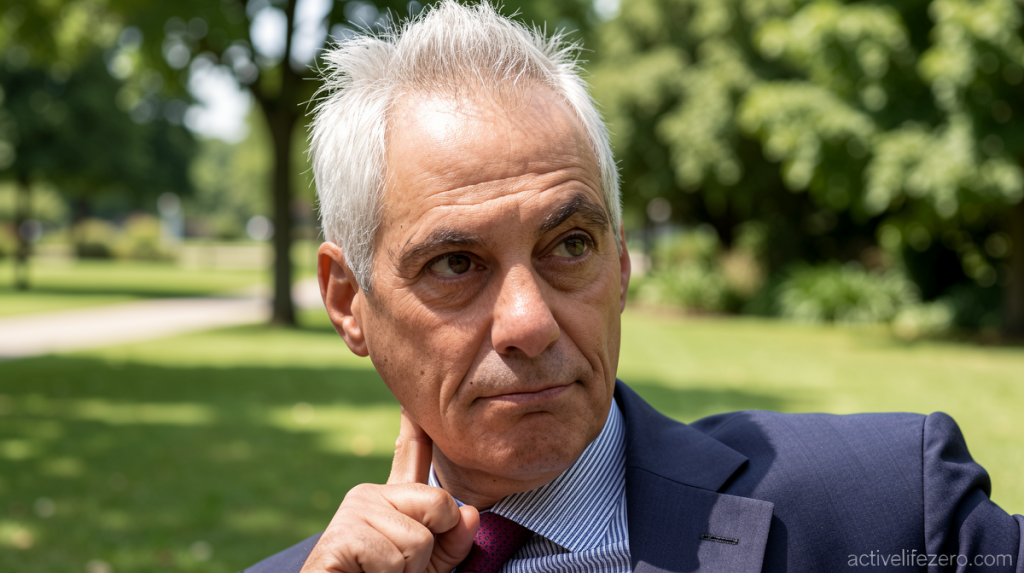
Emanuel’s Tel Aviv Address: A Candid Reckoning with Israel’s Future
Rahm Emanuel to deliver painful truths – Former Chicago mayor and current ambassador to Japan Rahm Emanuel is preparing to deliver what he describes as a deeply personal message during his upcoming address at Tel Aviv University. The speech represents more than a routine diplomatic visit; Emanuel views it as an opportunity to fundamentally reshape how America approaches its relationship with Israel. Central to his message is the conviction that genuine friendship requires honesty, even when that honesty causes discomfort.
A Personal Connection to the Land
Emanuel’s relationship with Israel spans decades and includes both intimate family ties and political friction. He has traveled to visit the burial site of an uncle who served in the fight for Israeli independence. His connection to the country has not always been smooth, however. During his tenure as President Barack Obama’s chief of staff, Emanuel found himself on the receiving end of harsh criticism from Prime Minister Benjamin Netanyahu, who publicly labeled him a “self-hating” Jew following a heated disagreement.
Now, Emanuel is positioning this speech as a cornerstone of his broader political ambitions. The timing is deliberate, with his 2028 presidential campaign already taking shape in the background. He recognizes that the political landscape has shifted considerably since the October 7, 2023, Hamas-led attacks and the subsequent Israeli military campaign in Gaza. Public opinion, particularly among Democratic voters, has moved in ways that Emanuel believes require a new approach to American foreign policy.
Challenging Both Sides
The former White House aide is not limiting his message to American audiences alone. He intends to address Israelis directly, urging them to reconsider their relationship with Netanyahu’s administration. According to prepared remarks, Emanuel will tell his hosts that their current government bears responsibility for suffering inflicted upon Palestinian families in the West Bank, a situation he argues damages Israel’s standing in the international community precisely when such credibility matters most.
“Your government is complicit in the horrors now being inflicted on innocent families in the West Bank. That undermines your international legitimacy at a time when you can least afford it.”
Emanuel’s remarks will also target competing factions within Israeli politics. He plans to deliver a clear message to those advocating for expanded territorial claims, as well as to those calling for Palestinian self-determination through the “from the river to the sea” slogan. Both extremes, he suggests, misunderstand the path forward.
“Those chanting ‘from the river to the sea’ need to hear this loud and clear: they will never have their way. But those calling for a greater Israel must also hear this loud and clear: you’re never going to have your way, either.”
A Bold New Framework
Perhaps the most distinctive element of Emanuel’s proposal is his alternative to the traditional two-state solution. Having discussed these ideas extensively with former President Bill Clinton—whose own peace efforts remain a source of frustration—Emanuel is advocating for what he calls a 23-state framework. This model would recognize the 21 Arab nations that have long championed Palestinian rights rhetorically and now demand that they take concrete action.
Under this proposal, Arab countries would establish a governing authority capable of managing Palestinian affairs while acknowledging the historic Jewish connection to the territory. Emanuel argues that Israel’s greatest strength has always been its capacity for innovation, both economically and technologically, and that the nation should return to this forward-looking mindset despite the challenges it faces.
“Arab leaders, not Israel, must hold the Palestinians responsible and accountable for their actions, and for being a true partner in peace. To that end, the now-discredited path to a ‘two-state solution’ should be replaced by a 23-state solution.”
He will also remind his audience that Israel has made three separate offers of Palestinian sovereignty since the early 1990s, each time meeting not just rejection but direct military response. While acknowledging this painful history, Emanuel insists that moving forward requires looking beyond past grievances.
“Three times since the early 1990s, you have offered the Palestinians sovereignty in exchange for your security – and three times your offer was not only rejected, but you were attacked as a direct consequence. In the United States, we have a saying: ‘fool me once, shame on you. fool me twice, shame on me.’ I understand all of that. But even while acknowledging that history, the path forward cannot be held hostage to a past defined exclusively by recriminations.”
As Emanuel prepares to speak, he recognizes that his words will be scrutinized both in Israel and at home, where Jewish progressives are increasingly concerned that unwavering support for Israel may be sliding into antisemitism. His speech aims to navigate these complex waters by offering a vision that challenges assumptions on all sides.
