
Hungarian state TV suspends news broadcast for revamp after Orban years
Hungary’s Public Media Undergoes Major Transformation Following Political Shift
A New Chapter for Hungarian Broadcasting
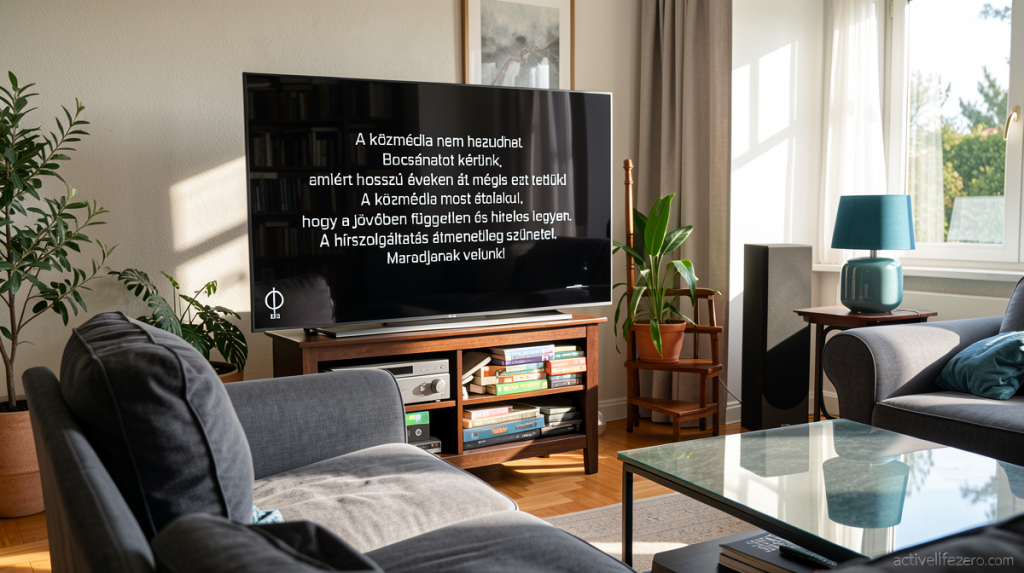
Hungarian state TV suspends news broadcast – Hungarian state television announced on Tuesday that its flagship news program would be temporarily halted as part of a sweeping government initiative to transform public service media into an institution that is both independent and credible. The announcement appeared on the M1 channel’s screen, which turned completely black to display a simple yet powerful message to viewers: “Public service media cannot lie. We apologise for doing this for many years nonetheless.”
This visual statement came shortly after local reports emerged indicating that several editors at state television and radio stations had been removed from their positions. While Reuters was unable to confirm these personnel changes immediately, the timing suggests they are part of a broader restructuring effort.
Political Context and Leadership Changes
The overhaul represents a significant departure from the policies implemented during the sixteen-year tenure of Prime Minister Viktor Orban. Peter Magyar, whose political party successfully challenged Orban’s nationalist Fidesz party in April’s electoral contest, has positioned himself as a reformer committed to restoring democratic balance. Magyar has explicitly stated his intention to strengthen institutional checks and balances while simultaneously addressing corruption concerns that have plagued Hungarian governance.
“Public media is now being revamped, so that it can be independent and credible in the future. News broadcast is temporarily suspended. Please stay with us!” the M1 announcement continued, providing viewers with reassurance during the transition period.
Magyar’s Vision for Media Reform
In a Facebook post published on Tuesday, Magyar celebrated what he described as a historic moment for Hungarian journalism. “It’s a historic day, as the broadcast of propaganda has ended on public service media,” he declared, noting that state Kossuth Radio had also ceased its regular programming as part of the same initiative.
Following the election victory, Magyar articulated his ambition to establish “a truly balanced, objective news service” that would serve all Hungarians rather than advancing a particular political agenda. To this end, he issued one of his earliest decrees as prime minister, mandating a “comprehensive and immediate” examination of public service media operations and their financial structure.
Challenges Ahead for Media Independence
Despite the optimistic announcements, media analysts have cautioned that achieving genuine balance in Hungarian public broadcasting will present substantial difficulties. During Orban’s administration, state media gradually came under tighter governmental oversight through the implementation of new media legislation. Several independent private outlets faced closure or were acquired by businessmen with close ties to the ruling party.
The decline in Hungary’s press freedom ranking provides quantitative evidence of these changes. According to Reporters Without Borders, the country’s position dropped dramatically from 23rd place in 2010 to 74th place in 2026, reflecting growing concerns about media independence and pluralism.
Orban’s government consistently maintained that it had not exerted undue pressure on journalists and media organizations, arguing that Hungary’s media environment met European Union standards for freedom of expression. However, the current administration’s actions suggest a different assessment of the situation.
Looking Forward
The temporary suspension of news broadcasts represents more than a logistical adjustment—it symbolizes a fundamental reorientation of Hungary’s public media landscape. As Magyar’s government moves forward with its reform agenda, the success of these efforts will depend on whether structural changes can translate into meaningful improvements in journalistic independence and credibility.
International observers and domestic stakeholders alike will be watching closely to see whether the promised transformation delivers on its ambitious goals or merely represents another chapter in Hungary’s ongoing political evolution.
