
Peruvians say they were promised jobs in Russia, but landed on the front lines in Ukraine
Peruvians Say They Were Promised Jobs in Russia, But Landed on the Front Lines in Ukraine
Peruvians say they were promised jobs – As the conflict in Ukraine enters its third year, the Russian military has turned to unconventional methods to bolster its ranks. Foreign fighters, often lured by promises of financial security and citizenship, are now playing a significant role in the war effort. Among those drawn into this web of recruitment are Peruvian men who believed they were signing up for civilian employment in Russia, only to discover they were deployed to the front lines. Their families, like Norma, a mother from Lima, are left grappling with uncertainty and heartache.
A Promise of Stability, A Reality of Combat
Norma’s final sighting of her son occurred in late January, when she dropped him off at Lima’s airport. He had claimed he had secured a position as a cook for the Russian army, advertised on social media, and assured her he would be far from the war in Ukraine. He promised a steady income, the chance to work in Russia, and even a path to citizenship. Norma, however, was skeptical. Her son, a 31-year-old who had never held a weapon or left Peru before, seemed eager to leave, but she feared the unknown.
“I wanted to lock him in the house, but he had made up his mind already,” Norma said. “He told me ‘Mom, please, understand, I am just going as a cook.’ But a mother’s heart knows, if not I wouldn’t have felt so anxious.”
Norma’s concerns proved valid. By early April, she began receiving videos from her son showing him in battle gear, constructing wooden shelters in a Ukrainian forest. The footage revealed a stark contrast to his earlier assurances. “He left me heartbroken. Something told me that there was something wrong,” she recalled. “I said goodbye, and that was the last time I saw him.”
Russia’s Recruitment Strategy Expands
Russia’s military has intensified its recruitment campaigns, targeting men from developing nations with enticing offers. In February, CNN reported that several African men had been coerced into joining the Russian forces after being promised lucrative civilian roles as drivers or security guards. These recruits, often untrained and unaware of the war’s risks, were quickly thrust into combat. A dozen individuals who spoke with CNN described being forced to sign contracts in Russian, given minimal preparation, and sent to the front lines without hesitation.
Now, similar patterns are emerging in Latin America. Peruvian men, some from low-income families, have been enticed by local recruiters with stories of stable employment and financial rewards. The Russian military’s strategy relies on these promises, exploiting the desperation of young men seeking better opportunities abroad. As the war drags on, the scope of this recruitment has grown, drawing attention from international observers.
Families Demand Answers
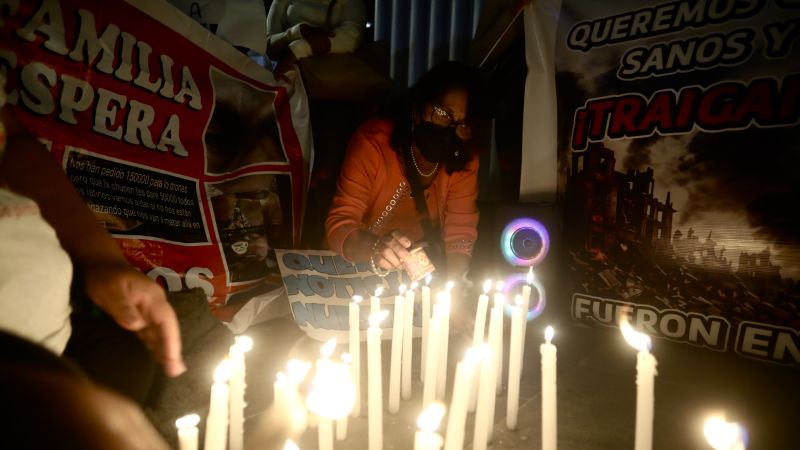
Dozens of Peruvian families have taken to protesting outside the Russian embassy in Lima and the Foreign Affairs Ministry, demanding clarity about their loved ones’ fates. For many, the journey to Russia began with hope, only to end in confusion. “They don’t have a very clear understanding of the international reality,” said Pedro Bravo, director of Peruvian Communities Abroad at the Foreign Ministry. “It’s much easier to deceive them.”
“Many recruits ‘have limited resources and are in dire need’ of funds,” Bravo told CNN. “They’re not fully aware of what they’re signing up for.”
One such family is Rosa’s, whose 48-year-old husband joined a group of Peruvians heading to Russia. He had worked as a prison guard in Lima but lacked any military experience. “He was hoping to get a job as a security guard,” Rosa said, using a pseudonym to protect her identity. “But once he got there, it was all about fighting.”
International Outcry Grows
The recruitment of foreign fighters has sparked backlash from several countries. In March, Kenya’s foreign minister traveled to Moscow to accuse Russia of running a human trafficking operation, with Kenyan citizens being lured into military service. The Russian embassy in Nairobi dismissed the claims as “dangerous and misleading,” according to a statement to Deutsche Welle.
Nepal, too, has raised alarms after thousands of its citizens volunteered for the Russian military. The government temporarily banned travel to Ukraine and Russia for work, fearing the men would be forced into combat. Meanwhile, Russia recently detained two Colombian men on suspicion of supporting Ukraine, further fueling concerns about its recruitment tactics.
Voices of Uncertainty and Hope
Norma’s story mirrors those of countless families who now face the same dilemma. “I have this light of hope that he is somewhere, hiding in a trench, but I really don’t know,” she said. Her son’s disappearance has left her questioning the promises that once seemed so solid. She noted that during sporadic calls, he would describe explosions in the background, insisting they were far away. “He told me to calm down,” she remembered. “But I couldn’t stop worrying.”
The recruitment process, while offering quick financial relief, often masks the true nature of the work. Peruvians like Norma’s son are part of a growing trend where individuals are led to believe they are joining a peaceful workforce, only to be thrust into a war zone. “They’re being told they’ll be safe, but the reality is they’re risking their lives,” said a Peruvian activist who requested anonymity. “It’s a trap they don’t see coming.”
Uncovering the Hidden Costs
As the war continues, the human cost of Russia’s recruitment strategy becomes more apparent. For families in Peru, the emotional toll is immense. They are left to wonder whether their sons and husbands will return home, or if they will become casualties of a conflict far from their homeland. The Russian military’s reliance on foreign labor underscores a broader issue: the exploitation of vulnerable populations for geopolitical gain.
Norma’s son was not alone. Others, including Rosa’s husband, faced similar fates. Their stories highlight the vulnerability of individuals who, with limited information, are enticed by the promise of a better life. “He was just trying to support his family,” Rosa said. “But once he got to Russia, everything changed.”
Russia’s efforts to recruit abroad have become a significant part of its military strategy, especially as the war in Ukraine stretches on. With local resources stretched thin, the Kremlin has turned to international manpower, offering jobs that often come with hidden dangers. The recruitment of Peruvians, Africans, and Colombians demonstrates how the war has evolved into a global phenomenon, with civilians caught in the crossfire of political and military ambitions.
For Norma and her family, the fight for answers continues. While she waits for news, her son’s fate remains uncertain. His journey from Lima to Ukraine, once framed as a dream, now feels like a nightmare. “I can’t stop thinking about him,” she said. “Every day, I hope he’s safe, but I’m not sure what ‘safe’ means anymore.”
As the world watches the conflict unfold, the stories of these recruits remind us of the human face behind the war. They are not just soldiers, but sons, fathers, and dreamers who believed they were choosing a path to stability. Now, they are finding out the hard way that some promises are not what they seem.
