
One way to improve your sleep? Imitate the habits of hunter-gatherers
One way to improve your sleep? Imitate the habits of hunter-gatherers
One way to improve your sleep – Modern sleep science suggests that adults should prioritize approximately eight hours of uninterrupted rest in a cool, dark setting. Consistent adherence to this routine, according to experts, could contribute to longevity and overall well-being. Yet, as The Sleepless Ape: The Story of Sleep in Human Evolution argues, this ideal is far from the norm in human evolutionary history. Published on May 19, 2026, the book challenges contemporary assumptions by revealing how our ancestors developed distinct sleep patterns that diverged from those of their more ape-like predecessors.
The Evolution of Human Sleep Patterns
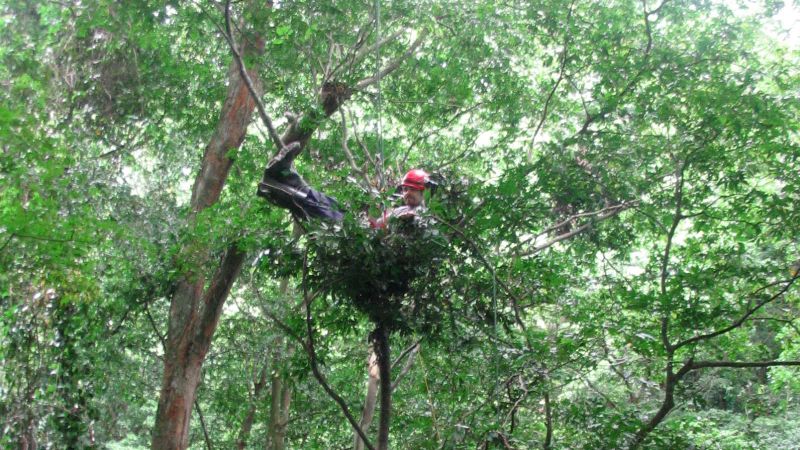
Anthropologist David Samson, the author of the book and an associate professor at the University of Toronto, has dedicated years to studying sleep behaviors across primates. His research includes climbing trees to examine chimpanzee nests and immersing himself in remote communities to observe ancient sleep practices. Samson’s work suggests that human sleep evolved to be shorter, deeper, and more adaptable than that of earlier primates, enabling us to focus on tasks like tool creation, social bonding, and exploration. These adaptations, he explains, were pivotal in shaping our species’ survival and success.
Samson’s findings indicate that while many primates sleep for 10 to 12 hours, humans average only about seven hours. This discrepancy has sparked debate about the role of sleep in human evolution. The book posits that this shift wasn’t accidental but a deliberate response to environmental and social changes. For instance, early humans began sleeping on the ground rather than in trees, leveraging fire, shelter, and group dynamics to create safer sleeping environments. This transition allowed for more efficient use of time, freeing humans to engage in activities that required mental acuity and physical coordination.
Sleep as a Catalyst for Human Innovation
“Sleep governs so much of our mental and physical performance throughout the day,” Samson told CNN. “How is it then that we are the shortest sleeping primate on the planet?” This question underscores the book’s central thesis: human sleep patterns are not just a biological necessity but a cultural and evolutionary innovation. By studying chimpanzee nests, Samson discovered that these structures provided protection from both large and small predators. The nests, made from plants, also offered insulation and insect repellent, creating a microenvironment that optimized rest.
“What we created was a completely new innovative space for sleep,” Samson explained. “The analogy I’ve been using here is a shell. Early humans like Homo erectus were sleeping in groups, and we can tell that around this time, controlled fire use became common. This allowed for a more distributed alert system within the group, with individuals awake at different times to monitor for threats.”
Samson describes this as a “shell” of safety, where the collective vigilance of the group ensured that no single member was constantly on guard. This arrangement, he argues, mirrored the distribution of “larks and owls” in modern hunter-gatherer societies, where individuals naturally take turns being awake to protect the community. Such flexibility in sleep timing, he suggests, was crucial for survival, enabling early humans to respond to dangers while also conserving energy for other tasks.
The Role of REM Sleep in Human Evolution
Despite sleeping less overall, humans spend a disproportionately high amount of time in REM sleep—the phase associated with vivid dreams and cognitive processing. Samson emphasizes that REM sleep is not just a passive state but a key driver of creativity and problem-solving. “When you’re in phasic REM, you’re as dead to the world as you’ll ever be,” he said. “For our ancient ancestors, this was extremely costly, but once the shell of safety was established, it became a valuable resource.”
The book explores how this increased REM activity may have contributed to the development of complex human behaviors. While other primates rely on longer periods of light sleep for survival, humans evolved to utilize REM sleep for higher-order functions like planning and innovation. This shift, Samson argues, was likely tied to the emergence of tools, language, and social hierarchies—elements that defined human progress. “REM is the sleep stage famously linked to dreaming,” he noted. “It’s associated with creativity and innovation, all the things that would have been prerequisites for us becoming a successful species.”
Learning from Ancestral Sleep Practices
Samson’s research highlights that today’s sleep-deprived populations can benefit from revisiting the sleep habits of our ancestors. He points out that small-scale societies, such as those studied by researchers, often thrive in dynamic environments where sleep is not isolated from daily life. “Many readers might think they need isolation to achieve optimal sleep,” he said. “But in these environments, there’s a pervasive sense of safety once you return to the camp.”
“It’s this little bubble, this shell: ‘I can finally let my guard down,’” Samson remarked. “Understanding how our ancestors structured their sleep could help modern individuals reframe their approach to rest. For example, fragmented sleep cycles and shared nighttime responsibilities might offer insights into managing stress and improving sleep quality.”
Samson’s work also addresses the paradox of human sleep: why do we sleep less than other primates yet allocate a larger share of our sleep to REM stages? He suggests that this unique combination reflects our species’ dual focus on both rest and cognitive engagement. “The model was predicting that we sleep much longer,” he explained. “That means humans are an evolutionary outlier, with a sleep pattern that prioritizes mental performance over sheer duration.”
By examining the interplay between environmental factors, social structures, and biological needs, Samson’s book offers a fresh perspective on sleep. It challenges the notion that modern sleep habits are the gold standard, instead proposing that our ancestors’ strategies—such as communal sleeping and adaptive rest patterns—were equally, if not more, effective. “The story of sleep is not just about rest,” he said. “It’s about how humans evolved to thrive in complex, ever-changing environments.”
Samson’s findings encourage a reevaluation of sleep as a cultural practice rather than a fixed biological imperative. He believes that by embracing elements of ancestral sleep habits, such as shorter durations and more flexible rhythms, contemporary humans can enhance their well-being. “The Sleepless Ape” is not merely a historical account but a guide for understanding how sleep has shaped—and continues to shape—our species’ trajectory. As the book makes clear, the way we sleep is as much a product of evolution as the tools we use or the societies we build.
