
Communist scientists built a Cold War cola to beat Coke. It’s still a hit — along with these 7 other global rivals
Communist Scientists Built a Cold War Cola to Beat Coke
Communist scientists built a Cold War cola to challenge American dominance in the soft drink market. When American pharmacist John Stith Pemberton created his formula on May 8, 1886, Coca-Cola sparked a global revolution that continues today. While you can now “buy the world a Coke” in nearly every country, nations like Cuba, North Korea, and Russia—since 2022—developed local substitutes to satisfy their citizens’ cola cravings. These regional alternatives incorporate native ingredients and novel formulas for a unique cola experience.
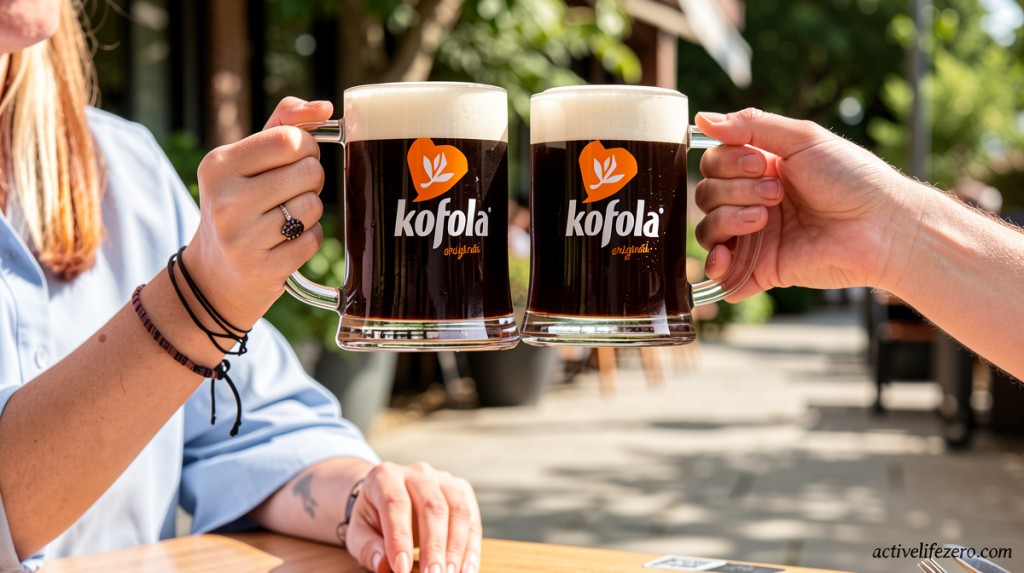
The Czechoslovak Solution: Kofola
Often, successful alternatives end up owned or part-owned by The Coca-Cola Company—such as Thums Up in India and Inca Kola in Peru. However, Kofola stands apart as a true Cold War creation. “Love is in Kofola’s DNA” declares this Czech take on cola. The secret recipe contains 14 herbal and fruit extracts plus caffeine, created during the Cold War in then Czechoslovakia.
The state assignment went to the United Pharmaceutical Works, tasked with creating a purely Czechoslovak drink to compete with capitalist cola imports. Kofola resembles a Coke in appearance but offers a more herbal flavor. Among the 14 ingredients in the proprietary Kofo syrup are raspberry, blackberry, strawberry, cinnamon, licorice, caramel, apple, cherry, and orange peel.
“If you love it, then there’s nothing to work out.” — Kofola slogan
With 30% less sugar than a Coke and no phosphoric acid, Kofola is an acquired taste for some. Another Cold War chapter emerged with Cockta, which landed on its formula in 1952 thanks to Emerik Zelinka, a chemistry professor at the University of Ljubljana in then Yugoslavia. Within a year, it was filling bottles and refreshing Yugoslavs as the new national drink.
Global Rivals: From Nigeria to Japan
Like many Cold War colas, Cockta almost fell with communism but eventually recovered and found success under capitalism. Today, Cockta is distributed in 18 countries, including the United States. New fans are won over by the tart, citrus, floral flavor from its secret, caffeine-free combination of 11 herbs and spices, including pomegranate, lemon, and orange. The primary tasting note comes from the dog rose berry, also known as “rosehip.”
Cockta also mixes remarkably well with Slovenian red Refošk wine to create a bambus, the local name for a red wine and cola mix. Meanwhile, a Nigerian cola launched with great fanfare in February 2026 comes with spiritual and royal roots. It’s the brainchild of His Imperial Majesty Ooni Adeyeye Enitan Ogunwusi Ojaja II, the 51st Ooni of Ife and spiritual leader of the Yoruba people.
The African homeland is written into the drink’s DNA, with 100% indigenous ingredients, including actual kola nuts that provide natural caffeine and a spicy ginger kick. The mission goes further, as the Ooni of Ife noted on his Instagram page at the launch. “This milestone transcends the realm of beverages,” he wrote. “Every aspect of the Ojaja brand reflects an unwavering commitment to national pride and industrial advancement.”
The Argentinian brand Cunnington Cola may have taken the longest journey of any world cola. After traveling through 19th-century India, English lord William Cunnington developed a formula of fizzy tonic water, which Argentinian Juan Vicente Sangiácomo got the rights to produce in the 1920s. Later decades saw new owners take the reins and introduce new soft drinks, leading to the launch of Cunnington Cola in 2008.
The taste is described as less sweet and fizzy than a Coke, with hints of tonic for some. Perhaps more importantly for many Argentinians, it mixes well with Fernet to make the unofficial national drink of Argentina, the “Fernandito.” Tiny Kikaijima Island, 240 miles south of mainland Japan, is an unlikely home for an elite cola. But Toba Toba Cola has grown in reputation and pedigree, earning shout-outs in “Elle Japan” and “National Geographic France.”
They have created a cola concoction unlike any other, marrying the kola nut with the island’s native shiiku citrus fruit, raw brown sugar, and a blend of 14 spices—some of which are hand-ground—to create a versatile cola-colored syrup. Mix it with carbonated water to make a cola, but it works equally well blended into tea, milk, wine, beer, and whiskey. A few sips may also capture the spirit of the name, which comes from the Kikaijima dialect and means “excited,” “uplifted,” or “joyful.”
