Rent control doomed this mayor’s re-election campaign. He has no regrets

Daftar Isi
Providence’s housing debate reshaped its mayoral race
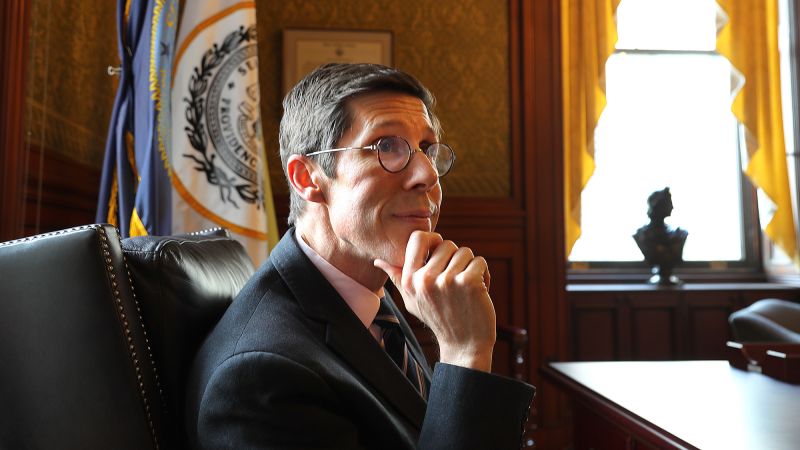
Activelifezero.com – Providence Mayor Brett Smiley built his administration around a straightforward housing strategy: loosen rules that restrict construction, speed up approvals and encourage new development across Rhode Island’s capital. The approach helped produce a surge in apartment construction, but it also put him in conflict with voters seeking faster protection from rising rents.
That divide became central to the city’s mayoral primary. Smiley vetoed a rent-control measure approved by the Providence City Council in April while facing a challenge from David Morales, a 27-year-old state legislator affiliated with the Democratic Socialists of America. Morales defeated Smiley decisively in the September primary, making Smiley the first Providence mayor to lose a primary election.
Morales is strongly favored in the general election next month and has promised to enact rent control within his first 100 days in office.
A supply-focused record
When Smiley won the mayor’s office in 2022, he pledged to increase housing construction and make city government more effective. Working with municipal and state officials, he supported efforts to revise restrictive zoning rules and reduce obstacles that can delay projects.
The results were visible in the city’s most recent fiscal year. Providence added more apartments than it had in any single year over the previous two decades, and 40% of those homes were classified as affordable. For advocates of a “Yes in My Backyard” approach, the construction boom offered evidence that expanding supply could eventually relieve pressure on the rental market.
But the mayor argued that rent control would undermine those gains. He believed the policy could steer developers toward nearby communities without comparable restrictions, leaving Providence with fewer new homes at a time when the city needs substantially more of them.
“I believe it is a false promise,” Smiley said. “But it’s good, cheap, easy politics.”
Smiley, who previously served as chief of staff to former Rhode Island Gov. Gina Raimondo, did not pursue a compromise with the City Council on the proposal. Providence would have been the only municipality in Rhode Island to adopt rent control, a distinction he viewed as a potential disadvantage in attracting investment.
Why renters wanted immediate relief
For many residents, the appeal of rent limits reflects the urgency of the city’s affordability crisis. Providence was identified last year as the least affordable metro area for renters, while median rents have climbed 40% since 2020. Renters confronting large annual increases often see construction plans as distant solutions to an immediate household problem.
The city’s market faces pressure from several directions. College students and higher-income newcomers from Boston, Connecticut and New York have added to demand. At the same time, Providence has one of the nation’s oldest housing stocks, and apartments that have deteriorated beyond livable condition further reduce the available supply.
Rhode Island’s broader construction record has also made the shortage harder to address. The state has trailed many others in housing growth since building reached a high point in the 1980s. Between 2008 and 2015, builders received fewer than 1,000 permits annually statewide.
That backdrop helped make a 4% annual cap on rent increases politically compelling. The City Council measure included several exceptions designed to protect smaller owners and preserve incentives to build. Landlords living in one of their own properties would receive a partial exemption. Newly built apartments could remain outside the limits for as long as 20 years, while existing units would not enter the system until five years after construction.
“I’ve been unapologetically supportive of capping rent hikes at 4% a year because I believe our neighbors deserve that basic stability,” Morales said.
Morales has argued that the exemptions answer concerns about whether the policy would halt development. He has also framed the election as a choice between a mayor focused on residents’ financial pressures and one aligned with corporate donors.
Providence residents “want to make sure that they have a mayor who’s looking out for their interests, not those of corporate donors,” Morales said.
The unresolved argument over rent caps
Rent control has long remained attractive in places where tenants face fast-rising costs, from large cities such as New York and Los Angeles to smaller markets including Portland, Maine, and St. Paul, Minnesota. Its economic effects, however, continue to fuel intense debate.
Rent limits can reduce costs for people already living in regulated apartments. Critics contend that the benefit can come with tradeoffs: rents may rise in unregulated units, and developers may become less willing to add housing. The conflict is especially sharp in cities like Providence, where the shortage is tied both to limited recent construction and to aging homes falling out of use.
Portland and St. Paul were among the examples considered as Providence developed its own policy. Portland voters approved an inflation-linked limit on yearly rent increases in 2020. Housing construction there has continued to grow after the cap took effect, although the city’s mayor has expressed concern that rent regulation has made it more difficult for landlords to maintain older apartments.
Providence’s election illustrates the political challenge of relying primarily on new supply. Construction can take years to plan, approve and complete, even when city policy supports it. Rent caps, by contrast, offer a more immediate and easily understood promise to tenants worried about the next lease renewal.
Smiley’s defeat does not erase the housing production achieved during his administration, nor does it settle the larger question of how Providence should balance new construction with tenant protections. It does show that, in a city where rents have risen sharply, voters were prepared to choose quicker intervention over an approach whose benefits may take longer to reach existing renters.
Related Reading
Frequently Asked Questions
What is Rent control doomed this mayor s re?
Rent control doomed this mayor s re is the main topic of this guide. The article explains the context, practical details, and next steps readers should understand.
Why does Rent control doomed this mayor s re matter?
Rent control doomed this mayor s re matters because readers are looking for a useful answer, not just a short summary. Good content should match search intent and help them decide what to do next.