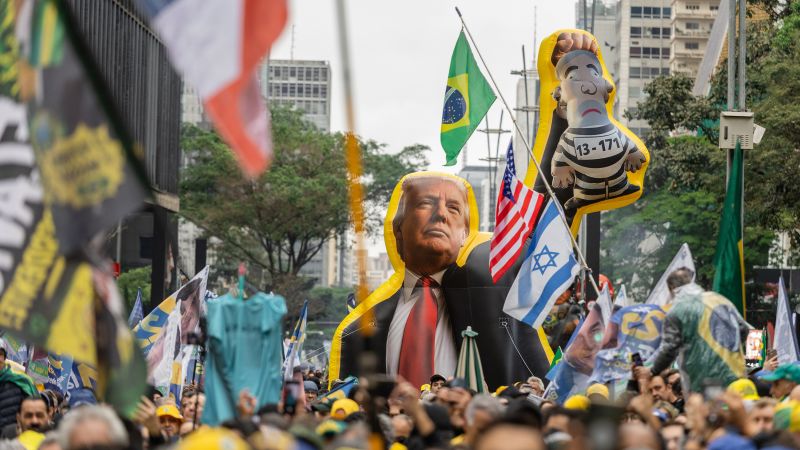
Brazil election heads to runoff after campaign dominated by crime, corruption and Trump

Daftar Isi
Brazil Election Heads to Runoff in High-Stakes Lula-Bolsonaro Contest
Activelifezero.com – Brazil election heads to runoff after neither President Luiz Inácio Lula da Silva nor Senator Flávio Bolsonaro secured the majority required to win in the first round. Brazilians will return to the polls on October 25, choosing between Lula’s bid for a fourth term and Bolsonaro’s effort to extend the political movement built by his father, former President Jair Bolsonaro.
The campaign was dominated by public safety, corruption, political polarization and Brazil’s increasingly tense relationship with the United States. The result now turns the race into a direct contest for voters who supported other candidates in the opening round.
Flávio Bolsonaro, 45, finished ahead of Lula despite polls through Saturday indicating that the two were effectively tied. His result gives the Bolsonaro camp a renewed path to the presidency, even as Jair Bolsonaro remains unable to seek office himself.
“It’s two competing visions of what the country should look like and what Latin America should look like,” said Brian Winter, editor-in-chief of Americas Quarterly and vice president of policy at Americas Society/Council of the Americas.
A Runoff Shaped by Competing Political Visions
Brazil election heads to runoff at a moment when many voters are weighing concern about crime against frustration with years of political conflict and corruption scandals. Compulsory voting applies to most Brazilian adults, helping make participation among the strongest in the Americas and ensuring that the finalists must appeal well beyond their most loyal supporters.
Jair Bolsonaro is serving a 27-year prison sentence following his conviction for attempting to overturn his 2022 election defeat through a coup attempt. He is under humanitarian house arrest because of health reasons. Although he cannot run, Flávio Bolsonaro’s campaign offers his political allies an opportunity to remain competitive at the national level.
Lula, 80, is seeking what would likely be his final term in office. He led Brazil from 2003 to 2010 and returned to the presidency in 2023 after a remarkable political comeback. Lula spent 580 days in prison on corruption convictions before Brazil’s Supreme Court annulled those convictions in 2021, restoring his political rights. He then defeated Jair Bolsonaro in the 2022 election.
Eliminated Candidates Leave Key Voters Up for Grabs
The candidates who failed to advance represented a broad mix of political views. They included Augusto Cury, a centrist psychiatrist and bestselling author; Ronaldo Caiado, a right-wing former governor of Goiás; Renan Santos, founder of the right-wing Movimento Brasil Livre and candidate for the Missão party; and Romeu Zema, the economically liberal, right-leaning former governor of Minas Gerais.
Their supporters may prove decisive in the final stage of the campaign. Lula and Bolsonaro will need to persuade voters whose first-round choices reflected different priorities, from economic liberalism and public security to opposition to Brazil’s long-running political establishment.
For Lula, the challenge is to defend his record and make the case for continuity after returning to office in 2023. For Flávio Bolsonaro, it is to broaden support beyond the former president’s core base while answering concerns about the Bolsonaro family’s political legacy and its ties to Washington.
US Relations and Sovereignty Become Campaign Issues
Foreign policy has become an unusually visible part of the contest. Lula has promoted multilateral diplomacy and a more independent role for Brazil in global affairs, while the Bolsonaro movement is associated with closer alignment with conservative leaders in the region and with US President Donald Trump.
China has been Brazil’s largest export market since 2009, and its lead has expanded since Trump returned to power. Those trade relationships reinforce Lula’s argument that Brazil should avoid excessive dependence on any one international partner.
Tensions with Washington intensified in the summer of 2025, when Trump announced tariffs on a range of Brazilian goods. The administration cited what it described as the politically motivated prosecution of Jair Bolsonaro. The tariffs were withdrawn in November, but they placed pressure on Brazilian businesses and became a major political issue.
Eduardo Bolsonaro, another son of the former president, moved to the United States and lobbied the Trump administration on his father’s behalf. He initially took credit for Washington’s pressure, a position that later complicated Flávio Bolsonaro’s campaign as Brazilian companies felt the effects of the tariff measures.
Trade friction returned this summer when Trump imposed new tariffs on selected Brazilian products. Those measures remain in force. Lula rejected the tariffs and threatened retaliation, but said in a September interview with Christiane Amanpour that he would delay action while negotiations with Washington continued.
What Is at Stake for Brazil
Brazil election heads to runoff with the country facing a decision that will shape both domestic policy and its role in Latin America. The winner will confront public concern over organized crime, demands for economic stability and the continuing effects of sharply divided politics.
The final result will also influence whether Brazil continues Lula’s effort to pursue a multipolar foreign policy or moves toward a more conservative regional alignment. With two weeks of direct campaigning ahead, the candidates’ ability to attract undecided and first-round opposition voters could determine who leads Latin America’s largest democracy.
Brazil Runoff Election FAQ
When is Brazil’s presidential runoff? Brazilian voters are scheduled to return to the polls on October 25 after no candidate won the required majority in the first round.
Who is competing in the runoff? President Luiz Inácio Lula da Silva will face right-wing Senator Flávio Bolsonaro, who finished ahead of Lula in the first round.
Why is voting especially important in Brazil? Voting is compulsory for most Brazilian adults, so turnout is typically high. The runoff will determine Brazil’s next president and could reshape the country’s approach to public security, trade and relations with the United States.
Why are US tariffs part of the campaign? Tariffs imposed by the Trump administration on Brazilian products have affected businesses and raised questions about national sovereignty, trade policy and the Bolsonaro family’s relationship with Washington.
Related Reading
Frequently Asked Questions
What is Brazil election heads to runoff after?
Brazil election heads to runoff after is the main topic of this guide. The article explains the context, practical details, and next steps readers should understand.
Why does Brazil election heads to runoff after matter?
Brazil election heads to runoff after matters because readers are looking for a useful answer, not just a short summary. Good content should match search intent and help them decide what to do next.