Hegseth announces new autonomous weapons command while repeating attacks on “woke” culture during speech to troops

Daftar Isi
Pentagon unveils autonomous warfare command as Hegseth returns to Quantico
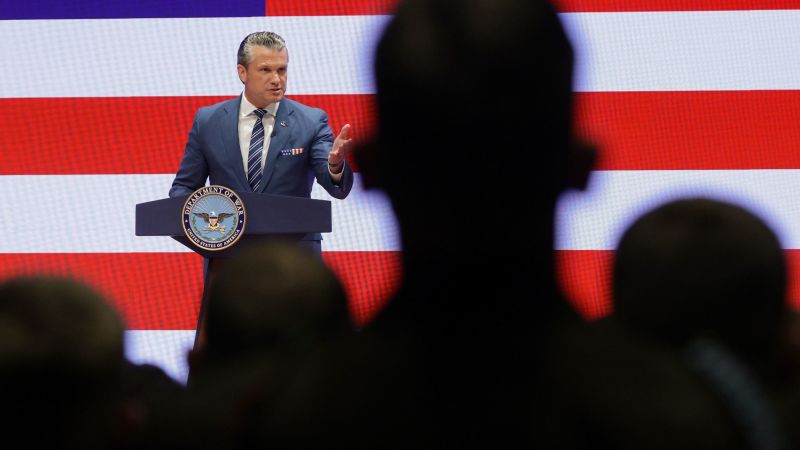
Activelifezero.com – Defense Secretary Pete Hegseth used a Wednesday address at Quantico, Virginia, to announce a new Pentagon command devoted to autonomous warfare, artificial intelligence, robotics and unmanned weapons. The organization, called the Autonomous Warfare Command, will be overseen by a four-star general, placing it among the military’s most consequential future-operating structures.
The announcement came exactly one year after Hegseth delivered a highly publicized Quantico speech aimed at generals and admirals. This time, his audience was largely made up of junior officers and noncommissioned officers, with roughly 600 lower-level military leaders invited to hear his message.
Hegseth said the command is intended to embed rapidly advancing autonomous technology within the military’s permanent leadership system rather than treating it as a temporary experiment or a collection of isolated programs.
“The autonomous and robotic revolution has enormous implications for equipment, doctrine, organization, and the assumptions that have governed warfare for decades,” Hegseth said. “Lasting change must be anchored in military command structures.”
Ukraine lessons and a faster drone effort
Hegseth pointed to the war in Ukraine as a major influence on the Pentagon’s decision. The conflict has underscored the central battlefield role of drones and other unmanned systems, while also highlighting the need for militaries to adapt quickly as technology and tactics change.
Alongside the new command, Hegseth announced Project Agincourt, an effort designed to reshape the way the Defense Department buys, evaluates and deploys drones and comparable weapons. Its focus is expected to include reducing barriers between development, testing and fielding so that useful systems can reach military units more quickly.
The four-star leadership assignment signals that autonomous warfare is being positioned as a core military priority. The new command will be responsible for issues that go beyond hardware, including doctrine, force organization and assumptions about how future conflicts may be fought.
Among those attending the Quantico event were Tesla and SpaceX chief executive Elon Musk, former House Speaker Newt Gingrich, and Palmer Luckey, the founder and head of defense technology company Anduril. Hegseth said the three men will chair Project Meridian, a new study group examining the future of warfare.
Renewed cultural criticism and senior-officer reductions
While autonomous weapons dominated the policy announcements, Hegseth also returned to arguments he has repeatedly made about the military’s culture and leadership. He said he had directed additional reductions in the senior-officer ranks as part of a broader push against policies he has characterized as “woke.”
The new target calls for a 20% reduction in general and flag officer jobs, doubling the 10% cut in generals and admirals that Hegseth directed in a May 2025 memorandum. Military branches have already eliminated some available four-star assignments, a move that has required certain senior leaders to leave service.
More than two dozen senior officers have been dismissed across the armed forces under Hegseth, often with little or no public explanation. The removals have drawn concern from lawmakers in both political parties, and criticism surrounding the firings contributed to the resignation of former Army Secretary Dan Driscoll.
Driscoll’s concerns included Army transformation, readiness and the removal of generals who had been responsible for those efforts. The debate reflects a broader tension within the Pentagon: the department is seeking major technological change while simultaneously reshaping the ranks of leaders charged with managing it.
A familiar Quantico message for a different audience
Hegseth’s previous Quantico speech, delivered September 30, 2025, was aimed at the military’s highest-ranking officers. He sharply attacked what he called “the woke department” and outlined his preferred standards for the force, including criticism of “fat troops” and “beardos.”
At that event, he said the Trump administration would “rip out the politics” of the Pentagon and argued that the department’s sole focus should be “warfighting, preparing for war and preparing to win.” Much of the same cultural criticism appeared in Wednesday’s remarks, though the Pentagon selected a different audience: officers and enlisted leaders who oversee much of the military’s daily work.
Hegseth also criticized press coverage of U.S. military operations, comparing some coverage to “treason,” while acknowledging that a free press remains important. The comments added another political element to a speech that otherwise centered on the Pentagon’s effort to prepare for technologically changing conflicts.
Address coincides with Iraq withdrawal milestone
The Quantico address took place as U.S. forces completed their withdrawal from Iraq. The departure closes the Iraq phase of a mission launched in 2014, when ISIS captured major cities across Iraq and Syria and expanded quickly across the region.
For the Pentagon, the timing placed two eras of military policy side by side: the conclusion of a long campaign against a terrorist organization and the creation of a command intended for warfare shaped by artificial intelligence, robotics and autonomous weapons. How quickly the new command can turn that mission into deployable capabilities, effective doctrine and trained forces will help determine its practical significance.
Related Reading
Frequently Asked Questions
What is Hegseth announces new autonomous weapons command?
Hegseth announces new autonomous weapons command is the main topic of this guide. The article explains the context, practical details, and next steps readers should understand.
Why does Hegseth announces new autonomous weapons command matter?
Hegseth announces new autonomous weapons command matters because readers are looking for a useful answer, not just a short summary. Good content should match search intent and help them decide what to do next.