Lindsay Clancy’s attorney said prosecutors did not prove she actually killed her children

Daftar Isi
Defense Challenges Evidence After Lindsay Clancy Murder Case Ends in Mistrial
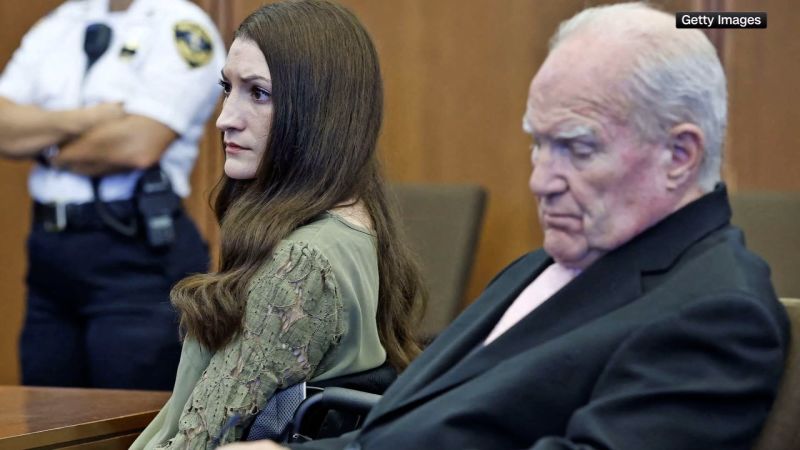
Activelifezero.com – Lindsay Clancy’s defense attorney is pressing a Massachusetts judge to end the murder case against her after the trial concerning the deaths of her three children concluded in a mistrial earlier this month.
Kevin Reddington argued during a Tuesday hearing that prosecutors did not present legally sufficient proof that Clancy killed Cora, 5, Dawson, 3, and Callan, who was 8 months old, in January 2023. The Plymouth County district attorney has not announced whether the case will be tried again, and neither side has publicly discussed whether plea negotiations are underway.
Clancy faces murder charges in connection with the deaths of the children. Prosecutors have alleged that she harmed the children and then attempted to take her own life by cutting her neck and wrists before jumping from a window.
Motion Seeks Finding of Not Guilty
Reddington’s latest request is a Rule 25 motion, a procedure in Massachusetts that asks a judge to enter a not-guilty finding when the prosecution’s evidence could not legally support a conviction. Such a motion tests whether a rational juror could find the required elements of an offense proved beyond a reasonable doubt.
In court, Reddington questioned whether the investigation adequately established who caused the children’s deaths. He noted that Clancy never expressly admitted responsibility and criticized what he described as an incomplete inquiry.
“Where is the evidence that she did this?”
He argued that investigators moved too quickly to treat Clancy as the responsible person.
“They just immediately assumed that this woman was guilty.”
Outside the courtroom, Reddington said his position did not represent a new theory of the case. He maintained that the prosecution had failed to meet its evidentiary burden.
“It’s not new rocket science by any means. It’s the fact that they cannot prove probable cause.”
His courtroom arguments stand in contrast to the approach used during the trial, where the defense contended that Clancy was experiencing postpartum psychosis at the time of the deaths and therefore was not criminally responsible.
Two Different Questions in a Criminal Case
The distinction matters because criminal proceedings can involve both the question of whether a defendant committed an act and whether that person can be held legally responsible for it. The defense had sought a bifurcated process: one proceeding on whether Clancy committed the alleged acts, followed by another on criminal responsibility if needed.
The judge rejected that request earlier in the year. That ruling required the defense to decide how to present its arguments before one jury.
Massachusetts defense attorney Elyse Hershon said the prosecution retains the duty to establish that the defendant committed the crime, even if a defense lawyer makes concessions while advancing a mental-health defense.
“Whether or not a lawyer concedes, though, that their client did it as part of the defense, the commonwealth still has to prove it was her.”
Hershon said Reddington could theoretically have pursued both themes at trial: arguing there was reasonable doubt that Clancy caused the deaths, while also maintaining that she lacked criminal responsibility if jurors concluded that she did. But she said the lawyer may have viewed the mental-health defense as the more credible strategic choice for the jury.
“Could he technically have said she didn’t do it, it’s reasonable doubt, and also, if you think she did it, she’s not criminally responsible. Technically, yes, he could have done that. But strategically, he made the decision to do what he’d have more credibility presenting to the jury, and he went with a stronger defense in his mind.”
Reddington renewed his request for separate phases while asking for an acquittal Tuesday. He said he would again seek a split trial if the case moves forward with another jury.
Disputes Over Physical Evidence and Timing
The defense attacked several portions of the prosecution’s evidence, including exercise bands, DNA testing, fingerprint work and the overall investigative process. Reddington characterized much of the case as circumstantial and said the evidence did not reliably connect Clancy to the children’s deaths.
“When you consider the evidence that the government has, you have the exercise bands, you have the woefully deficient DNA, you have the woefully deficient fingerprinting, you have the horrific, ridiculous investigation.”
He also disputed the use of any claimed admission, arguing that state law would not allow it without corroboration. Reddington told the judge that Clancy had no memory of the events after emerging from what he described as an obvious coma, citing testimony from psychiatric specialists and medical staff at Brigham and Women’s Hospital.
“Where is the admission? Where does she say that she did this? And what’s most chilling is the fact that when she comes out of this obvious coma that she is in – Your Honor heard the testimony from the psychiatrist and from the doctors at Brigham and Women’s Hospital – She was told what happened. She had no memory of what happened.”
Reddington further challenged the prosecution’s reconstruction of the day, saying the timeline did not fit the alleged sequence of events. He argued that even the prosecution’s closing presentation acknowledged limitations on the available time.
“Even the government, in their own closing, indicated to the jury that she did not have enough time to do this. The timeline is ridiculous.”
Prosecutor Shanan Buckingham rejected the defense argument, telling the court that the commonwealth had established that Clancy killed the children and describing Reddington’s position as “laughable.”
No retrial date has been set. The judge’s decision on the Rule 25 motion, along with any future decision by prosecutors about a second trial, will determine the next major step in a case that has raised difficult questions about evidence, mental health and criminal responsibility.
Related Reading
Frequently Asked Questions
What is Lindsay Clancy s attorney said prosecutors?
Lindsay Clancy s attorney said prosecutors is the main topic of this guide. The article explains the context, practical details, and next steps readers should understand.
Why does Lindsay Clancy s attorney said prosecutors matter?
Lindsay Clancy s attorney said prosecutors matters because readers are looking for a useful answer, not just a short summary. Good content should match search intent and help them decide what to do next.