Military F-16 fighter jet crashes and bursts into flames in Michigan during training exercise

Daftar Isi
F-16 Crash in Northern Michigan Sends Pilot to Hospital, Prompts Chemical Safety Response
Activelifezero.com – A Texas Air National Guard F-16 went down Thursday afternoon in Grand Traverse County, Michigan, during a routine training flight, setting off a large fire and forcing nearby residents and businesses to leave the area temporarily.
The aircraft had departed from a National Guard installation in Alpena, Michigan, for a training mission. It was assigned to the Texas Air National Guard’s 149th Fighter Wing, the Texas Military Department said. The pilot safely ejected before the jet struck the ground and was transported to a local hospital in stable condition.
The cause remains under investigation. Radio traffic captured during the emergency suggested a possible bird strike, though officials have not confirmed that explanation.
“We have a possible mayday by wingman. I believe (they) may have taken a bird,”
A controller later told other aircraft that the crew may have lost an engine before ejecting. The crash site produced heavy black smoke visible in the rural area south of Traverse City, roughly 130 miles north of Grand Rapids.
Fireball and Explosions Seen Near Homes
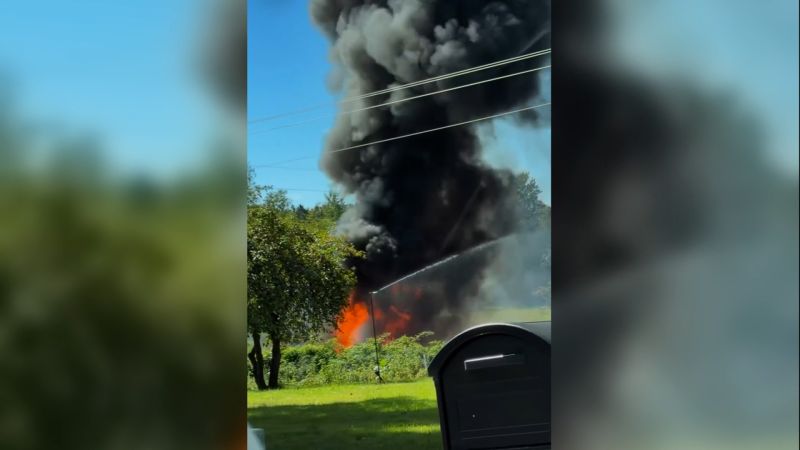
Video from the scene showed a fireball erupting in a field close to residential properties, followed by a substantial plume of smoke. Michigan State Police confirmed that the F-16 had crashed in Grand Traverse County.
Shellie Doornbos said she and her husband were returning from errands when they witnessed the flames. While leaving the area, they heard explosions coming from the burning aircraft.
“We could hear explosions coming from the fire and asked a police officer what it was we were hearing as we were driving away, and he told us it was a fighter jet crash and the explosions were ammunition,”
No injuries beyond the pilot were initially identified at the crash location. The emergency response later expanded because of concerns about hazardous materials associated with the aircraft.
First Responders Evaluated for Hydrazine Exposure
Several first responders received treatment after possible exposure to toxic chemicals released in connection with the crash. Michigan State Police said Friday morning that patients who remained hospitalized were expected to be released later in the day.
Munson Medical Center set up an outdoor treatment area to assess and decontaminate people who may have encountered hydrazine. The substance is used in the F-16’s emergency power system and is highly toxic. Exposure can cause respiratory symptoms including coughing, wheezing and difficulty breathing.
Hydrazine-related precautions are a central reason emergency crews must carefully control access around a military aircraft crash. Even when a fire is contained, responders may need specialized protective equipment and decontamination procedures before the area can be considered safe.
Authorities ordered evacuations for homes and businesses within one mile of the scene because of the chemical spill risk. Most residents were cleared to return by 10 p.m. Thursday, indicating that officials had reduced the immediate danger sufficiently to lift much of the restriction.
Bird Strikes Are a Recurring Aviation Risk
Investigators have not determined whether wildlife played a role, but bird strikes are a familiar hazard for both military and civilian aircraft. The Federal Aviation Administration’s Wildlife Strike Database records thousands of encounters between aircraft and birds or other animals across the United States each year.
Traverse City alone recorded 41 wildlife strikes in 2025. Many such events do not result in serious damage, but a strike can become dangerous when it affects a critical system, particularly during lower-altitude flight phases when pilots have less time to respond.
The reported radio call and the possible engine issue will be examined as part of the military investigation. Investigators will also review the aircraft’s maintenance history, flight conditions, communications and evidence recovered from the crash area to establish what occurred before the pilot ejected.
The incident underscores the layered safety systems built into military aviation training. The pilot’s successful ejection prevented a more serious outcome, while the response from law enforcement, fire crews, medical personnel and military officials focused on protecting the surrounding community from the fire and chemical hazards that followed.
Related Reading
Frequently Asked Questions
What is Military F 16 fighter jet crashes?
Military F 16 fighter jet crashes is the main topic of this guide. The article explains the context, practical details, and next steps readers should understand.
Why does Military F 16 fighter jet crashes matter?
Military F 16 fighter jet crashes matters because readers are looking for a useful answer, not just a short summary. Good content should match search intent and help them decide what to do next.