An ambassador in Ljubljana, but not in London: Israel’s foreign policy shifts away from longstanding allies

Daftar Isi
Israel Redirects Its Diplomatic Focus as European Pressure Grows
Activelifezero.com – Israel’s diplomatic calendar this month has highlighted a widening divide in its foreign relationships. While Foreign Minister Gideon Saar marked new diplomatic openings with countries such as Nauru and Slovenia, the government was simultaneously confronting one of the strongest coordinated responses from Western partners in recent years over settlements in the occupied West Bank.
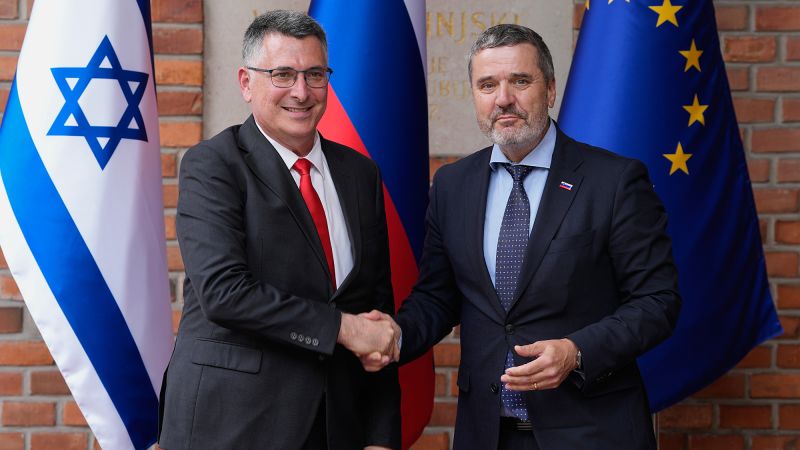
The contrast was especially stark between Ljubljana and London. Saar traveled to Slovenia to inaugurate Israel’s new embassy and praise the country’s center-right government for its support within the European Union. A sizeable Israeli business delegation accompanied him, underscoring the importance Israel places on strengthening those ties.
Days earlier, Saar had attended the opening of Nauru’s embassy in Jerusalem, describing the Pacific island state, home to roughly 12,000 people, as one of Israel’s closest friends internationally. Such events reflect an effort to broaden Israel’s diplomatic base as relations with several longstanding European partners become more strained.
London Post Remains Empty
There was no equivalent diplomatic celebration in the United Kingdom. Israel has been without an ambassador in London for almost a year. Prime Minister Benjamin Netanyahu had intended to appoint his chief of staff, Tzachi Braverman, but Braverman was prevented from leaving Israel because of a criminal investigation, leaving the role unfilled.
At the same time, the United Kingdom joined 11 other countries in announcing sanctions and trade restrictions aimed at Israeli settlements in the West Bank. The measures marked a significant rebuke from governments that have long maintained close ties with Israel.
British Foreign Secretary Ed Miliband linked the latest action to Israel’s decision to proceed with the E1 settlement project. Critics of that project argue that it would divide the West Bank geographically and further undermine the possibility of a contiguous Palestinian state in the future.
The diplomatic dispute is not limited to one settlement plan or one round of sanctions. It is part of a broader shift in which several Western governments have adopted increasingly direct measures in response to settlement expansion and heightened violence involving settlers in the West Bank.
A Growing List of Measures
In September 2025, Britain, Canada, France and more than a dozen other Western countries recognized Palestinian statehood. That decision was followed in June by coordinated sanctions from the United Kingdom, Canada, France, Norway, Australia and New Zealand. Those sanctions targeted people and networks accused of funding or facilitating settler violence.
Several governments have also taken individual steps. France barred far-right Finance Minister Bezalel Smotrich from entering the country. Italy opened an investigation into National Security Minister Itamar Ben Gvir over the treatment of detained activists, including Italian citizens, after Israel intercepted a Gaza-bound aid flotilla.
The Netherlands declared both Ben Gvir and Smotrich persona non grata and approved a ban on imports of settlement products. Together, these moves indicate that criticism once expressed mainly through diplomatic statements is increasingly being translated into specific legal, commercial and travel restrictions.
Not every proposed European action has moved forward. Israel has succeeded in delaying broader measures at the EU level, including efforts led by France and Sweden to prohibit settlement trade across the bloc. Attempts to remove Israel from Horizon, the EU’s flagship research program, have also stalled.
Changing Power Dynamics in Brussels
For years, Hungary under Viktor Orban served as an important obstacle to EU measures targeting Israel. Its government could help prevent consensus on tougher European action. Following a leadership change in Budapest, Slovenia has emerged as a more important supportive voice for Israel in Brussels.
That makes Saar’s visit to Ljubljana more than a ceremonial embassy opening. Slovenia’s position inside the EU gives it potential influence at a time when Israel is working to prevent additional European restrictions. Israeli officials have reason to value support from governments willing to resist collective action at the bloc level.
Dr. Rémi Daniel of Israel’s Institute for National Security Studies identified Germany and Italy as particularly important countries because of their capacity to block EU-wide proposals. Neither had joined the latest sanctions, limiting the scope of possible action at the European level.
“They are the most important EU member states because they have the power to block plans at the European level,” he said.
Still, Daniel warned that the political balance was moving in an unfavorable direction for Israel as more countries in Europe’s center shifted toward harsher policies.
“The swinging center is going more against Israel.”
Defense Ties Remain Strong in Parts of Europe
Political tensions have not erased all areas of cooperation. Some European countries continue to deepen defense relationships with Israel, particularly through major arms agreements. Last month, Israel signed a $3.5 billion air-defense agreement with Greece, among the largest weapons deals in Israel’s history.
Earlier in 2026, Israel Aerospace Industries reached a $3.1 billion agreement with Germany to expand the supply of Arrow missile interceptor systems. These contracts show that European criticism of Israeli policy does not automatically translate into a complete break in strategic or defense ties.
The coexistence of sanctions, diplomatic disputes and large defense purchases illustrates the complexity of Israel’s current position in Europe. Governments may seek to impose consequences over West Bank policy while continuing to view Israeli defense technology as strategically valuable.
An Increasingly Confrontational Response
Israel’s reaction to the new British-led measures has been openly confrontational. Saar announced plans to close the British Consulate General in Jerusalem, halt British training for Palestinian Authority security forces and deny entry to 12 British officials and lawmakers.
The response signals that Israel is prepared to answer European pressure with its own diplomatic restrictions. Yet it also risks deepening the rift with countries that have historically been among Israel’s most significant political and economic partners.
Israel is therefore pursuing two tracks at once: resisting sanctions and settlement-related criticism from traditional Western allies, while investing more attention in smaller states and governments it views as politically dependable. The embassy openings in Jerusalem and Ljubljana offer visible symbols of that strategy, but they do not remove the challenge posed by the changing mood in much of Western Europe.
Related Reading
Frequently Asked Questions
What is An ambassador in Ljubljana but not?
An ambassador in Ljubljana but not is the main topic of this guide. The article explains the context, practical details, and next steps readers should understand.
Why does An ambassador in Ljubljana but not matter?
An ambassador in Ljubljana but not matters because readers are looking for a useful answer, not just a short summary. Good content should match search intent and help them decide what to do next.