Missouri Supreme Court blocks Trump-backed US House map and orders it be put to a vote

Missouri Supreme Court Blocks Trump-Backed Map
Activelifezero.com – The Missouri Supreme Court blocks Trump’s preferred congressional redistricting plan in a unanimous ruling issued Thursday, ordering that the revised House districts be submitted to a statewide referendum before they can take effect. Under the decision, the boundaries drawn after the 2020 census remain the operative framework for electing the state’s eight members of Congress in November 2026. Unless voters affirm the Republican-led Legislature’s alternative plan at the ballot box, the old map governs the midterm contest.
The ruling sharply upends a national redistricting strategy in which Republicans had counted on Missouri’s redrawn lines to deliver an additional House seat and reinforce their slim majority. The state’s highest court found that the new map never legally activated because a citizen petition process had been frozen since December of the prior year, leaving the question of its validity unresolved until now.
How a Petition Triggered the Standoff
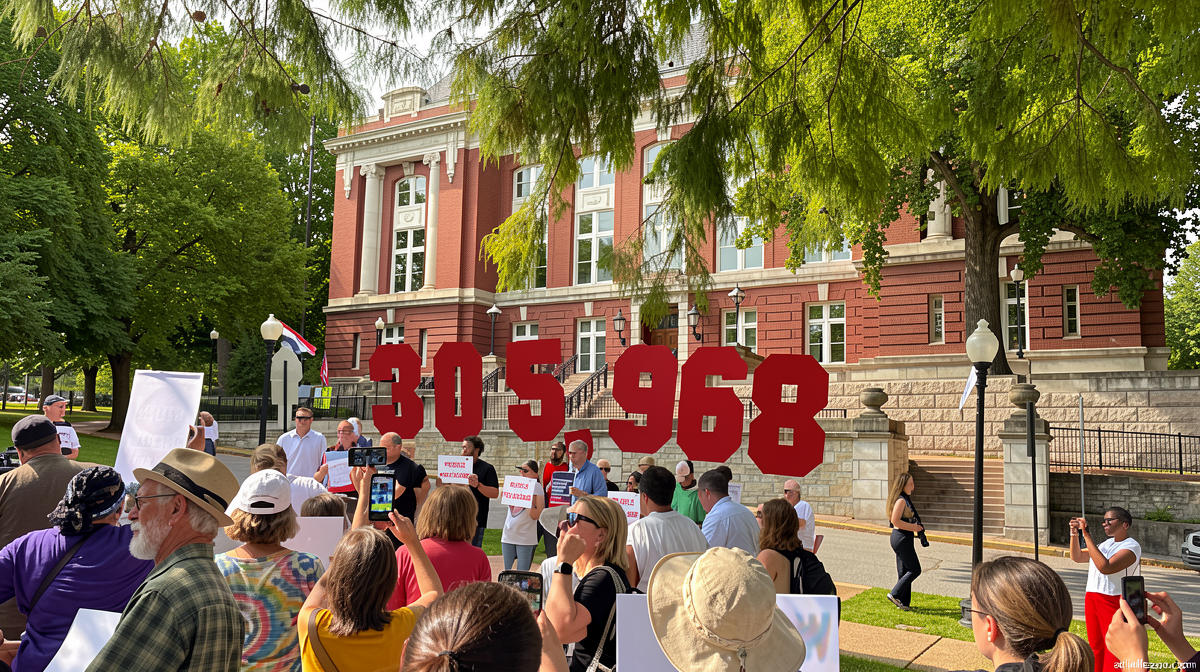
Opponents of the revised districts gathered more than 300,000 signatures and filed them in December, invoking Missouri’s constitutional right to petition for a referendum on “any act” of the Legislature. Republican Secretary of State Denny Hoskins held the petition until primary election day in August, then formally rejected it, arguing the referendum mechanism does not extend to congressional districting. A lower court agreed with Hoskins; the state’s highest tribunal reversed that determination.
“The referendum petition was legal, sufficient, and timely, and the secretary incorrectly concluded otherwise,” the court wrote in its opinion.
The justices further held that the legislation containing the new boundaries “did not go into effect and will not go into effect unless and until approved by the voters.” In practical terms, the post-2020-census map “remains in full force and effect for the November 2026 general election.”
Political Fallout and the Fifth District Showdown
Missouri Attorney General Catherine Hanaway, a Republican whose office had represented Hoskins in the litigation, announced she would file an immediate appeal with the United States Supreme Court, characterizing the ruling as an unprecedented breach of federal law.
“Never before in American history has a court overturned a congressional map after a primary and before a general election,” Hanaway said in a written statement, adding that the decision “has thrust our state into a full-fledged constitutional crisis.”
President Trump took to social media Thursday to denounce the ruling, arguing that the compressed timeline between the decision and Election Day makes restoration of the revised map impossible and that the judicial intervention disrupts the electoral process.
“There won’t be enough time to change the map back with the Election coming up in a very short period of time. The Election Process, as usual, is being disturbed in America! Missouri must be able to use the map that was in effect just a couple of months ago, in the Primary,” Trump wrote.
The practical stakes center on Missouri’s 5th Congressional District, a Kansas City–based seat held by Democrat Emanuel Cleaver. After Trump publicly urged Republican governors to redraw districts in their party’s favor, Governor Mike Kehoe convened a special legislative session last year to overhaul that district. The revised boundaries stretched the seat eastward into rural, heavily Republican territory, replacing roughly 59 percent of the old electorate, according to an Associated Press estimate.
Cleaver, who has won the district with at least 60 percent of the vote in each of the past two elections, ran unopposed in the August primary under the new lines. Republican state Senator Rick Brattin, a Marine veteran and founding member of the conservative Missouri Freedom Caucus, captured the GOP nomination in the reshaped district. Cleaver acknowledged he had not placed campaign signage across many of the newly added rural areas, explaining that he was awaiting the court’s ruling. He nonetheless pledged to press forward regardless of the outcome.
“We’re going to run, and we’re going to run hard, no matter where we are,” Cleaver told supporters last month at the Missouri State Fairgrounds in Sedalia, a community now inside the revised 5th District.
Brattin, for his part, questioned whether Cleaver could credibly represent a district that now encompasses communities far removed from Kansas City’s urban core.
Frequently Asked Questions
What happens if Missouri voters reject the new map at the referendum? The post-2020-census districts remain in full force and effect for the November 2026 general election. No further legislative action is required to keep the old boundaries operative.
Can the state appeal the ruling after the election? Attorney General Hanaway has announced an immediate appeal to the United States Supreme Court. The outcome of that appeal could alter which map governs the general election, though the compressed timeline makes a pre-election reversal unlikely.
Which district is most affected by the ruling? Missouri’s 5th Congressional District, currently held by Democrat Emanuel Cleaver, is the primary seat at issue. The revised boundaries replaced approximately 59 percent of the old electorate with rural, Republican-leaning territory.
When was the petition filed and what did it seek? More than 300,000 signatures were collected and filed in December of the prior year, seeking to place the redistricting measure before voters under Missouri’s constitutional referendum provision.