‘The world will be amazed:’ Iran’s commanders prepare for further war

Daftar Isi
Iran Signals Readiness for a Wider Conflict as Washington Weighs Its Next Move
Activelifezero.com – Iranian military leaders are increasingly presenting their country as ready for a prolonged and potentially broader confrontation with the United States, raising fears among civilians already living with the possibility of renewed airstrikes. The warnings come as the conflict launched by the United States and Israel in February approaches its ninth month without a clear political resolution.
Tehran has paired public threats with claims that it has expanded its weapons inventory, portraying those capabilities as a deterrent against any decision by President Donald Trump to restart major combat operations. Iranian officials have suggested that a future escalation could reach beyond the immediate region and affect strategic infrastructure with international consequences.
Among the possibilities raised publicly are attacks on oil and gas facilities in the region, artificial intelligence data centers, and undersea internet cables. Such targets would represent a major expansion of the conflict’s economic and technological impact, potentially disrupting energy markets, communications, and military logistics far from Iran’s borders.
Military Leaders Promise New Options
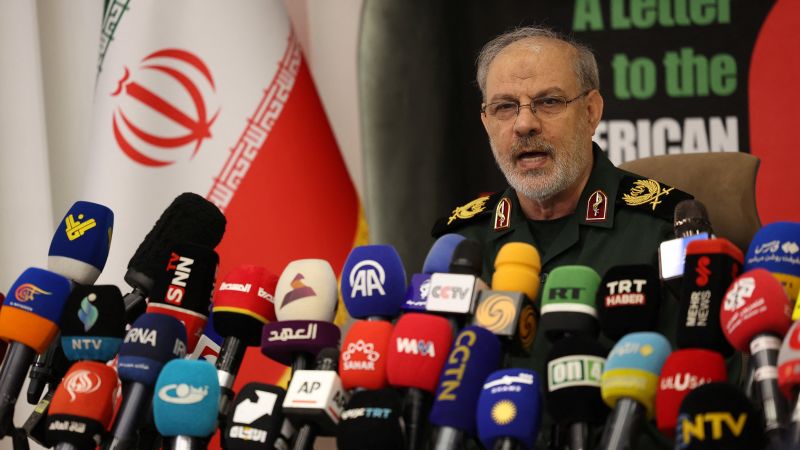
Hossein Mohebbi, a spokesperson for Iran’s Revolutionary Guards, said late last month that Iran had additional targets in mind that had not previously been struck. He also emphasized that Iranian forces had made preparations for a conflict that could last well beyond a single round of fighting.
“The world will be amazed,” Mohebbi said. “We have new targets that have not yet been attacked.”
“The war is not over,” Mohebbi said. “The Islamic Revolutionary Guard Corps has prepared itself for a long-term war.”
The messaging reflects a more assertive posture from Tehran. Rather than limiting its response to retaliation after an attack, Iran has indicated it may consider a military doctrine that permits action before it is hit. That shift increases the danger of miscalculation: military movements intended as deterrence could be interpreted by the other side as preparation for an imminent strike.
Revolutionary Guards-linked social media accounts said last week that nationwide exercises included the simultaneous launch of 30 ballistic missiles. The exercises were presented as evidence of operational readiness, though their broader purpose also appeared political: demonstrating that Iran can still threaten adversaries despite months of pressure and damage from the war.
A Stalemate With High Costs
Neither side has secured an outcome that clearly ends the confrontation. Tehran points to the survival of its government and military structure as proof that it has withstood the campaign. Washington, meanwhile, has highlighted the harm inflicted on Iranian state and military capabilities.
The Trump administration has continued exploring economic and military pressure intended to force Iranian capitulation, an objective Tehran has resisted. In recent weeks, White House advisers have met to review options involving Iran, even as Trump publicly said he would not take further action before the November 3 midterm elections.
That statement has not removed uncertainty. Some advisers have privately questioned whether the pledge is fixed or whether circumstances could prompt a change before election day. The lack of a firm endpoint has left regional governments, markets, and ordinary families trying to assess whether the current pause is temporary or the beginning of a longer stalemate.
US Strike Planning and the MOAB Question
US military planners have developed potential new strike options that could be used if Trump authorizes another phase of combat, either before or after the midterm vote. Those plans include the possible use of the GBU-43/B Massive Ordnance Air Blast Bomb, widely known as the MOAB, against Iranian energy assets and nuclear-related locations.
The MOAB is the largest non-nuclear weapon in the US arsenal. Its use would be seen as a substantial escalation, both because of its destructive power and because it could signal an attempt to inflict deeper damage on protected or hardened infrastructure.
Iranian army commander Alireza Sheikh dismissed the prospect as an effort to frighten the public.
“These are propaganda tools intended to intimidate the Iranian people,” Sheikh said. “The Iranian people are the father of all bombs.”
For Iran’s leadership, public defiance serves several purposes. It seeks to discourage further US action, reinforce domestic resolve, and signal to regional rivals that Tehran retains options. Yet the rhetoric also sharpens anxiety for people who would bear the immediate consequences of another round of bombing.
Tehran Residents Prepare for the Worst
Residents in Tehran describe a daily life shaped by anticipation rather than certainty. A 70-year-old resident said preparations had become routine, including charging power banks and storing water in case attacks resume without warning.
“Every single day and every night, we’re waiting for the bombing to start again,” the resident said. “I’ve charged all my power banks, stocked up on water, and got everything ready, because the attacks could start again at any moment, any day.”
A mother of two said the journey to school has become a source of constant worry as her children pass areas where Revolutionary Guards personnel remain visible and military sites are still active.
“I would like to know exactly what else the US is planning to bomb?” she said. “They couldn’t even take (the Iranian leadership) out. You couldn’t negotiate either. So, what’s the point of starting another war?”
Another Tehran resident said many people now assume hostilities will resume, turning conversation about war into a persistent part of everyday life.
“It’s all anyone can talk about…you just have it in the back of your head, is tonight the night? Is it tomorrow?” the resident said.
The residents spoke anonymously because of fears about discussing the prospect of war openly. Their accounts underline the divide between strategic calculations in capitals and the immediate reality on the ground: families planning for blackouts, disrupted services, and sudden violence.
Risks Beyond the Middle East
The prospect of a wider conflict has also raised concerns in Europe. Farzin Nadimi, a senior fellow at The Washington Institute whose work focuses on US policy in the region, said that if Tehran chose to use long-range missiles against Europe, possible targets could include US forces at air bases in England and the logistics center at Ramstein, Germany.
Ramstein is the largest US military installation in Germany, making it a strategically important hub. Any attack on US-linked facilities in Europe would transform a regional war into a much broader security crisis and could deepen pressure on allied governments to respond.
For now, Iran’s declarations, US planning, and the unresolved political goals of both sides have created an unstable pause. The central question is not simply whether fighting resumes, but whether the next phase remains geographically contained—or expands into infrastructure, energy systems, and military networks that connect the Middle East to the wider world.
Related Reading
Frequently Asked Questions
What is The world will be amazed Iran?
The world will be amazed Iran is the main topic of this guide. The article explains the context, practical details, and next steps readers should understand.
Why does The world will be amazed Iran matter?
The world will be amazed Iran matters because readers are looking for a useful answer, not just a short summary. Good content should match search intent and help them decide what to do next.