Russian attack on Ukrainian ammunition warehouse triggers waves of blasts, killing 37

Russian Attack on Ukrainian Ammunition Depot Kills 37
Activelifezero.com – A Russian attack on Ukrainian ammunition stored in a depot adjacent to Bucha, a residential suburb of Kyiv, set off a cascading series of detonations that flattened apartment blocks and left at least 37 people dead by Saturday afternoon. Rescue teams were still combing through collapsed buildings as authorities cautioned the toll could rise. The incident stands as one of the deadliest single strikes on the capital since Moscow launched its full-scale invasion more than four years ago.
Aftermath and official response
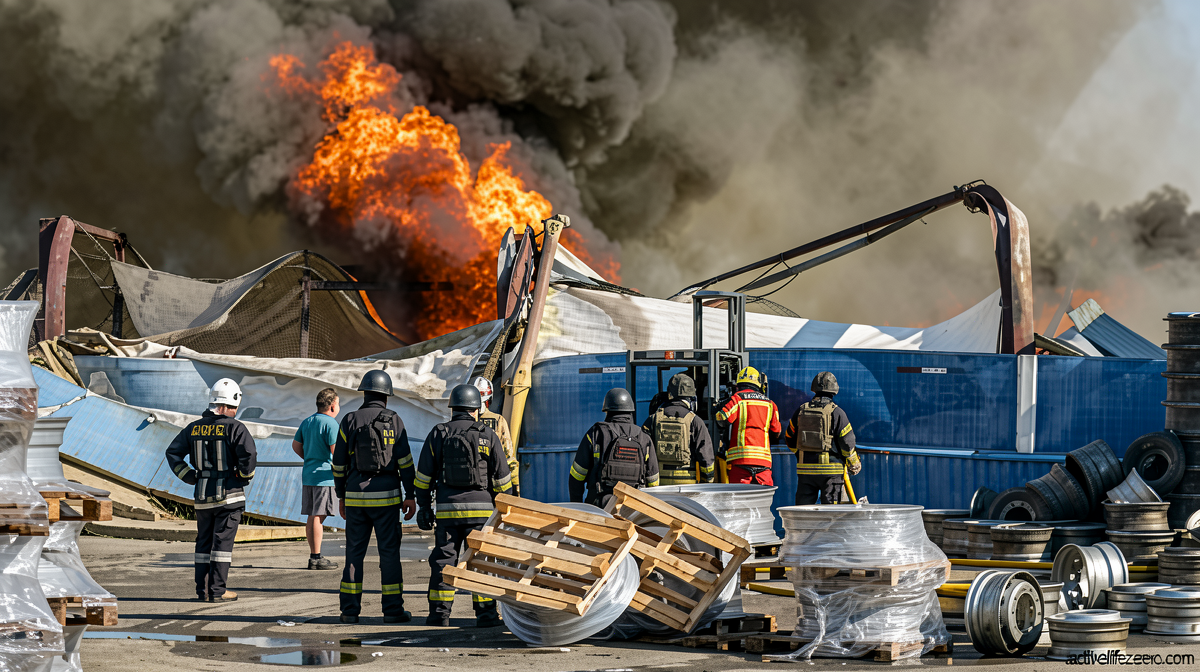
Footage from the scene showed skeletal apartment frames, streets coated in blast residue, and entire blocks rendered unrecognizable. Over 300 emergency workers converged on the area, where a care home for elderly residents and people with disabilities was among the dozens of structures damaged or destroyed.
Taras Didych, the long-tenured head of the local municipality, died after rushing to coordinate relief efforts. Mykola Kalashnyk, Ukraine’s Minister for Recovery, Infrastructure and Transport, paid tribute to his service:
“He always stood by his people. He did not abandon them even during the Russian occupation — he was there, offering support and assistance, and keeping the community together during one of the most terrifying periods.”
Kyiv Mayor Vitali Klitschko confirmed that a two-year-old girl, badly wounded in one of the numerous strikes that rained across the city on Saturday, later died. Five other residents were injured at separate locations in the capital.
Questions over munitions siting and accountability
President Volodymyr Zelensky pointed not only at the Russian strike but at the decision to keep explosive stockpiles within walking distance of homes. He said the facility “should not have been there” and that the initial blast ignited shells, mines, additional munitions, and drones held on site.
“It is a horrific situation, and there has been appalling negligence by those who stored explosive materials right next to where people were living.”
A criminal investigation was opened immediately. Ukraine’s Prosecutor General confirmed that “explosive objects and materials” had been kept at the premises and pledged to examine “the circumstances surrounding the explosion on the premises of the facility and the actions of the officials responsible.”
Tymur Tkachenko, head of the Kyiv region military administration, addressed the bereaved families:
“This is a terrible and irreparable loss. Our heartfelt condolences go out to the families and loved ones of those who have died.”
A repeating pattern of depot strikes
The Bucha disaster followed within weeks a Russian missile that struck a depot holding large quantities of ammunition in Vyshneve, another residential zone roughly 20 kilometers (12 miles) from the Saturday blast site. That earlier strike killed seven people. Two incidents in quick succession, both involving munitions stored beside civilian housing, have intensified public calls for stricter siting rules and clearer accountability for officials who approve such placements.
Two days of near-continuous aerial bombardment
The warehouse strike was embedded in a broader campaign. Between midnight Thursday and midday Saturday, Kyiv residents received 28 separate air-raid alerts, accumulating more than 28 hours of continuous siren time. Overnight into Saturday, strikes were also reported across Odesa, Dnipro, Zaporizhzhia, Sumy, Kherson, Kharkiv, Mykolaiv, Donetsk, and Chernihiv regions.
Zelensky said more than 260 attack drones participated in the multi-day operation alongside Banderol cruise missiles. While some conventional missile strikes were logged on Thursday, the overwhelming majority of recent attacks have been delivered by jet-powered drones — a capability first observed around the start of the year and now deployed at scale.
These turbojet UAVs, capable of speeds near 500 kilometers per hour (310 miles per hour), outrun the mobile anti-aircraft fire groups that form the backbone of Ukraine’s point-defense network and slip beneath or past air-defense layers designed for slower targets. In practice, only ground-to-air missiles or fighter jets can reliably intercept them.
Frequently asked questions
Where did the Russian attack on Ukrainian ammunition occur? Bucha, a suburb on the western outskirts of Kyiv, Ukraine.
How many people were killed? At least 37 residents and local officials were confirmed dead by Saturday afternoon; authorities warned the number could rise.
What caused the chain of explosions? A Russian drone struck an ammunition depot, igniting stored shells, mines, additional munitions, and drones held on site.
Is an investigation underway? Yes. A criminal investigation was opened immediately, and Ukraine’s Prosecutor General confirmed it would examine the circumstances of the explosion and the actions of responsible officials.
Had a similar depot strike occurred recently? Yes. Weeks earlier, a Russian missile hit an ammunition depot in Vyshneve, about 20 kilometers away, killing seven people.