Trump’s Marine One again struggles to communicate with air traffic control before takeoff after similar incident this month

Trump’s Marine One Radio Silence: Second Failure in Weeks
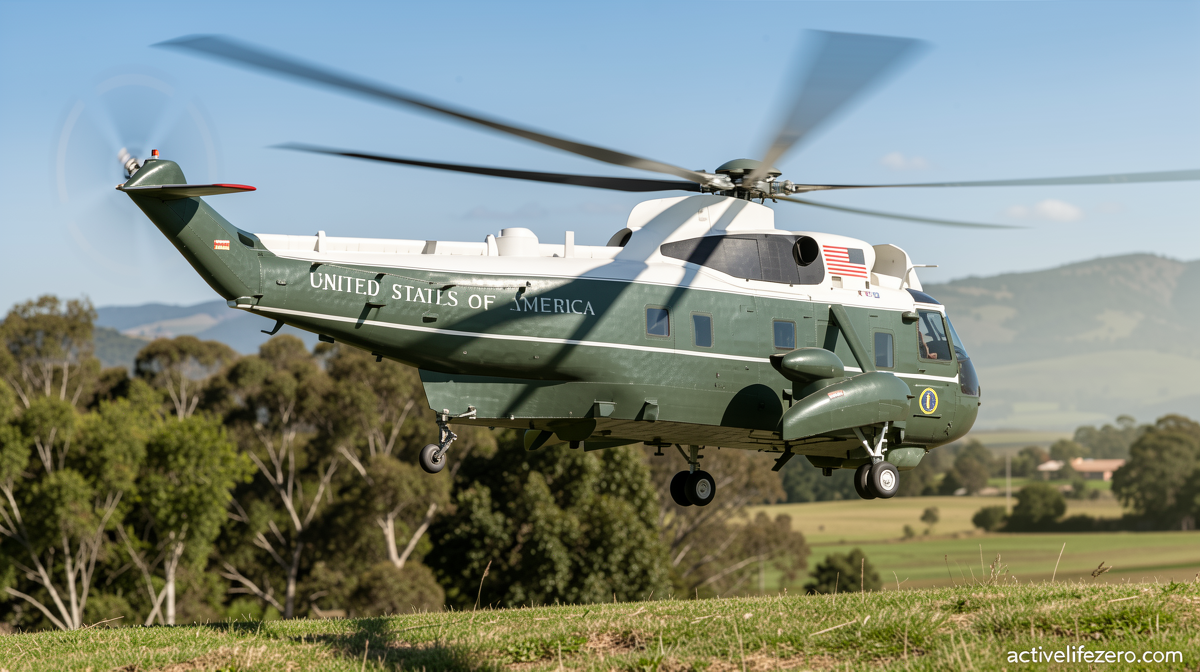
Activelifezero.com – Trump’s Marine One again found itself grounded on the White House tarmac for roughly four minutes on Thursday, unable to complete the mandatory radio handshake with air traffic controllers at Ronald Reagan Washington National Airport. Controllers, hearing nothing from the presidential helicopter’s pre-departure call, turned to other aircraft already airborne to relay messages back and forth until positive contact was finally confirmed before liftoff. The episode marks the second significant communication breakdown involving the presidential helicopter within a single month, sharpening scrutiny of radio reliability in one of the most tightly managed airspace corridors in the country.
The Four-Minute Relay
ATC audio from the Thursday departure captures the full sequence of confusion. The helicopter attempted to reach the Washington tower before liftoff, but no response came. A nearby aircraft was then asked to carry the message to the controller, who replied, “Oh, I couldn’t hear any of that.” Approximately sixty seconds later, the same controller directed yet another aircraft to listen for the helicopter.
“Do me a favor, I can’t hear Marine One. If you hear Marine One, can you let me know?”
Only after about four minutes of this relayed back-and-forth did the tower and the helicopter achieve direct contact. The Federal Aviation Administration confirmed that the mandatory three-minute pre-departure notification was delivered through alternate means, acknowledged by a controller, and that positive contact was established before the aircraft took off.
A Near-Miss on August 4
The Thursday episode closely mirrors what happened on August 4, when the presidential helicopter was operating from the Ellipse — a temporary departure point used while construction proceeds at the White House. According to the National Transportation Safety Board’s preliminary report on that day’s incident, the aircraft made two unsuccessful attempts to contact the tower within three minutes of planned liftoff. Because the required notification never reached controllers, departing commercial flights were not grounded as standard procedure dictates for a presidential helicopter movement.
The consequence was a close encounter: the helicopter came within 0.82 nautical miles laterally and 700 feet vertically of an Envoy Air passenger jet that had just departed the runway. The proximity event prompted an NTSB investigation and drew immediate FAA attention to the underlying radio infrastructure.
Technical Roots and FAA Response
Aviation radios operate on a line-of-sight principle: signals travel in essentially straight paths and require a relatively unobstructed corridor between transmitting and receiving antennas. The NTSB determined that the August 4 failure stemmed from inadequate line-of-sight between FAA radio equipment and the Ellipse, where the helicopter had been temporarily based. Investigators noted that the first transmission was never received at all, while the second arrived broken and unreadable.
In the wake of the August 4 event, the FAA stated it “took immediate action,” which included relocating an antenna to improve the communication link between DCA controllers and the helicopter’s pilots, along with a review of associated procedures. Whether those corrective steps were sufficient to prevent a repeat of the Thursday breakdown remains to be seen, given that the same fundamental difficulty — the tower’s inability to hear the aircraft directly — recurred within weeks.
White House Defends Its Protocols
Asked for comment on the Thursday incident, the White House directed inquiries to the FAA. On the earlier August 4 event, White House spokesperson Kush Desai issued a statement emphasizing confidence in the flight crew and the broader security apparatus.
“Marine One flights are piloted by the finest aviators in the world, and the White House maintains the utmost confidence in these patriots and other security officials who are responsible for ensuring the President’s safety.”
“Although the President was at no point in harm’s way during the August 4th momentary loss of separation,” Desai said, “the White House continues to work with relevant military, FAA, and other security personnel to ensure the President’s continued safety.”
Why the Gap Matters
The pre-departure radio call is not a formality. It is the mechanism by which controllers are alerted to a presidential helicopter’s imminent movement, triggering the temporary suspension of commercial departures that keeps the airspace around the White House clear. When that call fails, the protective buffer disappears, and ordinary traffic resumes in a corridor that normally would be locked down. Two failures in one month suggest that the infrastructure fix applied after August 4 did not fully close the gap, leaving the question open: what additional safeguards, if any, will be deployed before the next departure?
Frequently Asked Questions
How long was the helicopter grounded on Thursday? Approximately four minutes elapsed between the planned departure time and the moment positive radio contact was established. The FAA confirmed the mandatory three-minute pre-departure notification was completed through alternate means before liftoff.
What caused the communication failure? The NTSB attributed the August 4 incident to inadequate line-of-sight between FAA radio equipment and the Ellipse departure point. The Thursday breakdown appears to share the same root cause: the tower’s inability to receive the helicopter’s transmission directly.
Did the FAA take corrective action after August 4? Yes. The agency relocated an antenna to improve the link between DCA controllers and the helicopter’s pilots and reviewed associated procedures. The recurrence of the problem within weeks has raised questions about whether those steps were sufficient.
Was anyone in danger during either incident? On August 4, the helicopter came within 0.82 nautical miles laterally and 700 feet vertically of an Envoy Air jet. The White House stated the President was at no point in harm’s way. On Thursday, no proximity event was reported; the helicopter remained on the ground until contact was made.