Liberia once offered Black Americans a new home. Decades on, it is receiving migrants the US wants out

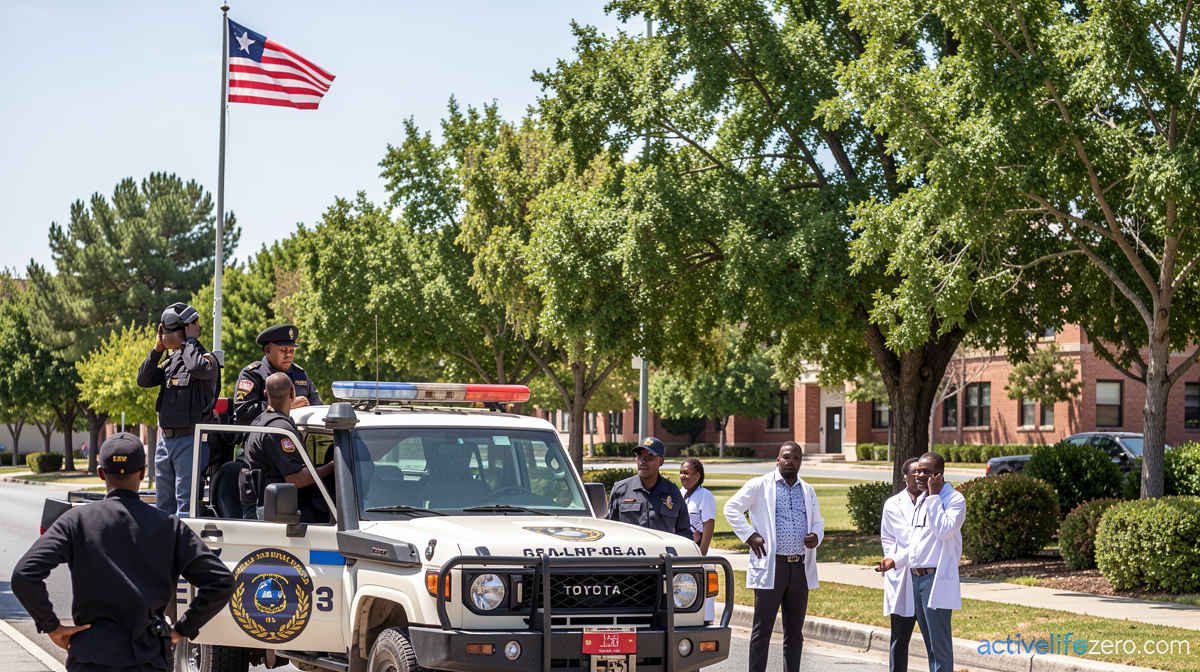
Liberia Once Offered Black Americans a Home
Activelifezero.com – Liberia once offered Black Americans a new home nearly two centuries ago, and now that same West African nation is receiving migrants the United States wants removed. The irony is not lost on the fewer than six million Liberians watching the first deportation flights land in Monrovia. A bilateral arrangement signed under the Trump administration’s sweeping anti-immigration enforcement campaign could ultimately relocate as many as 1,200 people into a country still stitching itself back together after decades of conflict. The question on the streets is no longer abstract: can a fragile post-war society absorb another wave of arrivals, and what does that say about two hundred years of shared history?
The First Flight and the Friction It Produced
Twenty individuals touched down in Monrovia on a flight originating in Louisiana, marking the first concrete step under the deportation pipeline. Liberian officials described the newcomers as hailing from “African and western hemisphere countries,” a phrasing that underscores the multinational scope of the transfers. Liberia is one of several nations that have agreed to accept migrants under Washington’s accelerated removal program, which has moved people out of the country at a pace unseen in recent decades.
The practical mechanics have already produced friction. Five of the twenty arrivals reportedly declined to step off the aircraft once it landed. Those five were subsequently flown to Equatorial Guinea, a Central African nation where more than thirty other migrants previously relocated by Washington are already being held. A US State Department spokesperson characterized implementation of the administration’s immigration agenda as a “top priority” and noted that the department generally does not discuss private diplomatic exchanges with foreign governments.
Two Centuries of Shared History
To understand why this moment lands with particular weight, one must look back to the early 1820s, when the first group of free Black Americans set foot on the West African coast. Over the following decades, thousands more made the crossing, often with the logistical backing of the American Colonization Society, which helped organize settlements along the shoreline. The US State Department estimates that roughly 16,000 Black Americans migrated to the region during the nineteenth century.
The migration was far from uniform in motivation. Some saw in the journey an escape from entrenched racism and a chance to construct a life on their own terms. Others resisted the colonization project outright, arguing that free Black people owed nothing to a scheme that implied their presence in America was a problem to be solved by removal. Africans rescued from slave ships by the US Navy were also deposited in the settlements, adding another layer to the demographic mosaic. From those scattered communities, the Republic of Liberia eventually crystallized and declared independence in 1847 — the first republic in Africa to do so.
The American imprint remains visible in everyday Liberian life. The national flag bears a striking resemblance to its northern counterpart. The capital carries the name of America’s fifth president, James Monroe. Early governmental institutions were modeled closely on Washington’s. These are not trivial details; they mean the current deportation arrangement does not arrive in a vacuum of indifference. It lands in a society that has, for generations, processed its relationship with the United States through the lens of that original migration.
Voices from Monrovia
Pheta Morris, 48, a descendant of the Black Americans who settled in Liberia in the nineteenth century, described the emotional complexity of watching the first deportees walk through the airport. She framed the arrivals through the country’s own founding narrative — the story of people rejected in one place and welcomed in another.
“I think about the Americo-Liberians — people who were rejected where they were and needed somewhere to go, and Liberia opened its arms to them. Back then, people needed somewhere they could be free, accepted and welcomed. Now, people are being rejected from the US, and Liberia is opening its doors to them.”
Yet the same interview revealed a quieter anxiety. Liberia is still recovering from a fourteen-year civil war that ended only in 2003, and the social fabric remains thin in places.
“This country is going through a lot, and having more people come in — can we handle all of this?”
Frequently Asked Questions
How many deportees are expected under the Liberia arrangement? The bilateral agreement could ultimately move as many as 1,200 people into Liberia, though the first flight carried only twenty individuals from Louisiana.
Why were five arrivals redirected to Equatorial Guinea? Five of the twenty passengers reportedly declined to disembark in Monrovia. They were subsequently flown to Equatorial Guinea, where more than thirty other previously relocated migrants are already being held.
What is the historical connection between Liberia and Black American migration? Beginning in the early 1820s, roughly 16,000 free Black Americans migrated to the West African coast over the nineteenth century, many with the logistical support of the American Colonization Society. Those communities eventually formed the Republic of Liberia, which declared independence in 1847.
Is Liberia prepared to absorb additional migrants? Liberian officials and citizens express mixed feelings. While some see a moral parallel to the country’s founding story, others point to ongoing recovery from a civil war that ended in 2003 and question whether infrastructure and social services can accommodate another wave of arrivals.