In Puerto Rico, even when it doesn’t rain, it pours

Daftar Isi
Puerto Rico’s Water System Collapses Under Drought and Decades of Neglect
Activelifezero.com – For the third consecutive week, residents of San Juan and surrounding municipalities have been living under mandatory rationing schedules that cut off their tap water for stretches of up to two full days. The island’s capital recorded its driest July in more than 120 years of meteorological record-keeping, and the broader archipelago now sits under moderate-to-extreme drought conditions affecting over three million people, per the US Drought Monitor. What began as a seasonal rainfall shortfall has metastasized into what experts describe as a full-scale humanitarian emergency, compounded by infrastructure so old and under-maintained that a single pipeline rupture can starve an entire metro area of potable water.
A 96-Year-Old Woman’s Daily Arithmetic of Survival
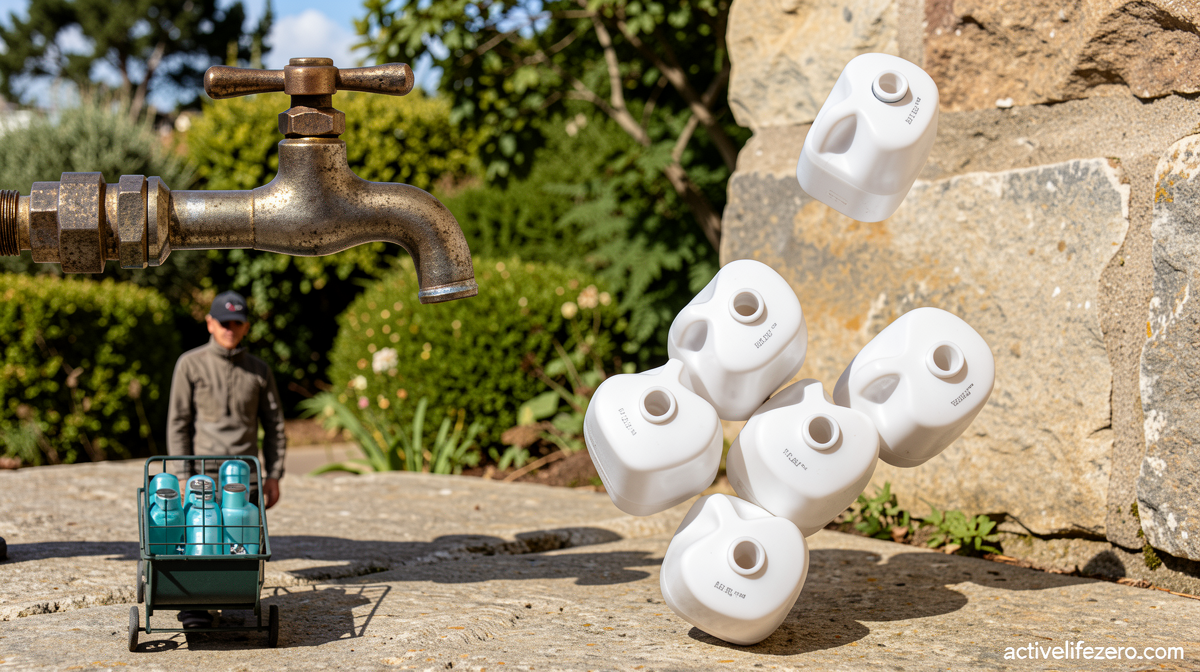
In Loiza, a small oceanfront community in Puerto Rico’s northeast corner, Milagros Pica Quiñones has turned her modest concrete house into what she might call a water logistics operation. Paint buckets, bleach jugs, laundry-detergent containers, and plastic bottles crowd every available surface. Most days, before the utility shuts off service between 10 p.m. and dawn, she watches what she describes as “the thinnest thread of water” seep from her faucet and races to catch it.
“I drag the buckets away with whatever strength I have and I cover them,” Pica Quiñones said. “Three buckets in the bathroom. One in my kitchen. Outside, I have three, two-gallon buckets. In front of the house: 15 smaller, gallon-sized containers. Next to a wall – 10 large bottles.”
Her showers, when she takes them, consist of dipping a red Solo cup into one of those buckets. The routine she describes is not an anomaly. Hundreds of thousands of other US citizens on the island face the same scramble each morning, hauling vessels to intercept whatever trickle reaches their taps before the shutoff window begins. The elderly, the chronically ill, and those living on fixed incomes carry the heaviest share of the burden, because they lack the mobility, the storage space, or the financial cushion to buy bottled water in bulk.
The Superaqueduct Break and What It Exposed
The crisis deepened sharply in June, when the so-called Superaqueduct suffered a rupture. That pipeline—a 72-inch conduit running roughly 50 miles along the northern coast—delivers the bulk of potable water into the densely populated San Juan metropolitan area. Since the break, the Puerto Rico National Guard and various government agencies have been rolling cistern trucks through neighborhoods to distribute drinking water, a stopgap that the governor’s office confirmed. The Puerto Rico Aqueduct and Sewer Authority, which operates the system, did not respond to repeated requests for comment.
Carlos Pesquera, a civil engineer who previously served as secretary of transportation, has long warned that the island’s water conveyance network operates far beyond its design life. The Superaqueduct rupture was not an isolated event but the latest in a series of failures that point to years of deferred maintenance and insufficient capital investment.
Drought Science: Months of Deficit Ahead
Emanuel Rodriguez, a hydrologist with the National Weather Service office in San Juan, confirmed that the capital’s July rainfall total set a new record low stretching back more than a century of observation. Across the archipelago, lakes and streams have dropped to or near historic minimum levels. Rodriguez cautioned that the rainfall deficit is not expected to resolve quickly.
“We could stay below normal (rainfall levels) at least until January,” he added.
That timeline matters because it means rationing, if it remains in force, will overlap with the island’s winter season—a period when tourism revenue, already fragile, depends on visitors arriving to find functioning infrastructure. Puerto Rico markets itself as a vibrant, sun-drenched destination, yet its 3.2 million American residents are spending their days negotiating bucket baths, dry shampoo, paper plates, and plastic forks, occasionally skipping laundry or toilet flushes to conserve what little reaches their lines. Water bills, meanwhile, continue to arrive on schedule.
Government Response and the Question of Federal Aid
Gov. Jenniffer González-Colón, a Republican, declared a state of emergency on July 31 in response to the drought. She told reporters the duration of the rationing measures remains uncertain. The US Department of Agriculture subsequently approved a drought disaster declaration covering 26 municipalities, opening emergency loan programs for farmers and agricultural producers in those areas, the governor’s office announced Wednesday.
González-Colón told MS NOW this week she was “not ruling out” a request for a national emergency declaration from Washington, a designation that would unlock substantial federal funding streams. At the same time, she stressed that her administration must first “exhaust all the local assets, all the resources before asking for a national declaration of emergency.” Asked about residents who direct anger at the government over years of water-system neglect, she offered a measured acknowledgment.
“I totally understand the frustration,” she said.
Why This Is More Than a Weather Story
Eugene Smotkin, a chemistry professor at Northeastern University who resides in Old San Juan with his wife, frames the situation in terms that strip away any comforting narrative of temporary inconvenience.
“When you have a drought colliding with an aging infrastructure, that’s more than a drought. That’s a humanitarian crisis, and it’s a crisis which is deep. It’s not a drought story.”
The distinction matters for policy. A pure weather event demands short-term relief—tanker trucks, bottled-water distribution, temporary rationing. A structural failure demands capital: pipeline replacement, reservoir rehabilitation, treatment-plant upgrades, and sustained operational budgets. Puerto Rico’s water authority has operated for years under chronic underfunding, and the Superaqueduct’s repeated failures suggest that the next rupture is not a question of whether but when. Until the physical plant is rebuilt, every dry spell—this summer’s included—will land with amplified force on the island’s most vulnerable residents, from the 96-year-old grandmother in Loiza counting gallons by hand to the families in San Juan who have learned to cook over bottled water and wash with a cup.
Related Reading
Frequently Asked Questions
What is In Puerto Rico even when it doesn?
In Puerto Rico even when it doesn is the main topic of this guide. The article explains the context, practical details, and next steps readers should understand.
Why does In Puerto Rico even when it doesn matter?
In Puerto Rico even when it doesn matters because readers are looking for a useful answer, not just a short summary. Good content should match search intent and help them decide what to do next.