Inside DC’s historic heart, an IndyCar race backed by Trump kicks into gear

Daftar Isi
Engines Roar Through the Monuments: Washington’s Streets Become a 1.66-Mile Circuit
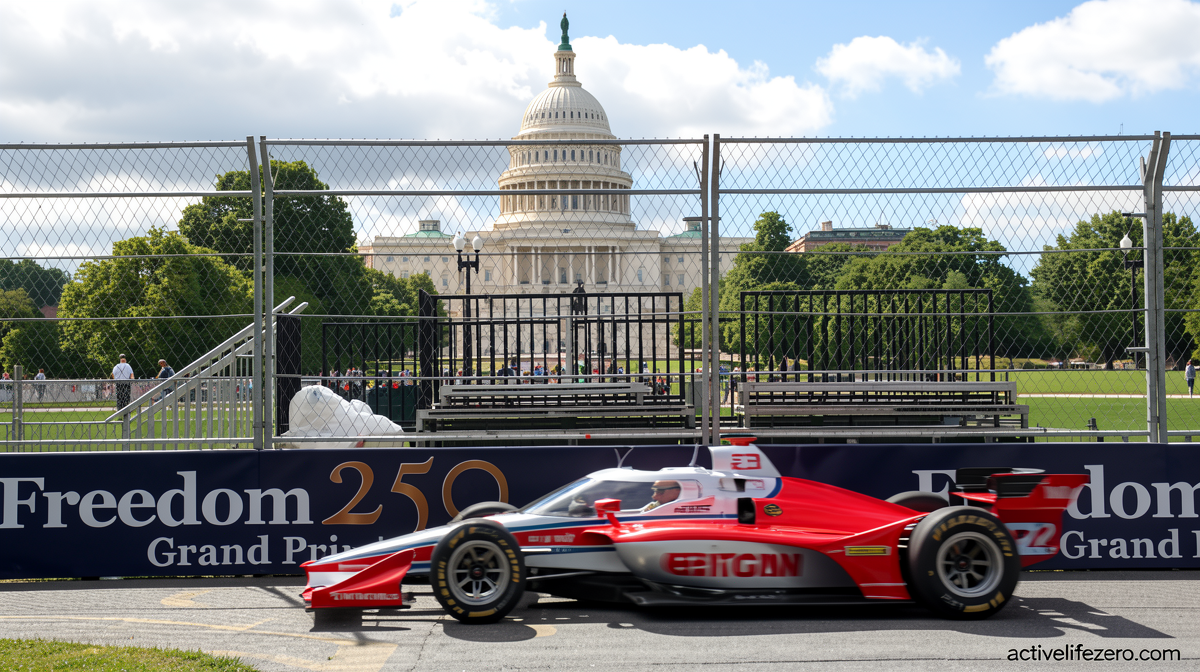
Activelifezero.com – For two days this week, the heart of the American capital has been transformed into a high-speed motorsport venue. The Freedom 250 Grand Prix, a street circuit threading past the US Capitol, the Washington Monument, and the Smithsonian museums, opened its gates on Saturday morning under a thin drizzle. By midday, thousands of spectators had gathered along the barriers, watching sleek open-wheel machines carve through avenues that normally carry commuters and tour buses. The weekend marks the culmination of a summer-long series of events tied to the nation’s 250th anniversary, and Sunday’s main race — 147 laps totaling 250 miles — will draw an estimated audience approaching 300,000 across both days.
A Circuit Carved Into the Capital’s Grid
The course spans just under 1.7 miles and features seven turns, weaving through some of the city’s most recognizable geography. Drivers launch from a start-and-finish stretch on 3rd Street, painted in bold red, white, and cobalt blue with a thick checkered-flag band that dwarfs the ordinary crosswalk stripes nearby. From there the route sweeps across the National Mall opposite the Washington Monument, then hooks onto Pennsylvania Avenue — the same boulevard that runs past the White House. That wide thoroughfare doubles as the pit lane, where cars will pull in for tire swaps, refueling, and mechanical work during Sunday’s race.
The layout continues along 9th Street, skirting the National Gallery of Art and the National Archives, before cutting across Constitution Avenue and 7th Street to bisect the Mall once more. A turn onto Independence Avenue carries drivers past the Smithsonian’s Air and Space Museum, after which the course folds back through Maryland Avenue and returns to 3rd Street to close the loop. Top speeds approach 180 mph on the long straightaways, particularly along Pennsylvania Avenue, before drivers slam into a sharp right-hander on 9th Street NW — a corner that proved treacherous during Saturday’s first practice sessions, with more than one driver overshooting the apex and having to reverse back onto the racing line.
From Pitch to Pavement in Under a Year
The race’s existence owes much to a single executive order signed by President Donald Trump in January, which effectively short-circuited the local permitting and bureaucratic processes that would ordinarily have delayed the project by months. Penske Corporation President Bud Denker had pitched the concept to the administration, and within less than twelve months the event moved from proposal to reality. The symbolic weight of the timing is deliberate: 147 laps, a 250-mile distance, and a name referencing the semi-quincentennial all tie the spectacle to the country’s 250th birthday.
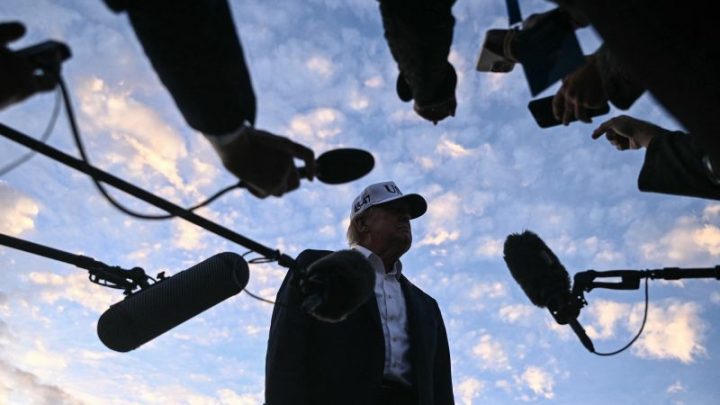
Trump himself is scheduled to attend Sunday’s main event. A White House official confirmed that before the green flag drops, the president will complete a ceremonial lap aboard the presidential limousine — colloquially known as “The Beast” — and release the flag from the rear seat to signal the start of the race.
Fans Make the Pilgrimage
The drizzle that greeted Saturday’s early arrivals did little to cool the enthusiasm of dedicated motorsport fans who had traveled from across the country. Tom Lantz drove his family from Altoona, Pennsylvania, bringing along his 12-year-old son, Levi Steele, for what was the boy’s first time at a Grand Prix. Lantz has attended several previous races, but for Levi the experience was entirely new.
“I’m just glad I’m here,” Levi said.
Scott Talbott, visiting from Dallas, framed his excitement in terms of the city’s layered history rather than pure speed.
“The nostalgia of DC, the heritage — I’ll take this any day,” Talbott said.
Along the barriers, fathers hoisted small children onto their shoulders for a clearer sightline, while rows of low concrete blocks spaced every few yards gave standing spectators a slight elevation boost. Large metal fencing encloses the entire site, shielding attendees from cars that will eventually streak past at nearly 180 mph.
The City Adapts
Even residents who never set foot near the track will feel the event’s footprint. District officials have imposed sweeping traffic and parking restrictions across multiple neighborhoods for the duration of the weekend. The Federal Aviation Administration announced a temporary suspension of departures from Ronald Reagan Washington National Airport on Sunday, tentatively set between 10:15 a.m. and 1:15 p.m., though those windows remain subject to adjustment.
Several Smithsonian institutions sit directly in the racing line, meaning general museum visitors will need a Freedom 250 Grand Prix event ticket to enter during race hours. The National Gallery of Art, positioned immediately adjacent to the pit lane, told visitors it had completed an “extensive vibration study” and implemented a package of protective measures designed to safeguard both guests and its collections from the sustained mechanical forces generated by hundreds of laps of open-wheel racing at full throttle.
Saturday’s preliminary schedule — featuring a slate of support races and practice sessions — served as a warm-up for the main event. Drivers spent the day learning the track’s quirks for the first time, probing braking points and testing tire behavior on the asphalt that normally hosts pedestrians, cyclists, and the occasional parade. Sunday, those same streets will host 147 laps of sustained competition, with the Capitol dome visible over one of the course’s longest straightaways and the full weight of American history watching from the grandstands.
Related Reading
Frequently Asked Questions
What is Inside DC s historic heart an IndyCar?
Inside DC s historic heart an IndyCar is the main topic of this guide. The article explains the context, practical details, and next steps readers should understand.
Why does Inside DC s historic heart an IndyCar matter?
Inside DC s historic heart an IndyCar matters because readers are looking for a useful answer, not just a short summary. Good content should match search intent and help them decide what to do next.