New CDC director acknowledges agency problems in first large staff meeting

Daftar Isi
CDC’s New Director Faces a Fractured Agency in First All-Hands Address
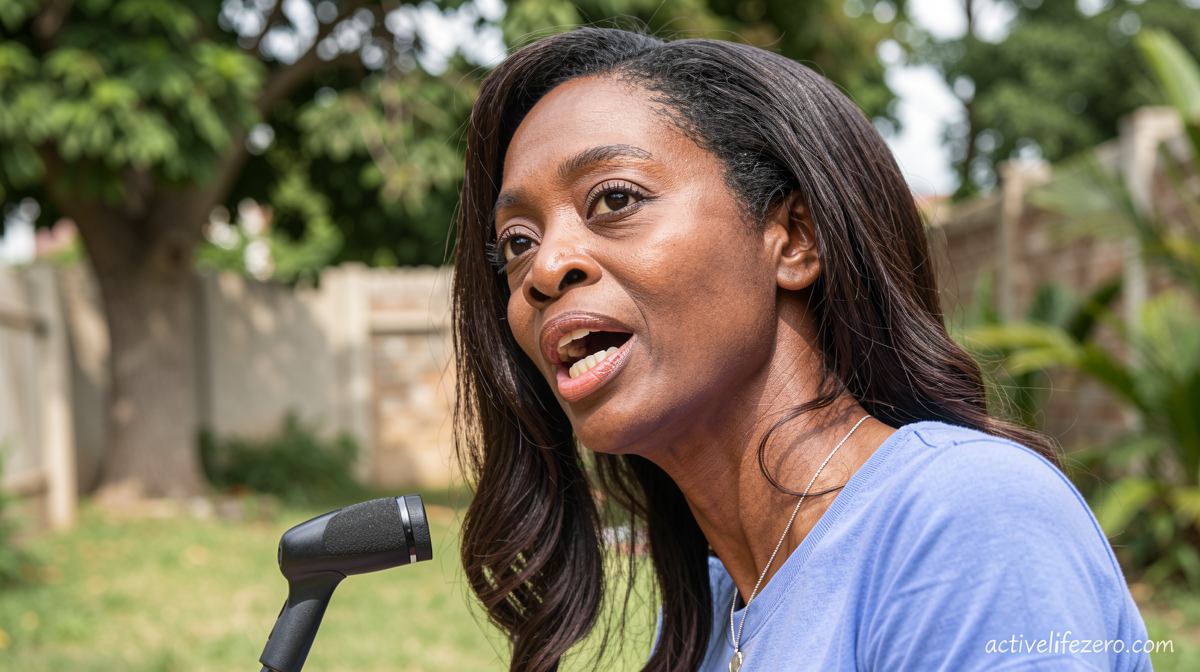
Activelifezero.com – Dr. Erica Schwartz walked into her first full-staff gathering at the Centers for Disease Control and Prevention on Wednesday carrying a mandate that is, by any measure, enormous: rebuild an institution that has lost more than a quarter of its workforce, inherited a roster of congressionally funded programs that no longer function, and restored the confidence of a public that has watched its leading public-health body stumble through months of leadership instability. Speaking to CDC employees in Atlanta, the agency’s 22nd director framed her arrival not as a rescue but as the beginning of a long repair job.
Schwartz took the helm last week, stepping in after a string of interim directors left the organization without a permanent voice in Washington. In her remarks, she acknowledged plainly that many programs receiving annual congressional appropriations have become what she called “zombie” operations — funded on paper, dead in practice because the scientists and analysts who carried out the work were either terminated under President Donald Trump’s administration or remain on extended leave.
“The good news is, I’m here. I’m Week 1 of being here, and now I can certainly be able to advocate for the CDC. I think when you have (had) that leadership vacuum, it’s, you know, it’s hard to get that advocacy.”
She stopped short of announcing specific remediation steps for those hollowed-out programs or for the exhausted employees still holding the fort. Instead, she pledged to sit down with staff members to map the damage and identify what can realistically be restored in the near term.
A Workforce in Free Fall
The numbers behind her remarks are stark. Layoffs and voluntary departures have stripped the agency of more than 3,000 employees, eroding its capacity to monitor outbreaks, track environmental hazards, and advise state and local health departments. Morale, already fragile before the departures began, has deteriorated further as one temporary leader after another cycled through the front office. Those interim directors, Schwartz noted without naming names, were political appointees with little or no formal training in medicine or public health — a gap that left staff without a credible internal champion when they needed one.
The result, as Schwartz described it, is an agency where remaining employees feel overloaded, under-supported, and uncertain whether their work will even be recognized by the next administration. Her promise to advocate for CDC’s mission before Congress and the White House is therefore not merely rhetorical; it addresses a concrete operational gap created by months without a permanent director willing to defend the agency’s budget and staffing levels.
Private Dissent, Public Unity
One of the most closely watched questions in the room concerned Schwartz’s relationship with U.S. Health and Human Services Secretary Robert F. Kennedy Jr., a prominent figure in the anti-vaccine movement who has taken several actions running counter to CDC’s own research and advisory recommendations. Those steps include dissolving an existing expert advisory committee and installing a replacement panel populated in part by vaccine skeptics.
Schwartz said she would not hesitate to push back against Kennedy when she believed the science warranted disagreement. But she drew a firm line on venue: any such friction would happen in closed rooms, not on camera.
“Because that’s just part of the uniformed service person in me.”
She explained that her prior service in the U.S. Coast Guard and the U.S. Public Health Service taught her to resolve conflicts privately and present a united front externally. She pledged to continue that practice, adding that she would not air disagreements “in front of the media.” The comment echoed language Kennedy himself has used in describing his own management philosophy, suggesting an attempt to find common ground even while preserving institutional independence.
Vaccine Policy Under Scrutiny
During the question-and-answer segment, a staffer raised Trump’s executive order calling for a revision of childhood immunization schedules — an order rooted in the president’s long-held, scientifically discredited position that vaccines should be administered across separate medical visits rather than in the combined shots recommended by decades of pediatric research.
Schwartz responded that a task force on childhood vaccine safety is being stood up and that she sits on the panel. It had not yet convened as of Wednesday, she noted, and the group has been allotted 90 days to deliver its report to the president. The timeline compresses what is ordinarily a multi-year evidence review into a single quarter, a constraint that drew quiet concern among attendees.
In the same address, Schwartz pledged to rebuild public trust through what she termed “radical transparency, scientific rigor and honest communications” — phrasing that mirrors Kennedy’s own public vocabulary and underscores the delicate balancing act she now performs: honoring the chain of command while protecting the scientific integrity of an agency whose credibility is itself a public-health asset.
What Comes Next
Current and former CDC employees who followed the meeting described Schwartz as earnest and clearly briefed, but cautioned that words carry little weight until matched by decisions. The National Public Health Coalition, an organization composed of current and former CDC workers, issued a statement after the session.
“CDC staff and the American people deserve a strong, independent leader who will follow the science, defend public health expertise and put the health and safety of the public ahead of political pressure. Dr. Schwartz has spoken about rebuilding trust. That trust must be earned through action.”
That last sentence captures the central tension of the coming months. Schwartz now holds the institutional authority to push back against decisions that undermine CDC’s scientific mission, to lobby Congress for the staffing levels that congressionally funded programs require, and to re-engage a workforce that has spent months wondering whether anyone in the building still believes the agency’s work matters. Whether she converts those authorities into concrete protections for public health — or whether the political currents around her prove stronger — will define not just her tenure but the next several years of American epidemic preparedness, environmental surveillance, and communicable-disease control.
Related Reading
Frequently Asked Questions
What is New CDC director acknowledges agency problems?
New CDC director acknowledges agency problems is the main topic of this guide. The article explains the context, practical details, and next steps readers should understand.
Why does New CDC director acknowledges agency problems matter?
New CDC director acknowledges agency problems matters because readers are looking for a useful answer, not just a short summary. Good content should match search intent and help them decide what to do next.