Ebola outbreak in Democratic Republic of Congo becomes deadliest in country’s history

DR Congo Ebola Outbreak Tops 2,300 Deaths
Activelifezero.com – The Ebola outbreak in Democratic Republic of Congo has now claimed more lives than any previous epidemic in the country’s recorded history. Government figures published on Sunday placed the confirmed death count at 2,325, surpassing the 2,299 fatalities logged during the 2018–2020 wave. Alongside those deaths, authorities tallied 4,945 confirmed infections, with 101 additional cases identified in the 24 hours before the announcement.
How Quickly the Record Fell
This marks the nation’s 17th Ebola episode. It had already become the largest by raw case count in late July, when confirmed infections outpaced every prior wave. The mortality threshold followed within weeks, compressing into roughly three months a trajectory that took West Africa nearly five months during its own devastating 2014–2016 epidemic. For context, that West African crisis — spanning Guinea, Liberia, and Sierra Leone — ultimately produced 28,616 cases and 11,310 deaths, per World Health Organization tallies, and remains the largest Ebola event ever documented. Two thousand deaths arriving in under three months underscores how swiftly the virus is moving through communities with thin access to care.
A Rising Fatality Ratio and Its Causes
The most unsettling figure in the latest data is the trajectory of the case fatality ratio. In early June, roughly one in five confirmed patients died. That proportion has since climbed to 46 percent, meaning nearly half of all identified infections now end fatally.
Public health specialists stress that this upward trend does not indicate a more virulent virus. It reflects systemic gaps in surveillance, early detection, and timely medical intervention.
“Normally, as an outbreak progresses, the case fatality ratio should fall as contact tracing improves and patients are identified and treated earlier,” said Thomas Parisch, a Médecins Sans Frontières specialist recently deployed to the country. “Instead, we’re still seeing many cases detected very late, when treatment is less likely to succeed, with many identified only after they die in the community.”
The factors compounding detection delays are well documented: fragile health infrastructure across vast rural territories, pockets of community resistance to contact tracing and isolation protocols, and ongoing instability in several provinces. Together they create windows in which infected individuals circulate before anyone flags their symptoms.
The Bundibugyo Strain and a Treatment Gap
The virus driving this episode is the Bundibugyo species. Unlike the Zaire strain, for which licensed vaccines and monoclonal antibody therapies exist, Bundibugyo currently has no approved vaccine and no standardized treatment regimen. A small number of experimental candidates are under evaluation, and global health bodies are examining whether existing Ebola therapies might offer cross-protection. Evidence to date, however, is confined to animal studies, leaving frontline clinicians without a proven pharmacological tool.
The outbreak was formally declared on May 15. Since that announcement, momentum has built steadily, driven by the convergence of biological, logistical, and social obstacles described above.
Regional Containment: Uganda’s Brief Episode
The epidemic briefly crossed the border into neighboring Uganda. Authorities there contained the spill quickly, limiting confirmed infections to 20 and deaths to two before declaring the Ugandan episode closed last month. That contained response stands in sharp contrast to the scale now unfolding within DR Congo itself.
How Ebola Spreads and What It Does
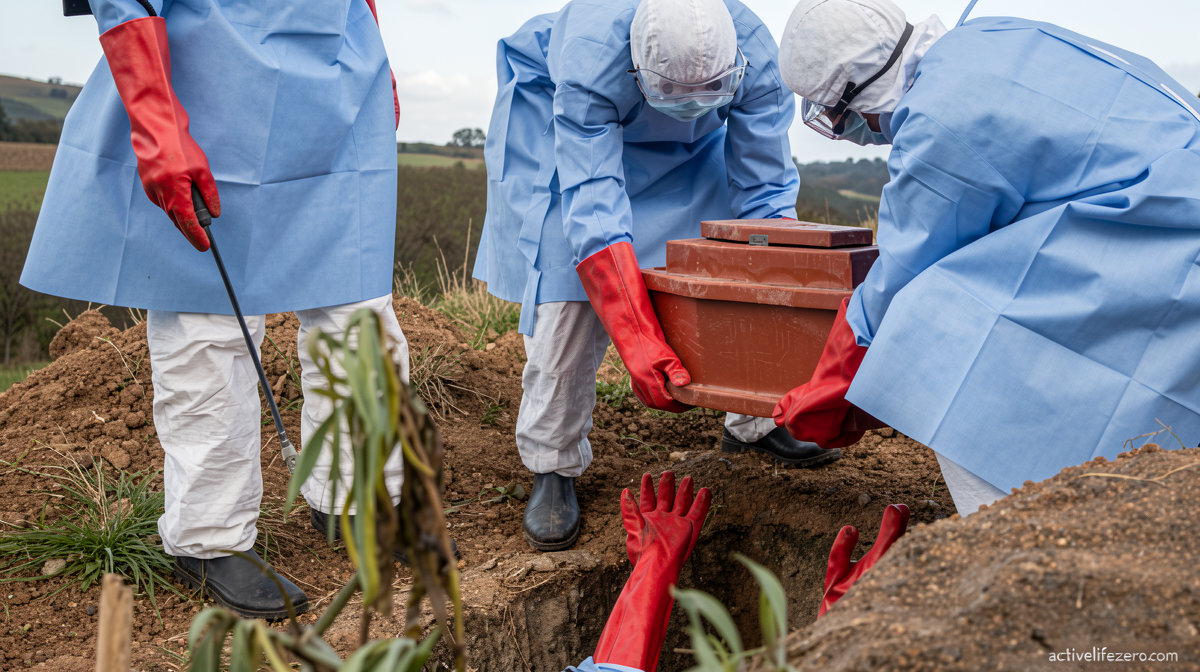
Ebola transmits through direct contact with the bodily fluids of infected individuals, whether living or deceased. Unprotected caregivers, family members performing traditional burial rites, and healthcare workers without adequate personal protective equipment are all at elevated risk. Clinical presentation typically begins with fever, vomiting, and diarrhea; in severe cases, patients develop both internal and external hemorrhage. Without supportive care — fluid replacement, electrolyte management, and monitoring for complications — mortality remains high even for strains with available therapeutics.
Frequently Asked Questions
Is there a vaccine for the strain causing this outbreak? No. The Bundibugyo species currently lacks an approved vaccine. Licensed vaccines exist only for the Zaire strain. Experimental candidates for Bundibugyo are in early evaluation stages.
How long has this outbreak been running? It was formally declared on May 15. As of the latest government figures, more than three months have elapsed since that announcement.
Did the outbreak spread beyond DR Congo? A brief spill reached Uganda, producing 20 confirmed infections and two deaths before authorities closed the episode last month. No sustained cross-border transmission has been reported.
What is the current case fatality ratio? Approximately 46 percent, up from roughly 20 percent in early June. Specialists attribute the rise to late detection and limited treatment access rather than increased viral virulence.