How this conservationist fought to bring an elusive monkey back from the brink of extinction

Daftar Isi
From Brink of Extinction: How One Conservationist Rescued Nigeria’s Rare Red Colobus
Activelifezero.com – Deep within the tangled waterways of southern Nigeria, a remarkable recovery is underway. The Niger Delta red colobus, a striking primate with distinctive black, orange, and white fur, once teetered on the edge of permanent disappearance. Now, thanks to dedicated local efforts, this elusive species is finding new life in the very forests that nearly claimed it.
When scientists first documented the red colobus in 1993, they encountered a creature already struggling for survival. Local communities had long known of the monkey’s existence, but Western science remained largely unaware. At that time, approximately 10,000 individuals roamed across the region’s fragmented habitats. Within just twenty years, however, relentless hunting and rapid habitat destruction reduced their numbers dramatically.
A Landscape Under Siege
The Niger Delta represents one of Africa’s most ecologically significant regions. Spanning 27,000 square miles, it contains the continent’s second-largest swamp forest and the world’s third-most extensive mangrove ecosystem. This vast landscape also supports crucial coral reefs and marine habitats that sustain countless species.
For the red colobus, this ancestral territory once offered abundant resources. But industrial expansion changed everything. Oil extraction operations carved roads and canals through ancient forests. Tree felling for timber and fuel further fragmented the habitat. By 2010, the primate ranked among the planet’s most critically endangered primates, with populations concentrated in isolated pockets across just 77 square miles.
Changing the Conservation Paradigm
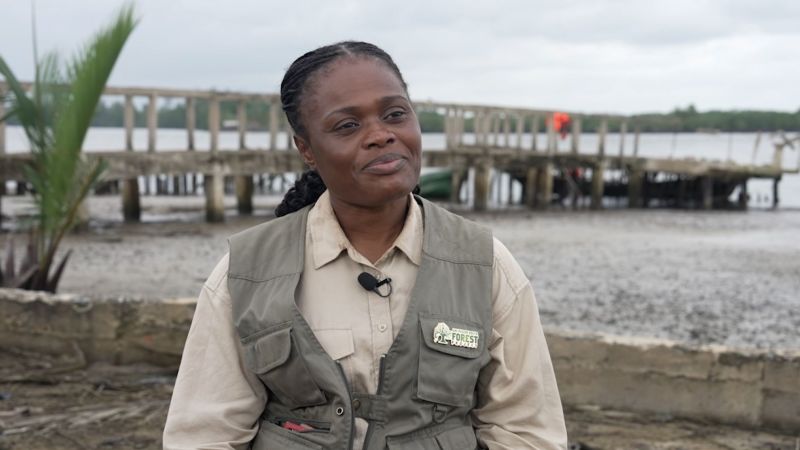
Rachel Ikemeh arrived in the region in 2013 with a clear mission. The Nigerian conservationist recognized that traditional approaches had failed. Communities were typically cast as villains in environmental narratives, blamed for both hunting and deforestation. Ikemeh questioned this assumption.
“In my line of work, I was given the impression that communities were always to blame,” Ikemeh explained. “They’re the culprit, the problem to the natural environment. The ones hunting animals to extinction and the ones driving deforestation.”
Instead of imposing external solutions, Ikemeh chose collaboration. She established the South-West/Niger Delta Forest Project, a community-led initiative centered in Apoi Creek Forest. Local residents received training in conservation principles, wildlife monitoring, and data collection methods.
Results That Speak for Themselves
The approach yielded remarkable outcomes. By 2021, the project had secured 2,500 acres of forest under community protection. The red colobus population, which had plummeted to roughly 200 individuals, began recovering. Ikemeh documented four thriving family groups raising young in restored habitats.
“The Niger Delta red colobus was right at the edge of becoming extinct,” Ikemeh recalled. “But today, as I speak to you, we have the records of four thriving groups, nursing and nurturing their babies. They’re repopulating where conservation areas were created, where habitat restoration is ongoing, and where the forest is now being restored.”
The project’s success exceeded expectations. What began as a short-term initiative evolved into a decade-long commitment. Today, SWNDFP protects over 20,000 acres and safeguards at least sixteen threatened species across multiple communities.
Expanding Beyond the Forest
Recognizing that forest conservation alone cannot ensure long-term survival, Ikemeh broadened her vision. Earlier this year, the Rolex Awards Laureate established Nigeria’s first locally managed marine area in Foropa Middleton Kingdom, a coastal settlement along the Atlantic Ocean.
The coastal region faces compounding threats. Aging oil infrastructure, militant sabotage, and illegal artisanal refining have created some of Earth’s most polluted watersheds. Black sand mining operations further degrade coastal ecosystems. These environmental pressures force local fishing communities toward logging and poaching, creating additional stress on red colobus habitats.
Ikemeh understands that sustainable solutions require local stewardship. Marine conservation, though outside her original expertise, follows the same principles that saved the forest. When communities become guardians rather than beneficiaries, environmental recovery becomes self-sustaining.
The red colobus story offers hope for Nigeria’s broader ecological future. As marine and forest conservation efforts converge, the Niger Delta demonstrates that human communities and wildlife can thrive together when given the opportunity to lead their own recovery.
Related Reading
Frequently Asked Questions
What is How this conservationist fought to bring?
How this conservationist fought to bring is the main topic of this guide. The article explains the context, practical details, and next steps readers should understand.
Why does How this conservationist fought to bring matter?
How this conservationist fought to bring matters because readers are looking for a useful answer, not just a short summary. Good content should match search intent and help them decide what to do next.