Six months on, Trump’s Iran ‘excursion’ risks igniting crises far beyond the Middle East

Daftar Isi
Half a Year After the “Excursion”: How One Middle East War Is Reshaping Global Power Balances
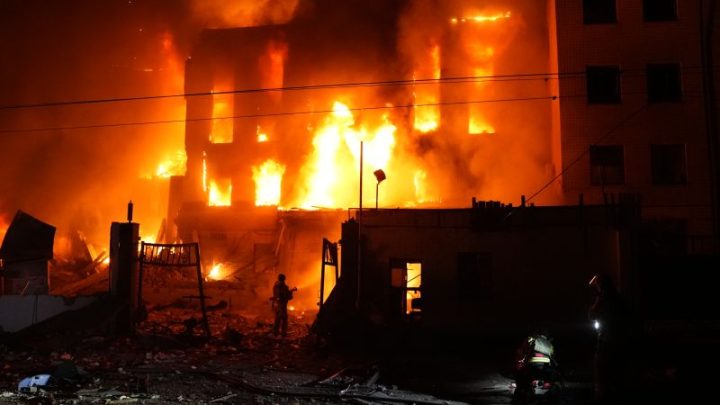
Activelifezero.com – The phrase was meant to minimize. A short trip, a few weeks of action, then home. That was how President Donald Trump framed the American military campaign against Iran when it began in early March. Six months into the conflict, the characterization has aged badly. What was pitched as a brief intervention has metastasized into a sprawling crisis touching energy markets, alliance architecture, and the strategic calculus of every major power on Earth. The Iranian population bears the heaviest toll, but the shockwaves have reached grocery shelves in Ohio, missile batteries in Kyiv, and carrier decks in the Pacific.
Goalposts in Motion
Perhaps no detail illustrates the war’s unraveling more clearly than the steady retreat of Washington’s stated objectives. At launch, the administration demanded total Iranian capitulation: regime change, the dismantling of the Islamic Republic’s nuclear ambitions, and a wholesale restructuring of Tehran’s foreign policy. By late summer, the bar had dropped dramatically. The operative demands now center on reopening the Strait of Hormuz to commercial shipping and slowing — not eliminating — the pace of Iran’s enrichment program. The gap between those two postures is vast, and it signals a campaign that has outgrown its original design parameters.
The Interceptor Gap in Kyiv
Nowhere has the war’s collateral damage been more acute than in Ukraine. As American and allied forces burned through interceptor rounds to counter the torrent of Iranian drones, ballistic missiles, and other projectiles raining down on bases across the Gulf and Levant, stockpiles that had been earmarked for the Eastern Front were quietly redirected south. The result is stark. Ukrainian President Volodymyr Zelensky disclosed this month that his country possesses roughly one-tenth of the interceptor missiles required to blunt the accelerating barrage of Russian ballistic strikes.
The human cost of that shortfall is already visible. The summer of 2026 has proven the deadliest stretch for Ukrainian civilians since May 2022, when the first waves of long-range bombardment began. Families in Kharkiv, Odesa, and Dnipro report nightly sirens with fewer defenses to answer them. The arithmetic is simple: every round spent over the Persian Gulf is a round absent over the Dnipro.
Oil, Sanctions, and Moscow’s Windfall
The closure of the Strait of Hormuz — effectively enacted by Tehran’s decision to block the waterway in retaliation for US-Israeli strikes — sent crude prices surging and rattled the Trump administration’s own economic-pressure campaign against Russia. Gasoline prices at American pumps climbed fast enough to force a politically fraught concession: partial lifting of sanctions on Russian oil exports, a move designed to cool the market but which handed Moscow additional revenue to sustain its war machine.
The disruption extended beyond crude. Natural gas and fertilizer trade routes were severed or rerouted, creating supply gaps that Russia moved to fill almost immediately. Alexander Gabuev, director of the Carnegie Russia Eurasia Center in Berlin, pointed to a telling episode in June, when President Vladimir Putin received Southeast Asian leaders in the Russian city of Kazan.
“The turnout in Kazan was impressive: Nine of 11 heads of state from ASEAN were present, along with the Indonesian foreign minister and a special representative from Myanmar. Above all, these men decided to make the long journey to Russia because of US and Israeli attacks on Iran causing higher prices for energy and fertilizer.”
For a nation whose war economy depends on selling hydrocarbons to whoever will buy them, the Kazan summit represented a direct dividend of American military action in the Gulf. The irony is not lost on Kyiv’s allies.
Pacific Realignment and the Korean Shadow
While Washington’s attention is locked on Tehran, the Western Pacific has experienced a quiet but consequential thinning of American military presence. Annual joint exercises with South Korea have been scaled back. The sole US aircraft carrier stationed in the Western Pacific has been pulled out. For Seoul, which faces a neighbor that has continued testing ballistic missiles and expanding its nuclear arsenal, the signal is unmistakable: the security umbrella is being adjusted, and the adjustment is happening without Seoul’s consent.
The Korean Peninsula, long managed through a fragile equilibrium of deterrence and diplomacy, now sits in the crosshairs of a different kind of risk — not an active war, but the slow erosion of the guarantees that keep the peace. Taiwan and the South China Sea face analogous exposure, though at this stage none has crossed the threshold into open confrontation.
What Adversaries Are Learning
Emily Harding, vice president of the Defense and Security Department at the Center for Strategic and International Studies in Washington, offered a measured but pointed assessment of the strategic environment. She emphasized that while no secondary flashpoint has yet erupted into full-scale crisis, the conditions for one are being assembled in real time.
“This is the kind of thing where the global adversaries are going to be taking note of the situation and learning more about how the US reacts in certain moments and then folding that into their planning. But we haven’t seen anybody take advantage of it yet.”
“It’s more that some foundations are being weakened, not that we’re actually seeing the building start to shake.”
That distinction — between weakened foundations and visible collapse — is precisely what makes the current moment dangerous. The adversaries in question are not idle. They are cataloguing American reaction times, testing the elasticity of alliance commitments, and pricing the cost of probing at the margins while Washington’s eyes remain fixed on the Gulf.
A Narrow Silver Lining for Kyiv
Not every consequence of the Iran war has been negative for Ukraine. The conflict has forced the international community to confront the scale of Kyiv’s drone capability, honed over more than four years of sustained combat. A wave of security-cooperation agreements and ammunition pledges from nations previously content to observe from the sidelines has followed. The war in the Middle East, paradoxically, has made the world look harder at what Ukraine has built and what it can offer in return.
Yet that benefit is thin compared with the interceptor deficit, the sanctions erosion, and the Pacific vacuum. The net effect, six months in, is a global order in which American commitments are being stretched thinner, Russian leverage is quietly expanding, and the next crisis — wherever it lands — will arrive into a world with fewer buffers than the one that existed in March.
Related Reading
Frequently Asked Questions
What is Six months on Trump s Iran?
Six months on Trump s Iran is the main topic of this guide. The article explains the context, practical details, and next steps readers should understand.
Why does Six months on Trump s Iran matter?
Six months on Trump s Iran matters because readers are looking for a useful answer, not just a short summary. Good content should match search intent and help them decide what to do next.