
Russia’s latest attack on Kyiv was exceptionally deadly – here is why
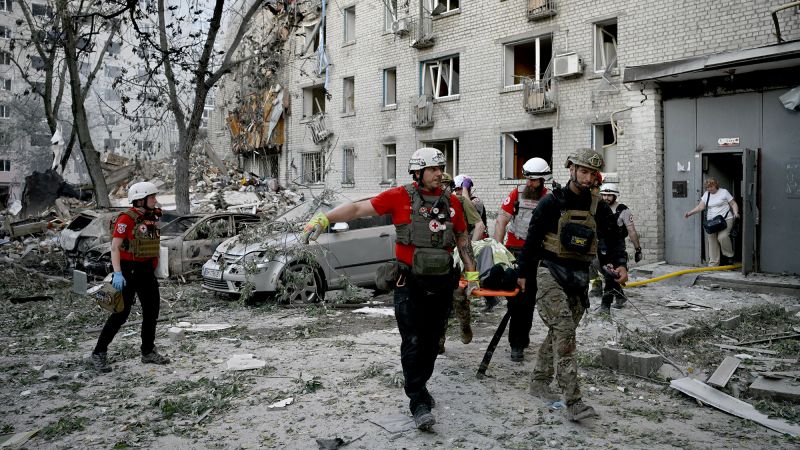
Russia’s Deadly Strike on Kyiv: A Harrowing Attack
Russia s latest attack on Kyiv – On Thursday, a brutal Russian assault on Kyiv resulted in the deaths of at least 30 individuals, marking the third most lethal attack on the Ukrainian capital since the conflict began. This devastating strike, which targeted residential zones with an unprecedented focus on civilian infrastructure, has intensified concerns about the evolving tactics of Moscow’s military strategy. Unlike previous operations, the scale and precision of this attack suggest a calculated effort to maximize casualties while testing the resilience of Kyiv’s defenses.
Unprecedented Lethality in Kyiv’s Battle
While Ukraine has weathered numerous large-scale aerial assaults, the recent attack stands out for its lethality. The attackers concentrated on residential buildings, deploying a mix of ballistic missiles, loitering munitions, and jet-powered drones. Among these, the Geran-4 UAV has emerged as a critical tool, noted for its speed and ability to evade Ukrainian intercept systems. These drones, capable of reaching velocities up to 500 kilometers per hour, pose a unique challenge, as they are faster than Kyiv’s mobile fire units can react to. According to Yurii Ihnat, spokesperson for the Ukrainian Air Force, the enemy is increasingly relying on jet-powered Shaheds, which are becoming a dominant part of their arsenal. This shift not only depletes Ukraine’s resources but also raises questions about the long-term sustainability of its defensive efforts.
Tactical Evolution in Russian Weaponry
Analysts at the Institute for the Study of War (ISW), a US-based conflict monitoring organization, highlighted Russia’s use of advanced drone systems as a key factor in the attack’s effectiveness. The organization noted that Moscow is leveraging technological innovations to “maximize civilian harm during strikes on Ukraine.” Faster-moving drones, which are harder to intercept, have been employed in previous operations to increase damage, and this pattern appears to be continuing. The ISW’s report, published Thursday, emphasized that such adaptations are part of a broader strategy to complicate Ukraine’s ability to respond swiftly. “Russian forces may be stockpiling drones, particularly for a higher frequency of large-scale strikes at a later time of the Kremlin’s choosing,” the group added, suggesting the attack was meticulously planned.
Among the arsenal deployed, the Zircon hypersonic cruise missile stood out for its speed and destructive potential. Ihnat stated that this weapon, which can travel at an extremely high velocity, is only effectively countered by the Patriot system. The Defense Ministry reported that over 90% of cruise missiles and Shahed-type drones were intercepted during the attack, but the remaining 10% caused catastrophic damage. One of the missiles destroyed a residential building housing 64 apartments, leading to multiple fatalities and displacing dozens of families. The sheer speed of these projectiles, combined with their precision, has made the attack particularly devastating for civilians.
Challenges for Ukrainian Defense
Ukraine’s defense capabilities are under significant pressure, especially as the conflict has escalated. The use of ballistic missiles in this attack, with 28 of the 77 deployed being of that type, underscores a shift in Russian targeting methods. Ihnat described this as a “very, very high number,” indicating that Moscow is prioritizing these weapons to overwhelm Ukrainian air defenses. However, intercepting ballistic missiles remains a formidable task, as Ukraine’s Patriot batteries are already stretched thin. The country’s missile shortage has been exacerbated by the conflict in Iran, where some of the missiles initially allocated for Ukraine were redirected to the Middle East.
Despite efforts to secure new supplies, Ukraine continues to face an urgent shortage of critical intercept systems. The Defense Ministry has sent letters to nearly 40 countries, requesting immediate access to Patriot missiles from their existing stock. In exchange, Ukraine has promised future deliveries of its contracted weapons. This situation highlights the logistical hurdles Ukraine must overcome to sustain its defense against increasingly sophisticated Russian attacks. The combination of high-speed drones and hypersonic missiles has created a dual threat, forcing Ukrainian forces to allocate resources more strategically than ever before.
Strategic Implications and Future Threats
The ISW’s analysis suggests that Russia has been preparing for this assault for months. Between January and May, the country averaged one major strike and several smaller attacks per week, but in June, it limited its efforts to just two larger operations. This pause in activity may have been an opportunity to stockpile drones and missiles, enabling the high-intensity strike on Kyiv. With the capacity to produce thousands of drones monthly, Russia has the potential to launch large-scale attacks at an accelerated pace. “Russian forces may be stockpiling drones, particularly for a higher frequency of large-scale strikes at a later time of the Kremlin’s choosing,” the ISW reiterated, emphasizing the strategic intent behind the operation.
The attack’s focus on civilian areas, rather than military targets, has sparked accusations of deliberate harm. Kyiv authorities reported that 25 sites across the capital were struck, with a significant proportion located in residential zones. This targeting strategy has led to a sharp rise in casualties, as the destruction of housing complexes and infrastructure has trapped civilians in the crossfire. Zelensky, Ukraine’s president, condemned the assault, stating that it damaged over 130 residential buildings and accused Russia of systematically attacking civilian facilities “every day and eve.” The Russian Ministry of Defense, however, framed the attack as retaliation, claiming it targeted “military-industrial facilities and fuel and energy complex sites.” This contradiction has fueled debates about the true purpose of the strike and its impact on the civilian population.
Civilian Impact and Accusations
The attack has not only caused immediate casualties but also amplified the humanitarian crisis in Kyiv. Residential areas, which are often the most vulnerable, bore the brunt of the assault, with many families left homeless overnight. The destruction of key infrastructure, such as power grids and water systems, has further complicated recovery efforts. Zelensky’s accusations of targeted civilian harm have been echoed by Ukrainian officials, who argue that Russia is using its attacks to cripple the country’s ability to sustain its war effort. The ISW supports this view, noting that the use of jet-powered drones and hypersonic missiles is part of a broader pattern aimed at exhausting Ukraine’s defensive resources.
As the conflict continues, the balance of power between Kyiv and Moscow remains precarious. The recent attack has exposed vulnerabilities in Ukraine’s air defenses, particularly the strain on Patriot systems. While the country has contracts for future missile supplies, the immediate shortage is forcing it to rely on international aid and diplomatic negotiations. The success of this strike may also embolden Russia to escalate its operations, using its growing drone production to maintain pressure on Ukrainian cities. For Kyiv, the challenge is not just to intercept these weapons but to rebuild trust with allies and ensure the long-term sustainability of its defensive capabilities. The attack serves as a stark reminder of the evolving nature of modern warfare and its devastating consequences for civilians.
Conclusion: A New Phase in the Conflict
As Russia continues to refine its tactics, the attack on Kyiv represents a significant development in the war’s trajectory. The combination of high-speed drones, hypersonic missiles, and a focus on residential targets has created a new level of threat for Ukrainian cities. While the Defense Ministry and ISW acknowledge the effectiveness of these weapons, they also warn of the potential for further escalation. The attack has not only tested Kyiv’s resilience but also highlighted the need for a coordinated international response to counter Russia’s technological advancements. With the war entering a new phase, the fight to protect civilians and maintain strategic superiority will define the coming months of the conflict.
