
Wife of Spanish PM forbidden to leave country as corruption probes pile up
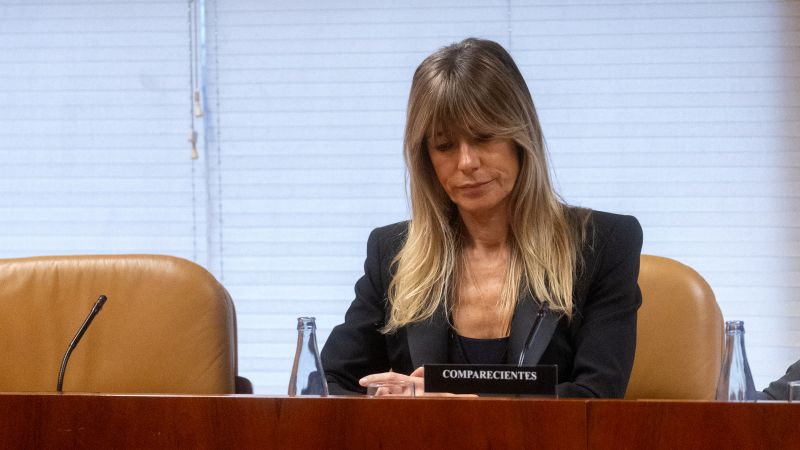
Wife of Spanish Prime Minister Ordered to Stay in the Country Amid Rising Corruption Allegations
Wife of Spanish PM forbidden to leave – Spain’s political landscape has been rocked by a fresh wave of corruption inquiries, with the wife of Prime Minister Pedro Sánchez now under judicial restrictions. On Saturday, a Madrid-based judge mandated that Begoña Gómez, the first lady, surrender her passport and remain within the nation’s borders while facing corruption charges. The decision, issued by Judge Juan Carlos Peinado, also requires her to appear in court twice monthly. This latest development has intensified scrutiny on Sánchez’s administration, which has already weathered several scandals since its formation.
A Political Storm Gathers
Spain has long grappled with corruption, a problem that has toppled numerous political figures over the years. The current case against Gómez is part of a broader pattern of investigations targeting the ruling Socialist Workers’ Party (PSOE) and its allies. Sánchez, who has led the country for nearly eight years, has positioned himself as a reformist leader, often criticizing the Trump administration on issues ranging from the Iran conflict to trade policies. However, his tenure has not been without controversy, as his coalition struggles to maintain stability amid mounting legal challenges.
“Mr. Money is a powerful gentleman,” said the 17th-century Spanish poet Francisco de Quevedo. His words, though centuries old, seem eerily prescient as Spain’s political elite face renewed scrutiny over their financial dealings.
Gómez is accused of embezzlement, influence peddling, and misusing funds in business transactions, with allegations that her marriage to Sánchez provided an avenue to further her career at a Madrid university. While both she and Sánchez have denied any wrongdoing, the charges have sparked debates about the fairness of the process. Sánchez, in particular, has described the case as a “political farce” designed to undermine his leadership.
The Roots of the Investigation
The probe into Gómez’s activities began in 2024 after an anti-corruption group, Manos Limpias, filed a complaint with ties to the far-right. The group alleged that Gómez had engaged in influence-peddling, a claim that has drawn criticism for its perceived political bias. At the time, Sánchez temporarily stepped back from public duties to assess whether he should continue as head of government. His hesitation highlighted the growing uncertainty surrounding his leadership.
Spain’s justice system has faced accusations of being overly aggressive in its handling of high-profile cases. A recent editorial in El País noted that the investigation against Gómez has been marked by “disproportionate measures,” suggesting that the court’s actions may be driven by a desire for media attention rather than strict impartiality. Some analysts argue that the judge’s decision to restrict Gómez’s movements is excessive, given her access to police protection, which could prevent her from fleeing the country.
“Today is a dreadful day for those of us who believe in justice,” wrote Justice Minister Félix Bolaños on X, reacting to the judge’s ruling. “Truth will ultimately prevail.”
The case against Gómez is not an isolated incident. Sánchez’s inner circle has been embroiled in a series of scandals, including a raid on the headquarters of his governing party last week. The operation, conducted by Spanish police, focused on alleged misuse of party funds, raising questions about how resources were allocated to support legal actions against key figures. The High Court described the probe as part of a broader effort to uncover a network aimed at influencing judicial proceedings against the government.
Broader Implications for the Government
As the investigation unfolds, the PSOE’s minority coalition has come under increased strain. The party has already lost ground in regional elections, and the raids on its headquarters have added to the pressure. Sánchez has pledged to cooperate fully with the justice system, defending his allies and emphasizing the importance of the presumption of innocence. However, his promises have not quelled public concerns about the government’s vulnerability.
Other high-profile cases have also targeted Sánchez’s closest associates. Former Prime Minister José Luis Rodríguez Zapatero, a prominent figure in the Socialist Party, is under suspicion for involvement in a case involving organized crime and document falsification linked to a loan for a small airline. Meanwhile, José Luis Ábalos, Sánchez’s former right-hand man, was imprisoned for seven months before his trial in April. He is accused of accepting kickbacks from the purchase of $60 million worth of facemasks during the COVID-19 pandemic.
Sánchez’s musician brother, David, is currently on trial in Badajoz, a town near the Portuguese border. The case against him centers on influence-peddling in his appointment to a position nine years ago. While these allegations do not directly implicate Sánchez, they underscore the widespread nature of the corruption investigations targeting his political network.
A Test of Resilience
For Sánchez, the challenges have become a test of his leadership’s resilience. His administration has managed to steer Spain toward economic growth, but this progress has been overshadowed by the ongoing controversies. The pressure to prove his innocence has intensified, with critics suggesting that the charges against him and his allies are part of a coordinated effort to destabilize the government.
Meanwhile, the opposition, led by Alberto Núñez Feijóo, has seized the opportunity to highlight the government’s weaknesses. Feijóo recently declared that the ruling party was in its “death throes,” calling for a thorough examination of its conduct. As the cases mount, the political future of Spain’s leadership remains uncertain, with the justice system at the center of a heated debate about its role in shaping the nation’s destiny.
The cumulative effect of these investigations is a significant erosion of public trust in the PSOE. While Sánchez has maintained his stance, the repeated scandals have forced his party to confront internal divisions and external criticism. The allegations against Gómez, in particular, have reignited discussions about the personal and political connections that may influence Spain’s governance. As the process continues, the nation watches closely to see whether justice will prevail or if the political machinery will continue to spin in its own favor.
Amid these developments, the broader implications for Spain’s democratic institutions remain a focal point. The justice system, while independent, is being scrutinized for its perceived alignment with political agendas. Whether these cases will lead to reforms or further divisions within the country’s political landscape remains to be seen, but one thing is clear: the fight against corruption has become a central issue in Spain’s political discourse, with far-reaching consequences for its leaders and their legacy.
