
Explaining the World Cup’s newest rules
Explaining the World Cup’s Newest Rules
Unfamiliar with the World Cup? Here’s Your Guide
Explaining the World Cup s newest – For those new to the sport or still navigating its complexities, the 2026 World Cup has introduced a set of rules that may feel as bewildering as a sudden tactical shift in the final moments of a match. While long-time fans might be nodding in recognition, even seasoned soccer enthusiasts are grappling with these changes, which aim to reshape the game’s dynamics. From controversial red cards to stricter enforcement of communication, the tournament is testing the boundaries of traditional play. As the competition kicks off, let’s break down the most notable updates that could redefine how the game is played and watched.
A Controversial Rule That Left Fans Confused
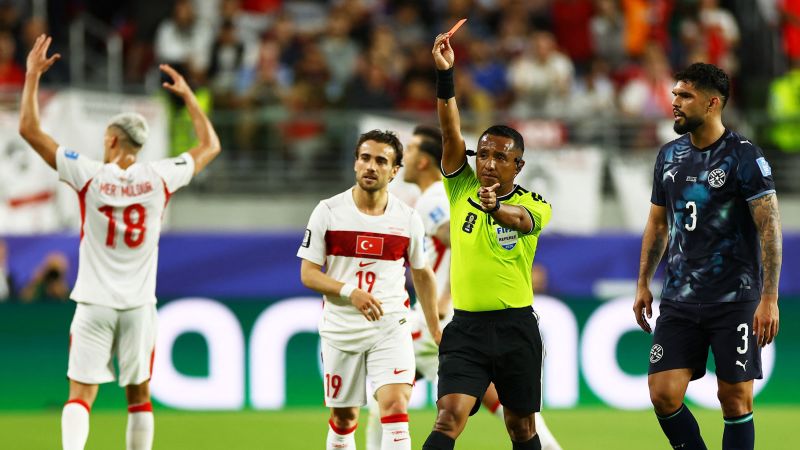
One of the most talked-about rules emerged during the opening round, when Paraguay’s Miguel Almiron was unexpectedly shown a red card in the first half. The incident left many spectators scratching their heads, as it appeared Almiron had done nothing to warrant such a severe penalty. He hadn’t tackled an opponent or committed a foul, yet referee Ivan Barton decided to send him off for covering his mouth in a confrontational moment. This action, though seemingly minor, became the first instance of a player being sanctioned under the new regulation that allows for red cards in such scenarios.
“It was a split-second decision, but the rule is clear: a player can be sent off for covering their mouth during a confrontation with an opponent,” explained FIFA officials in a recent statement.
The rule stems from a February Champions League clash where Real Madrid’s Vinícius Júnior accused Benfica’s Gianluca Prestianni of racial slur. Replays revealed Prestianni had said something to the player, but his mouth was covered, leaving the exact words ambiguous. FIFA responded by implementing this change to ensure verbal offenses are not hidden, allowing referees to penalize players who attempt to obscure their insults during heated exchanges.
Other Rule Changes That Could Impact the Game
Alongside the mouth-covering rule, several other adjustments have been introduced to streamline the game and reduce disputes. One such rule is the five-second countdown for goal kicks and throw-ins, designed to curb time-wasting. If a player runs out of time on a throw-in, possession automatically switches to the opposing team. Similarly, a missed goal kick results in a corner kick for the visitors. These measures aim to maintain rhythm and fairness, particularly in high-stakes moments.
Additionally, the Video Assistant Referee (VAR) now has expanded authority, including the power to overturn incorrectly awarded corner kicks. This addition ensures that even the most controversial decisions are subject to review, though it has sparked debates about its effectiveness in real-time situations. For example, during the Africa Cup of Nations final, a missed goal kick led to a contentious corner, which VAR later corrected. Such scenarios highlight the potential for these rules to influence outcomes in ways previously unimaginable.
Spain’s Challenge and the Road Ahead
Spain’s campaign faced an early test on June 21, as they struggled to break through Cape Verde’s resilient defense. The hosts, making their World Cup debut, managed a surprising 0-0 draw against the reigning European champions. Despite dominating possession with 74% of the ball and launching 27 shots on goal, Spain’s attackers were repeatedly thwarted by the determined Cape Verde squad, led by veteran goalkeeper Vozinha. The result left fans wondering if the team’s opening performance would shape their chances in the tournament.
However, Spain’s coach, Luis de la Fuente, remains unfazed. He cited the 2022 Qatar World Cup as a blueprint, where Argentina had faced a similar setback in their debut match against Saudi Arabia. The South American giants were stunned by a 2-1 defeat but went on to claim the title, proving that early struggles can be overcome. With this in mind, Spain’s players are likely preparing to push through their initial hurdles, even as they seek to harness the advantage of their high possession rate.
Saudi Arabia’s Ambitions and Group H Drama
Meanwhile, Saudi Arabia has positioned itself as a dark horse in Group H, maintaining the top spot despite their opening match loss to Uruguay. Maxi Araújo’s late equalizer against the Uruguayan side on Monday briefly disrupted their perfect run, but the team remains focused on building momentum. Coach Carlos Queiroz has emphasized the need for resilience, pointing to the potential for underdog stories to emerge in the group stage.
As the tournament progresses, the new rules will continue to test both players and officials. For instance, the mouth-covering regulation could become a focal point in future encounters, especially when tensions rise. Similarly, the five-second countdowns may lead to quicker transitions between play, altering the pace of matches. While some rules may take time to fully integrate into the game’s fabric, their impact is already being felt, from the penalty on Almiron to the tactical adjustments in Spain’s approach.
With so many changes in play, the 2026 World Cup promises to be as unpredictable as it is exciting. Whether it’s the unexpected red cards, the strategic use of VAR, or the pressure of early matches, the tournament is setting the stage for a new era of soccer. As fans prepare for the next round of action, one thing is certain: the rules are evolving, and the game is adapting to them—one unforgettable moment at a time.
