
Why these adults are suddenly obsessed with a kids toy from the late ’90s
Why these adults are suddenly obsessed with a kids toy from the late ’90s
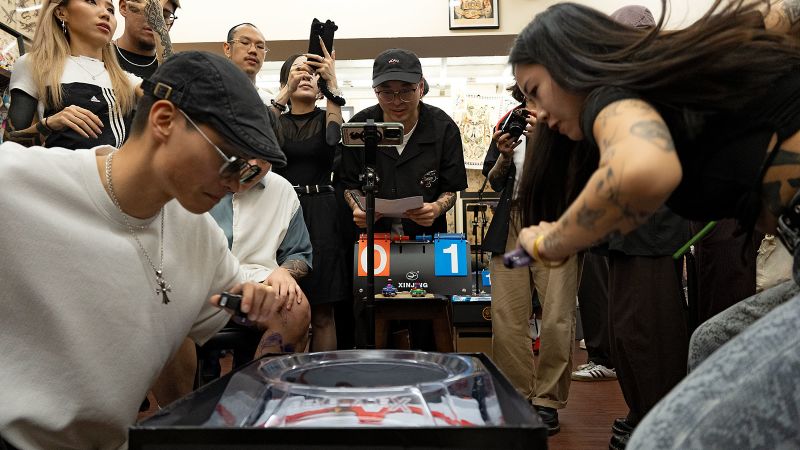
Why these adults are suddenly obsessed – In the heart of Hong Kong’s vibrant nightlife, a unique scene unfolds in a modest tattoo parlor that has transformed into a battleground of spinning tops. The usual sounds of tattoo machines and the occasional gasp of discomfort are replaced by the rhythmic clatter of steel and plastic. This shift is not due to a new trend in body art but rather a revival of a childhood favorite: Beyblade. Adults, once distant from the toy’s origins, now gather to compete in fierce, high-stakes matches, driven by a blend of nostalgia and competitive spirit.
A New Frontier for a Classic Toy
The 59 Tattoo, a small studio in Wan Chai, has become a hub for Beyblade enthusiasts, with its tables cleared to accommodate battles that rival those in sports arenas. Tiff Tam, 28, a staff member at the shop, describes the atmosphere as electric. “I’m ready to put up a fight,” she says, showcasing the collection of Beys she’s invested nearly $400 in. Tam’s enthusiasm highlights a broader phenomenon: adults across Asia are embracing a toy that once belonged solely to children, now redefining its place in the modern world.
Unlike the traditional spinning tops of Japan, Beyblade evolved into a complex, customizable system. The toy, originally launched in 1999 by toymaker Takara, combined the simplicity of a spinning top with strategic elements. Players assemble colorful Beys, named after fictional weapons and characters like “Saber Samurai” and “Arrow Wizard,” and launch them onto a large plastic panel known as a stadium. The goal is straightforward: keep the Bey spinning within the ring to claim victory. Yet, the simplicity of the rules belies the intensity of the competition.
The Resurgence of a Nostalgic Pastime
What began as a niche toy has sparked a global craze, particularly in Japan, Thailand, Taiwan, and Hong Kong. Informal matches are now commonplace in unexpected locations—parks, gyms, and even shopping malls. When stadiums are scarce, fans improvise, using items like Chinese woks as makeshift battle grounds. Social media has amplified this revival, with viral videos capturing the raw excitement of these kinetic contests.
For Marcus Yuen, the founder of The 59 Tattoo, the resurgence is more than just a trend. Hosting Beyblade tournaments at his shop is a way to reconnect with his own childhood memories. “Kids from my primary school used to hang around the park and play,” he recalls. “But as you grow up, people put their toys aside.” Yuen, now 36 and a father, was reintroduced to the game by a younger colleague earlier this year. The experience reignited his passion, leading him to open the parlor’s doors to a community of like-minded enthusiasts.
From Nostalgia to Community
Beys, once a staple of playgrounds, have found a new audience in adults seeking a break from digital distractions. “It’s hard these days to find an event where friends and strangers can get together and play,” Yuen says. “It’s a very pure kind of happiness.” This sentiment echoes among players who describe the toy as a bridge between generations. Tria John Bernard Benito, a 30-year-old participant, credits social media for bringing the game back into the spotlight. “I didn’t get to play when I was a kid because they were too expensive,” he admits. “Now I can use my own money to buy them and have fun.”
Meanwhile, in Tseung Kwan O, a suburban area near Hong Kong, dozens of players have gathered at a local park. The space, once a place for casual strolls, is now dotted with makeshift battle stations. Fans line up at each station, ready to challenge the host in a test of skill and strategy. The matches often pit young players against adults, creating a dynamic where age is irrelevant and the only rule is the desire to win. Winners earn the right to stay, much like a pickup game of street basketball, fostering a sense of camaraderie and shared purpose.
The Role of Social Media and Scalping
The Beyblade craze has also fueled a surge in demand, with rare models fetching up to $80 online—a price tenfold the original. Scalpers capitalize on this frenzy, selling coveted Beys to collectors who travel from Taiwan to Japan in search of exclusivity. This economic aspect underscores the toy’s cultural significance, transforming it from a simple children’s plaything into a competitive market.
Leo Tsoi, CEO of Toys “R” Us, calls the sudden interest in Beyblade “quite unprecedented.” He attributes this revival to the interplay of nostalgia and social media, which has rekindled a collective memory of childhood battles. “The thrill of the game and the nostalgia factor are bringing people back,” Tsoi says. “It’s not just about the toy anymore—it’s about the community and the shared experience.”
A Cultural Reconnection
Origins of the Beyblade can be traced to the traditional Japanese spinning top, beigoma, which has been a part of cultural heritage for centuries. The modern iteration, however, blends this ancient tradition with elements of futuristic design and competitive strategy. The toy’s revival reflects a deeper yearning for connection in a world dominated by smartphones and screen time. As players engage in face-to-face battles, they recreate the social interactions that have become rare in today’s digital age.
For Hui, a co-organiser of a local Beyblade event, the phenomenon has rekindled old friendships. “We play together now even though we weren’t even close back then. It’s very strange,” he says. This reconnection is a testament to the toy’s ability to transcend its initial purpose, becoming a medium for shared joy and rivalry. The tournaments, whether in a tattoo parlor or a park, are more than just games—they are gatherings that foster a sense of belonging and purpose.
As the Beyblade continues to gain traction, it’s clear that the toy’s appeal lies in its ability to evoke childhood memories while adapting to adult interests. The clashing of steel and plastic in these matches serves as a reminder of the simplicity and joy that once defined play. For many, it’s a way to reclaim a piece of their past and inject it with the energy of the present. In doing so, Beyblade is not just making a comeback—it’s redefining how people connect through a shared, tactile experience.
