
The Scotsman who leveled up Brazil’s beautiful game
The Scotsman who leveled up Brazil’s beautiful game
The Scotsman who leveled up Brazil – After a 28-year absence, Scotland is back in the World Cup, facing Brazil—a nation also chasing a long-awaited return to glory. Brazil, a five-time champion, has endured a 24-year drought since its last World Cup triumph, and its current squad is determined to break that cycle. At the heart of this historic rivalry stands Malcolm McLean, 77, a living embodiment of the deep-rooted football connection between the two countries. With his signature Brazil jersey and kilt, McLean symbolizes a legacy that transcends borders, rooted in the 1912 arrival of his grandfather, Archie McLean, who would later shape the trajectory of Brazilian soccer.
A Legacy Across Two Continents
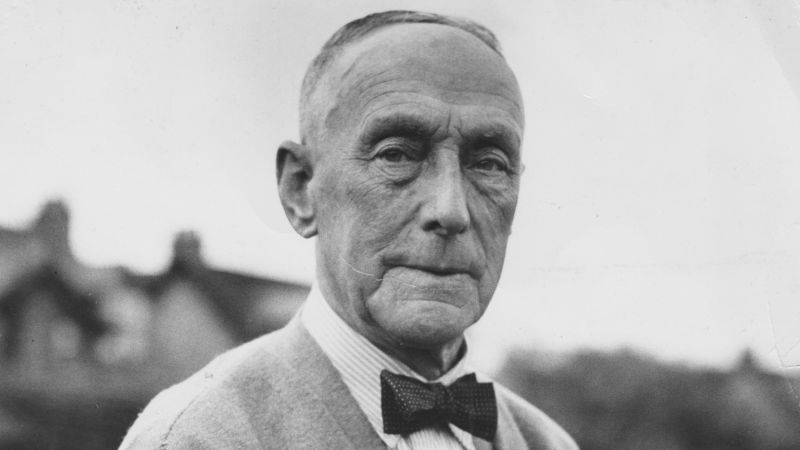
Archie McLean’s journey to Brazil in 1912 was initially meant to last six months, but the country had other plans. As a representative of the textile company J&P Coats, he was tasked with opening a factory, yet his stay stretched nearly four decades. During this time, he immersed himself in the local culture, developing a profound passion for football that would leave an indelible mark on Brazilian play. “He loved it here,” Malcolm said, reflecting on his grandfather’s impact. “And he got heavily into playing football.”
“Hard though it is today to imagine Brazilians blootering the ball from back to front,” Scottish broadcaster Billy Kay wrote in *The Scottish World*, a history of the Scottish diaspora. “That was exactly what Archie found when he arrived.”
Kay’s account highlights the stark contrast between the football styles Archie encountered and the modern Brazilian game. When he first arrived, players competed to see who could kick the ball the highest and the furthest across the field—a far cry from the swift, short-passing interplay that would later define Brazil’s approach. This innovation, brought by Archie and his partner, a Scottish-born player named Hopkins, was initially met with skepticism but quickly became a cornerstone of Brazilian football. “They were quick and devastating learners,” Kay noted, describing how the duo’s techniques revolutionized the sport in Brazil.
Their influence earned Archie recognition as a pioneer, with Brazilian historian Tomás Mazzoni praising him in 1949 as “an artist, a worthy exponent of the Scottish school.” The Brazilians, who adopted their methods, dubbed the style *tabelinha*, or “the chart,” and *sistema inglês*, or “the English system,” as a nod to its Scottish origins. This blend of traditions would eventually become the foundation of Brazil’s celebrated football identity, a testament to the cross-cultural exchange that began in the early 20th century.
A Personal Connection to the Game
Malcolm’s ties to both nations are deeply personal. Born in Brazil, he moved to Scotland at age 10, where he has since followed his country’s fortunes at the World Cup. His journey began in 1974, when he watched Scotland exit the group stage in West Germany without a single loss—a performance he still considers their best. “It was a dream come true,” he said, recalling the event. “We showed the world what we could do.”
Malcolm’s devotion to Scotland’s football tradition is matched by his affection for Brazil’s. During the 1982 World Cup in Spain, he had tickets for the opening match but gave them away when his wife faced a challenging pregnancy. Despite this, he remained a fixture at every major tournament, even attending the 1998 World Cup in Paris, where Scotland lost to Brazil 2-1. “That game was a real highlight,” he said, “but it also reminded me of how much Brazil has evolved.”
Now, in the 2026 World Cup, Malcolm has extended his family’s wedding trip to Rio de Janeiro into a longer stay, joining a Scottish expat group his grandfather helped establish, the St. Andrew’s Society. This community, formed in the early 20th century, continues to support Scotland’s football efforts, even in a foreign land. “The fans are always eager to see Scotland play,” he said. “It’s a tradition that’s been passed down through generations.”
A Shared Passion, A Split Loyalty
Malcolm’s dual loyalties are a reflection of the broader relationship between Scotland and Brazil. While the Tartan Army, Scotland’s passionate fanbase, has been a staple of World Cup gatherings, Brazil’s supporters often bring their own flair to the matches. At the 2026 tournament, the two groups have continued their tradition of camaraderie, even as the stakes have grown higher. “Scotland fans and Brazil fans always get on really well together,” Malcolm observed. “The Brazilians are usually drumming. And the Scots fans are playing bagpipes.”
This cultural exchange has deep historical roots. Archie McLean’s arrival in 1912 not only brought Scottish industry to Brazil but also sparked a football revolution. His story, though largely overlooked in Scotland for decades, has resurfaced with renewed interest as the World Cup approaches. “He retired back to Paisley in 1949,” Malcolm said, “but his legacy stayed with Brazil.” The standing ovation he received at São Paulo’s Pacaembu stadium in 1964—a testament to his enduring influence—reminds us of the bond that ties these two nations together.
Malcolm’s own journey mirrors that of his grandfather. Born in Brazil, he grew up with the rhythms of the country’s football culture but chose to root himself in Scotland. “It’s a bit of a split,” he said. “But both sides mean a lot to me.” His dream, he admitted, is simple: to see Scotland overcome Brazil in the World Cup. Yet, he also hopes Brazil succeeds in winning the tournament. “It’s a win-win,” he said. “Scotland beats Brazil, and Brazil wins the World Cup. That’s the ultimate outcome.”
The Road to the World Cup
Malcolm’s presence at the 2026 World Cup is a culmination of decades of dedication. He has followed Scotland’s path through the tournament since 1974, witnessing the highs and lows of the nation’s football history. His experience in São Paulo has been particularly significant, as the city has become a hub for Scottish supporters eager to relive the magic of the game. “The fans here are always lively,” he said. “They’ve been drinking Boston dry and showing Miami how to party.”
This sentiment captures the spirit of Scotland’s fanbase, which has been a driving force behind the team’s success. Even in a 24-year absence, the energy of the Tartan Army remains undiminished. “No Scotland, no party” has become a rallying cry, echoing through pubs and stadiums. For Malcolm, this phrase is more than a slogan—it’s a reminder of the passion that defines the nation’s football culture.
The challenges ahead are considerable. Brazil, with its rich history and current momentum, is a formidable opponent. Yet, Malcolm believes the unique blend of Scottish and Brazilian influences will create a compelling narrative this year. “It’s not just about the game,” he said. “It’s about the shared history and the hope of a new chapter.” As the World Cup unfolds, the story of Archie McLean and his grandson Malcolm will serve as a bridge between two nations, one rooted in tradition and the other in innovation.
With the 2026 tournament as a stage, the legacy of Archie McLean and the impact of Scottish football on Brazil’s development will be on full display. Malcolm’s presence in Miami, where Scotland’s fans have once again gathered, underscores the enduring connection. “It’s a celebration of what we’ve built together,” he said. “And a chance to see it come to life again.”
