Iran reports commercial vessel struck in Strait of Hormuz

Daftar Isi
Fatal Vessel Strike Raises Pressure Around Strait of Hormuz
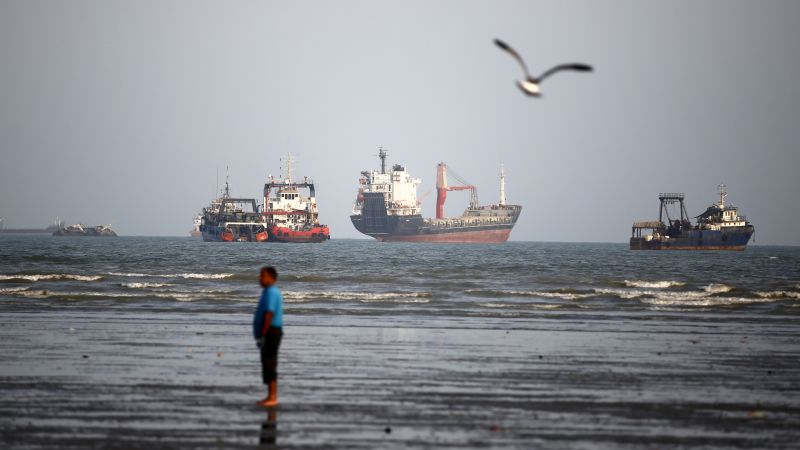
Activelifezero.com – An Iranian commercial ship was struck near Qeshm Island late Saturday, killing one person and injuring four others, Iranian state media said, as tensions over access to the Strait of Hormuz continue to threaten one of the world’s most important energy routes.
Iran’s state broadcaster IRIB said the incident occurred in waters near Qeshm, an island positioned close to the narrow passage between Iran and Oman. The state-run Islamic Republic News Agency quoted Qeshm’s governor, who blamed what he described as a “terrorist enemy” for the attack.
The United States had not issued public comment on the claimed strike. US Central Command was asked for a response. American forces have previously targeted Iranian-flagged vessels while enforcing a blockade of Iranian ports and facing renewed ballistic-missile threats against warships.
Qeshm Island lies roughly 14 miles from Bandar Abbas, the Iranian port city that is central to Tehran’s influence over shipping through the strait. Before the conflict, approximately 20 million barrels of oil moved through Hormuz each day. Ship traffic is now estimated to be about 90% below its prewar level, creating major uncertainty for energy markets and maritime operators.
Multiple Shipping Incidents Under Investigation
It was not immediately clear whether the vessel described by Iranian state outlets was the MT El Gaia, a Panama-flagged ship attacked off Oman’s coast. India’s Ministry of External Affairs said 14 Indian nationals were part of that vessel’s crew.
“Of the 14 Indian crew onboard, 13 Indians have been rescued so far,” ministry spokesperson Randhir Jaiswal said on X. “Search and Rescue operations for the missing Indian national are continuing.”
India’s government was asked to clarify whether the El Gaia was connected to the incident near Qeshm.
In a separate episode late Saturday, a ship in the Strait of Hormuz was hit by an unidentified projectile, the United Kingdom Maritime Trade Operations Centre said. A fire followed the impact, and local authorities assisted with an evacuation of crew members. The vessel’s registration was not identified.
The incidents underline the dangers faced by commercial crews in a confined sea lane that links Gulf producers with international markets. Even a limited disruption can affect tanker scheduling, insurance costs and the availability of oil supplies moving toward Asia and Europe.
Oman Talks Delayed Amid Regional Divisions
Regional diplomacy aimed at addressing movement through the strait has also encountered obstacles. Gulf Arab diplomats had been expected to meet Iranian Foreign Minister representatives in Oman on Monday to discuss maritime traffic, Iran’s foreign ministry spokesperson Esmail Baghaei said Saturday.
Omani Foreign Minister Badr Albusaidi said Sunday that the discussions had been delayed “in the interests of consensus.” Bahrain had already said it would not participate, while the attendance of other countries remained uncertain.
Iran and Oman, which sits on the opposite side of the strait, have spent months discussing an arrangement for shipping. Yet Iranian officials have repeatedly emphasized that an agreement would not necessarily reopen the waterway to normal traffic.
“The waterway would be opened up on the condition that the US will terminate its blockade,” President Masoud Pezeshkian told India Today TV on Saturday.
Ebrahim Azizi, who leads the Iranian parliament’s national security committee, expressed a similarly hard line in a post on X.
“As long as the American side does not accept all of Iran’s conditions, dialogue and negotiation are of no use.”
A senior Iranian official said Sunday that the proposed discussions were intended to support stronger regional security and develop “safe maritime routes.” But the official stressed that such work should not be viewed as an immediate restoration of normal passage through Hormuz.
“However, this agreement does not imply an automatic reopening of the Strait of Hormuz,” the source said. “The strait will not become secure until the US fulfills its obligations and halts its naval blockade and economic warfare.”
Red Sea Conflict Adds to Regional Risk
Pressure on maritime security is growing beyond the Gulf. Yemen’s Iran-backed Houthi rebels said Sunday that they had attacked a Saudi military base in the Sharurah area, as the group intensifies its confrontation with Yemen’s Saudi-backed government.
Houthi spokesperson Yahya Saree said the operation used a “barrage of ballistic missiles and drones” aimed at weapons depots and command-and-control facilities. He did not say when the strike occurred.
The Houthis have expanded their presence toward a strategically important Red Sea route connecting Asia and Europe. Their efforts to widen control near that waterway, combined with instability around the Strait of Hormuz, have heightened concern over two critical maritime corridors at once.
For ships and their crews, the immediate consequences are personal and dangerous: interrupted voyages, emergency evacuations and search-and-rescue operations. For the wider world, the stakes extend to oil flows, shipping reliability and the prospect that a regional conflict could further restrict movement through waterways essential to global trade.
Related Reading
Frequently Asked Questions
What is Iran reports commercial vessel struck in Strait?
Iran reports commercial vessel struck in Strait is the main topic of this guide. The article explains the context, practical details, and next steps readers should understand.
Why does Iran reports commercial vessel struck in Strait matter?
Iran reports commercial vessel struck in Strait matters because readers are looking for a useful answer, not just a short summary. Good content should match search intent and help them decide what to do next.