How Russian ballistic missiles are exploiting holes in Ukraine’s air defenses

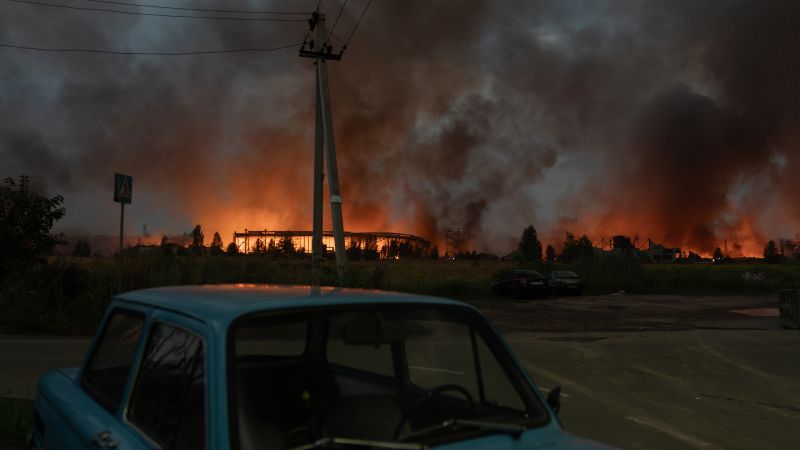
How Russian Ballistic Missiles Exploit Ukraine’s Air Defense Gaps
Activelifezero.com – Civilians across Ukraine are confronting an intensifying crisis as how Russian ballistic missiles are exploiting critical vulnerabilities in the nation’s air defense system becomes increasingly apparent. While Kyiv has achieved notable successes—targeting Russian refineries, disrupting fuel supplies, and damaging commercial infrastructure—a growing weakness threatens to reverse these accomplishments. The shortage of ballistic-missile interceptors has enabled Moscow to launch devastating high-speed strikes on population centers, resulting in hundreds of civilian fatalities over recent months.
The severity of this threat was underscored last week when more than two dozen ballistic and anti-ship missiles struck the Kyiv region in one night. Every single projectile breached Ukrainian defenses, causing at least seventeen deaths and dozens of injuries. This concentrated attack formed part of a wider pattern of Russian aggression that has forced Ukrainian officials to urgently pursue additional defensive capabilities.
Understanding Russia’s Coordinated Attack Strategy
Russian aerial operations have become progressively more sophisticated. The extensive operation against Kyiv and Lviv on June 30 illustrated this advancement. According to Ukrainian Air Force figures, Russia employed four anti-ship missiles, nine ballistic missiles, sixty-one cruise missiles, and roughly three hundred strike drones in a synchronized assault spanning multiple regions. Each weapon class fulfills a specific tactical role, overwhelming protective systems through combined volume and diversity.
Among these various threats, ballistic missiles have risen to become Ukraine’s foremost military concern. These weapons move at extraordinary speeds along elevated trajectories, rendering them substantially harder to intercept than slower drones and cruise missiles. This challenge has driven Kyiv to urgently request replenishment of its American-made Patriot air-defense interceptors—among the limited collection of systems capable of neutralizing ballistic threats.
From Historical Precedent to Modern Defense
Ballistic missiles possess deep historical roots in modern conflict. Nazi Germany pioneered the V-2 rocket during World War II, creating the foundation for subsequent ballistic weaponry. The Iran-Iraq war of the 1980s produced what scholars called the “war of the cities,” where Scud missiles—evolved versions of the V-2—inflicted extensive harm on civilian communities on both sides.
Defensive capabilities have progressed substantially since Cold War times. The Patriot’s PAC-3 interceptor marks a considerable advancement, utilizing kinetic energy instead of explosive charges to eliminate approaching threats. This “bullet hitting a bullet” methodology reduces collateral damage compared to conventional interception techniques, proving especially valuable for safeguarding crowded urban zones.
“Ballistic missile interceptors could have saved the lives of those killed today,” Ukrainian President Volodymyr Zelensky declared during a recent address. “It is very important that our partners understand that delays in supplying them, or an unwillingness to provide anti-ballistic systems, lead directly to such horrific casualties and destruction. Partners who are not yet ready to play a more active role in supplying interceptors can help by implementing new sanctions. A significant share of Russia’s ballistic missile production is still not under sanctions.”
The Growing Interceptor Deficit
The numerical gap between Ukraine’s defensive resources and Russia’s offensive capabilities has widened considerably. Zelensky informed CNN that Ukraine now holds two and a half times fewer interceptors than in 2025, whereas Russia has doubled its ballistic missile stockpile. This imbalance has converted the president’s daily schedule into millions of telephone conversations focused on complex diplomatic discussions with global allies.
Delayed deliveries carry consequences beyond immediate combat effectiveness. Every day without sufficient interceptor supplies produces additional civilian deaths and infrastructure destruction. Western partners face mounting diplomatic pressure, with Kyiv highlighting that sanctions loopholes in Russian missile manufacturing present opportunities for expanded economic pressure.
Classifying Ukraine’s Three Main Threats
The dangers confronting Ukrainian urban centers fall into three primary categories, each demanding distinct defensive approaches. Ballistic missiles, cruise missiles, and drones generally launch from Russian territory or occupied Ukrainian zones, yet they function according to different principles and require specialized countermeasures.
Ballistic missiles travel along predictable parabolic paths at velocities exceeding Mach 5, making them challenging for most defensive systems. Cruise missiles maintain lower altitudes and follow more complex flight patterns, often utilizing terrain masking. Drones, while slower and less powerful individually, overwhelm defenses through numbers and coordinated swarming tactics. Understanding how Russian ballistic missiles are exploiting these layered vulnerabilities remains essential for Ukraine’s survival.
Looking Ahead: Diplomatic and Military Solutions
Ukraine’s path forward requires both immediate military reinforcement and sustained diplomatic engagement. The administration continues pursuing additional Patriot batteries and interceptor stocks from allied nations while simultaneously working to close sanctions gaps that allow Russian missile production to continue largely unimpeded.
As winter approaches, the stakes grow higher. Extended cold weather could strain both civilian infrastructure and military operations, making every interceptor and every day of delay increasingly consequential for Ukraine’s future.
Frequently Asked Questions
What makes ballistic missiles harder to intercept than other weapons? Ballistic missiles travel at speeds exceeding Mach 5 along high arcing trajectories, giving defensive systems less time to react compared to slower cruise missiles and drones.
How many interceptors does Ukraine currently have compared to 2025? Ukraine possesses two and a half times fewer interceptors now than it maintained in 2025, while Russia has simultaneously doubled its ballistic missile inventory.
What is the Patriot PAC-3 interceptor’s main advantage? The PAC-3 uses kinetic energy to destroy incoming threats rather than explosive warheads, reducing collateral damage in populated areas during interception.
Why are sanctions on Russian missile production important? A significant portion of Russia’s ballistic missile production remains outside current sanctions, allowing continued manufacturing capacity that fuels ongoing attacks on Ukraine.